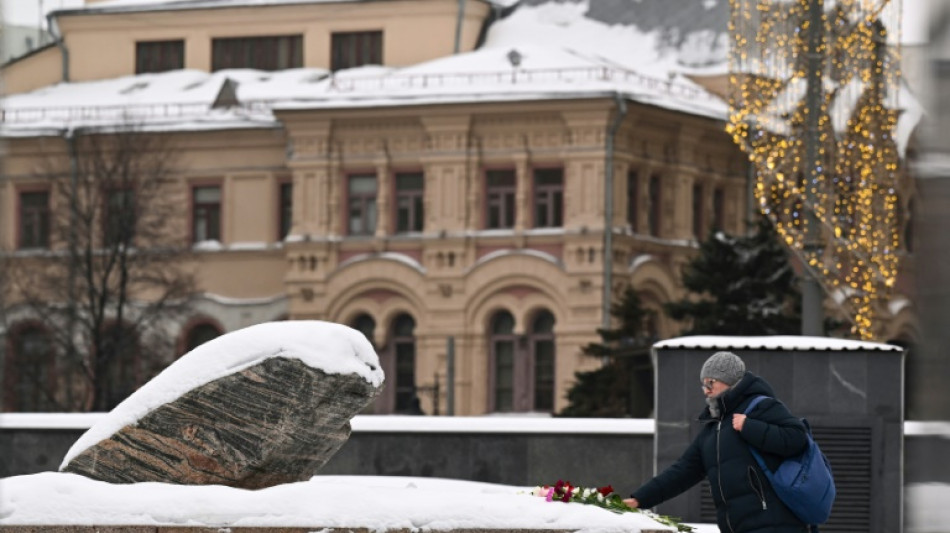
Russia threatening to bury Navalny on prison grounds, team says / Photo: NATALIA KOLESNIKOVA - AFP
Russian authorities are threatening to bury Alexei Navalny on the grounds of the Arctic prison colony where he died unless his family agrees to a closed funeral, the opposition leader's team said Friday.
The 47-year-old Kremlin critic died last week after spending more than three years behind bars, prompting outrage and condemnation from Western leaders and his supporters.
Several leading Russian cultural figures and activists have called on authorities to release the body to his mother, who arrived at the prison colony in northern Siberia last Saturday.
"An hour ago, an investigator called Alexei's mother and gave her an ultimatum," Navalny's spokesperson Kira Yarmysh wrote in a post on X, formerly Twitter.
"She has three hours to agree to a secret funeral without a public farewell, or Alexei will be buried in the colony."
His mother, Lyudmila Navalnaya, "refused to negotiate ... because they have no authority to decide how and where to bury her son", Yarmysh added.
She has now filed a lawsuit alleging the "desecration" of his body, said Ivan Zhdanov, an exiled ally of the late leader.
Navalny's team have said the Kremlin is "scared" of the opposition leader even after his death.
They believe the authorities do not want a public funeral as it would represent a show of support for Navalny's movement against Putin.
They previously called Putin a "killer" who was trying to cover his tracks by not allowing independent forensic analysis of Navalny's body.
- 'Putin is scared' -
After days of being denied access, Navalny's mother Lyudmila said Thursday she had finally been allowed to see her dead son's body.
But she said the authorities were not willing to give her custody and wanted to bury him secretly.
More than 25 film makers, artists, Nobel Prize winners and opponents of President Vladimir Putin have so far called for his body to be released, in videos published by his team on social media.
They include Nobel Prize winning editor Dmitry Muratov, protest rock band Pussy Riot member and activist Nadezhda Tolokonnikova, writer Victor Shenderovich and movie director Andrey Zvyagintsev.
"It's awkward to talk about this in a country that considers itself to still be Christian. Just give Lyudmila Ivanovna her son... without any conditions," Muratov said.
The authorities were trying to keep Navalny in solitary confinement even in death, he added -- just as they had done for long stints of his three years in prison.
"Putin is scared of Navalny after his death -- after he killed Navalny he's still scared of him," he added.
U.Laurent--LCdB