Global condemnation follows deadly Israeli gunfire near aid convoy / Photo: - - AFP
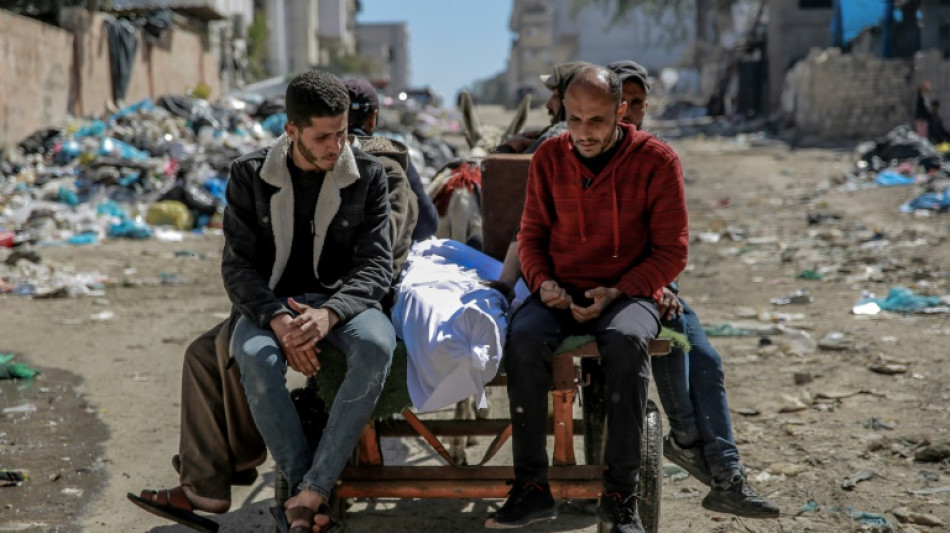
Global condemnation flowed on Friday after Israeli forces in war-ravaged Gaza opened fire as Palestinian civilians scrambled for food aid during a chaotic incident which the Hamas-run territory's health ministry said killed more than 100 people.
The Israeli military said a "stampede" occurred when thousands of desperate Gazans surrounded a convoy of 38 aid trucks, leading to dozens of deaths and injuries, including some who were run over by the lorries.
An Israeli source acknowledged troops had opened fire on the crowd, believing it "posed a threat".
Gaza's health ministry called it a "massacre" and said 112 people were killed and more than 750 others wounded.
French President Emmanuel Macron, in a post on social media platform X, expressed his "strongest condemnation of these shootings and call for truth, justice, and respect for international law".
Iran denounced "the barbaric attack by the Zionist regime", China said it was "shocked", and the head of the Arab League said the "brutal" act showed "total contempt for human life".
US President Joe Biden said Washington was checking "two competing versions" of the incident which occurred early Thursday in northern Gaza, where famine threatens after nearly five months of war between Israel and Hamas militants.
A US State Department spokesman said aerial footage of the incident made clear "just how desperate the situation on the ground is". Washington was pushing Israel to allow in more aid, he said.
The deaths came after the World Food Programme's deputy executive director Carl Skau told the UN Security Council on Tuesday: "If nothing changes, a famine is imminent in northern Gaza."
- Famine warning -
While the situation is particularly acute in Gaza's north, Gazans are struggling for food, water and medical care throughout the territory including in far-south Rafah where around 1.4 million people have sought refuge from fighting elsewhere.
Israel is threatening to send in troops against Hamas fighters in Rafah.
The war began on October 7 with a Hamas attack on southern Israel that resulted in the deaths of about 1,160 people, mostly civilians, Israeli figures show.
Israel's retaliatory military campaign has killed more than 30,000 people, according to the health ministry, which reported early Friday another 83 people killed in strikes overnight.
Israel's military says 242 soldiers have died in Gaza since ground operations began in late October.
The Gaza City aid incident would complicate efforts to broker a truce, Biden said.
The White House said he spoke with Qatari and Egyptian leaders -- fellow mediators -- in separate phone calls to discuss both the ceasefire and the "tragic and alarming" incident.
The UN Security Council held a closed-door emergency meeting on the incident, which United States deputy ambassador to the UN Robert Wood condemned before entering the chamber.
- 'Desperate' -
Washington has three times blocked Security Council resolutions for a ceasefire in Gaza.
"This outrageous massacre is a testimony to the fact that as long as the Security Council is paralysed" and vetoes cast, "then it is costing the Palestinian people their lives," Palestinian ambassador Riyad Mansour said ahead of the Council meeting.
Separately, Saudi Arabia strongly condemned what it called the "targeting" of unarmed civilians, while Kuwait and the United Arab Emirates also issued condemnations.
Qatar warned that Israel's "disregard for Palestinian blood... (will) pave the way for an expanding cycle of violence".
Turkey said the incident "is evidence that (Israel) aims consciously and collectively to destroy the Palestinian people".
Spain's foreign minister said the "unacceptable" events underline the "urgency of a ceasefire," while European Union foreign affairs chief Josep Borrell expressed horror at "yet another carnage among civilians in Gaza desperate for humanitarian aid".
Further afield, in South America, Colombian President Gustavo Petro announced the suspension of arms purchases from Israel after the "genocide" in Gaza City.
Information conflicted on what exactly unfolded there.
A witness, declining to be named for safety reasons, said the violence began when thousands of people rushed towards aid trucks at the city's Nabulsi roundabout, with soldiers firing at the crowd "as people came too close" to tanks.
Israeli army spokesman Rear Admiral Daniel Hagari said the military had fired "a few warning shots" to try to disperse a crowd that had "ambushed" the aid trucks.
When the crowd got too big, he said the convoy tried to retreat and "the unfortunate incident resulted in dozens of Gazans killed and injured".
- 'Day from hell' -
Aerial images released by the Israeli army showed what it said were scores of people surrounding aid trucks in the city.
Ali Awad Ashqir, who said he had gone to get some food for his starving family, said he had been waiting for two hours when trucks began to arrive.
"The moment they arrived, the occupation army fired artillery shells and guns," he told AFP.
Hagari denied Israeli forces carried out any shelling or strikes at the time.
Looting of aid trucks has previously occurred in northern Gaza, where residents have taken to eating animal fodder and even leaves to stave off starvation.
The chief of the United Nations agency for Palestinian refugees, UNRWA, said no UN agency had been involved in Thursday's aid delivery, and called the incident "another day from hell".
Among its war aims, Israel says it is fighting to bring home 130 hostages captured by militants on October 7 who remain in Gaza, including 31 presumed dead.
At the latest protest in Tel Aviv on Thursday night, Alon Lee Green, 36, said things were at a crossroads.
"It's either we are going into an eternal war that will never stop," he said, "or we're going to a diplomatic agreement, an Israeli-Palestinian peace."
Violence has also surged in the Israeli-occupied West Bank, where a gunman shot dead two Israeli men at a gas station on Thursday, the army and medics said.
burs/smw/it/dv
L.Dumont--LCdB