Zelensky defiant as Ukraine mourns victims of Odesa drone strike / Photo: Oleksandr GIMANOV, Oleksandr GIMANOV - AFP
Ukrainian President Volodymyr Zelensky on Sunday called for the world to help Kyiv defeat "Russian evil" as the death toll from a drone strike on Odesa rose to 12, including five children.
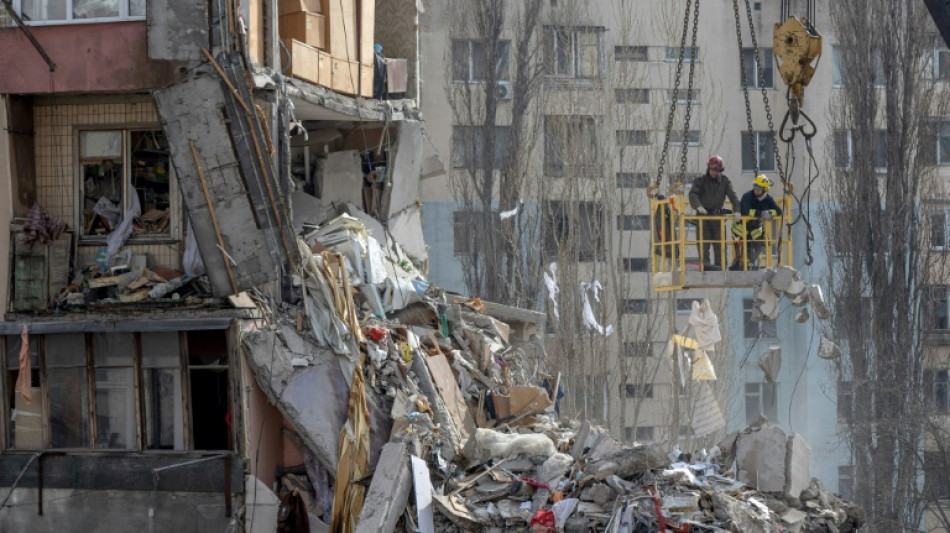
The strike on an apartment block in the southern port city early Saturday morning partially destroyed several floors, leaving more than a dozen people under the rubble.
The attack killed five children, including two babies less than a year old, according to statements by Zelensky and the regional governor.
"Mark, who was not even three years old, Yelyzaveta, eight months old, and Timofey, four months old," Zelensky said, naming the youngest victims of the strike in a post on Telegram.
"Ukrainian children are Russia's military targets," he added.
Rescuers were still pulling bodies from the rubble on Sunday evening, more than 36 hours after the strike, although Zelensky said the search and rescue operation had been called off.
He had pleaded Saturday with Kyiv's Western allies to supply more air-defence systems as Russia continued to pound Ukraine with drones, missiles and artillery fire in the war's third year.
Kyiv is currently on the back foot, following recent battlefield gains by Russia.
Zelensky said this latest strike underlined the importance of supporting Ukraine. A stalled $60-billion aid package from the United States has left Kyiv facing ammunition shortages.
"We are waiting for supplies that are vitally necessary, we are waiting, in particular, for an American solution," Zelensky said later Sunday in his evening address.
Russia had lost 15 military aircraft since the beginning of February, he added. "The more opportunities we have to shoot down Russian aircraft... the more Ukrainian lives will be saved."
- Bodies huddled together -
There was no comment on the Odesa attack in Moscow. It denies targeting civilians despite evidence of Russian strikes on residential areas and the United Nations having verified at least 10,000 civilian deaths since Russia invaded Ukraine in February 2022.
Ukraine's emergency services said they had found the bodies of families huddled together as they sifted through the rubble Sunday.
"A mother tried to cover her eight-month-old baby with her body. They were found in a tight embrace," the agency said on Telegram.
Odesa Governor Oleg Kiper said the bodies of a brother and sister, aged 10 and eight, were also found together in the debris on Sunday evening.
In other incidents, Ukraine's interior ministry reported one death and three people wounded in the southern Kherson region; and police said an airstrike on a residential quarter of Kurakhove, a town in the eastern Donetsk region, had wounded 16 people.
Russian military bloggers also reported a massive Ukrainian drone attack on the annexed peninsula of Crimea overnight.
Moscow said it shot down 38 Ukrainian drones, while the Rybar Telegram channel, close to Russia's armed forces, said one had hit a pipeline at an oil depot, the presumed target of the attack.
Kyiv has hit several Russian oil facilities in recent months in what it has called fair retribution for Moscow's attacks on Ukraine's power grid.
- 'Information war' -
A senior Ukrainian commander also accused Russian forces of dropping explosives containing an unspecified chemical substance over the battlefield, and said the situation on the front lines was "complicated, but under control".
A 38-minute recording of German officers discussing the possible use of German-made Taurus missiles by Ukraine and their potential impact was posted on Russian social media late Friday.
Russia has demanded an explanation from Berlin.
German Defence Minister Boris Pistorius said Sunday that Moscow was "using this recording to destabilise and unsettle us", adding that this was part of Putin's "information war".
M.Lenaerts--LCdB