UK govt woos voters with more pre-election tax cuts / Photo: - - PRU/AFP
Britain's embattled Conservative government on Wednesday announced a fresh tax cut for millions of workers to woo voters before a general election expected this year.
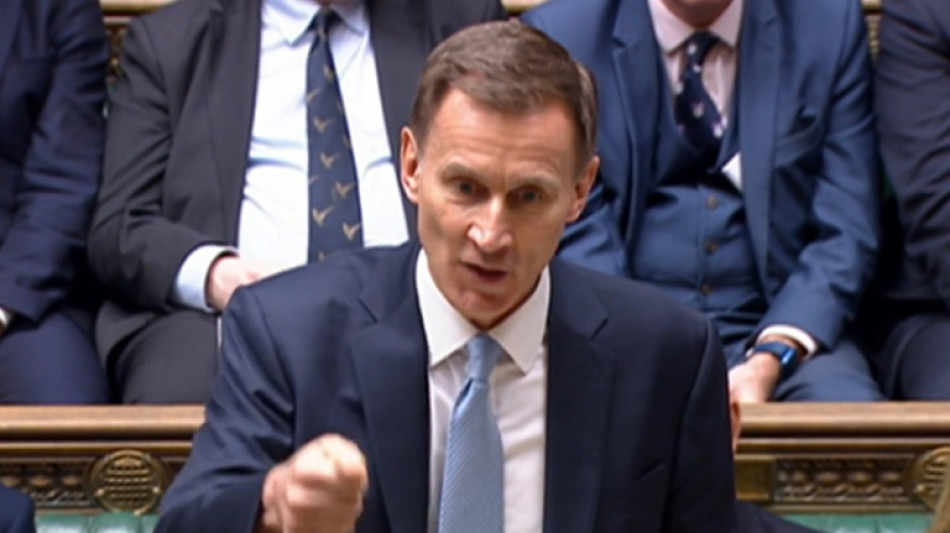
In a budget update, finance minister Jeremy Hunt said the government would cut national insurance -- a payrolls tax paid by employees and employers -- by two percentage points from April, matching action he took in November.
It remains to be seen whether the latest move, reportedly worth a total of £10 billion ($12.7 billion), would win over voters.
The right-wing Conservatives, led by Prime Minister Rishi Sunak, have been in power since 2010 but were well behind the main opposition Labour party in opinion polls ahead of Wednesday's budget.
Analysts said Hunt's latest tax cut was far from being a huge giveaway, as elevated inflation forces up repayments on state borrowing, undermining the government's ability to stimulate the recession-mired UK economy.
- 'Progress made' -
"Keeping taxes down matters to Conservatives in a way it never can for Labour," Chancellor of the Exchequer Hunt told parliament.
"Of course interest rates remain high as we bring down inflation, but because of the progress we have made... we can now help families not just with temporary cost-of-living support, but with permanent cuts in taxation," he added.
The budget featured also plans for better value-for-money in public services, notably the National Health Service, and improved benefits for families with children.
There were also tax rises, with Hunt unveiling a future levy on vaping, already the subject of a major crackdown by Sunak's administration.
And he extended by a year, until 2029, a windfall tax on the profits of oil and gas companies, whose revenues have soared following the invasion of Ukraine by major fossil-fuels producer Russia.
The Tories also used the budget to partially steal Labour's thunder, by tightening a loophole enabling Britain's wealthiest residents to reduce their tax bill.
Labour has vowed to end the loophole that allows those with "non-dom" status, who live in Britain but whose permanent domicile is abroad, to avoid UK tax on income earned outside the country.
Hunt said the government would replace the current system with a stricter process.
Sunak hopes the latest tax and spending announcements will help the Tories close the gap on Keir Starmer's resurgent Labour Party ahead of the elections.
But with centre-left Labour having had a clear lead in polling since October 2022 and the gap currently at about 20 points, Sunak has a mountain to climb.
"It may be that Jeremy Hunt has decided this is all he can afford to offer right now," noted Sarah Coles, head of personal finance at Hargreaves Lansdown.
She added that about 27 million people would have an average of £450 ($573) more disposable income a year from the latest cut to national insurance.
"The question will be whether it's a enough of a blockbuster tax cut to move the dial on a general election," Coles said.
- Economic recovery -
Brushing off the threat posed by recession, Hunt on Wednesday said that "under Conservative governments since 2010, growth has been higher than every large European economy".
The chancellor added that British gross domestic product was expected to expand 0.8 percent this year, citing the UK's fiscal watchdog, the Office for Budget Responsibility.
This was only slightly up on a previous OBR forecast of 0.7-percent growth.
While UK inflation is easing, a current annual rate of four percent is still double the Bank of England's target.
UK inflation was expected to fall below two percent this year, according to the latest OBR forecast.
R.Michiels--LCdB