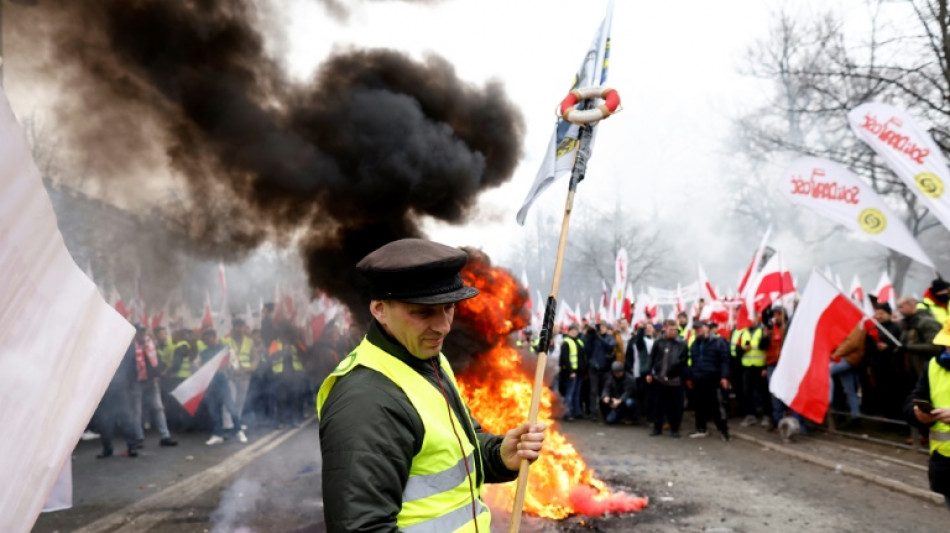
Angry Polish farmers protest EU rules, Ukraine farm imports / Photo: Wojtek Radwanski - AFP
Thousands of angry farmers descended on the Polish capital on Wednesday to protest EU environmental rules and cheap imports from Ukraine and elsewhere outside the bloc.
Blowing horns, throwing smoke bombs and firecrackers and lighting fires, the farmers gathered outside the prime minister's office in Warsaw, while others used their tractors to block highways nationwide.
"I want to produce healthy food but we're importing products lower in quality than ours with which we can't compete in terms of price," said protester Jan Kepa, who has a farm in southwestern Poland.
"We still have hope but we've been protesting for over a month and so far there's been no satisfying solution for us," he told AFP.
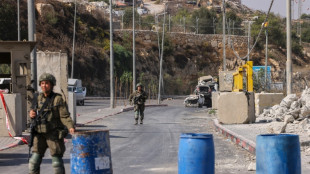
Polish farmers have also been blocking border crossings with Ukraine since last month to protest at what they say is unfair competition from goods entering the Polish market from Ukraine.
Ukraine, once dubbed "Europe's breadbasket", has seen its agriculture sector crippled by Russia's invasion.
Many of its major export routes through the Black Sea have been blocked and its farmland rendered unusable by warfare.
In a bid to help Kyiv economically, the European Union in 2022 scrapped tariffs on Ukrainian goods transiting the 27-nation bloc by road.
But logistical problems mean a lot of the Ukrainian cereal exports destined for non-EU countries have accumulated in Poland, undercutting local producers.
- 'Absurd regulations' -
The border blockades and grain dispute have put a strain on ties between Poland and Ukraine, even as Warsaw has shown its neighbour staunch support since the Russian invasion.
Farmers in several other EU countries have also been protesting for weeks.
Warsaw protester Tomasz Stachow, who owns a farm in southern Poland, told AFP that he wants to "live with dignity above all".
"And at the moment, prices are below the break-even point," he said, denouncing the European "Green Deal", a set of laws aimed at helping the bloc meet its climate goals.
"These are absurd regulations that farmers must conform to, which will only make the situation worse and raise production costs and product prices."
Prime Minister Donald Tusk said last week the government was mulling a temporary closure of the border with Ukraine for goods.
Tusk said EU-wide sanctions would make it possible to "more effectively protect the EU's agricultural and food markets" and "fully open up the possibilities of exporting Ukrainian produce... to third countries".
Tusk is due to hold talks with Polish farmers on Saturday.
A.Louis--LCdB