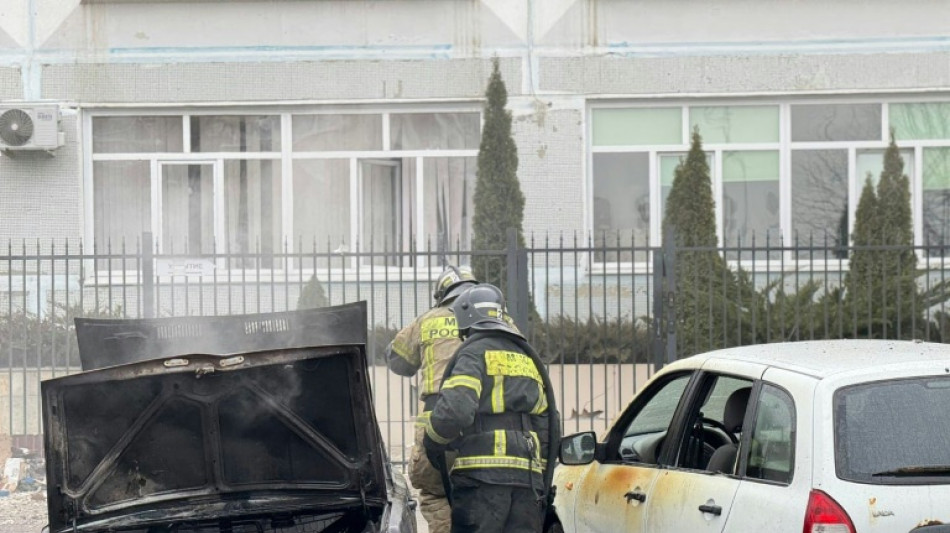
Fatal Ukrainian strikes rock Russia with voting underway / Photo: Handout - Telegram / @vvgladkov/AFP
Ukrainian bombardments killed two people in a Russian border region on Saturday, its governor said, on the second day of presidential elections in Russia guaranteed to cement Vladimir Putin's hardline rule.
Polls opened this week but voting has been marred by an uptick in fatal Ukrainian bombardments and a series of incursions into Russian territory by pro-Ukrainian sabotage groups.
Putin, who cast his vote online, vowed a harsh response to the assaults and accused Kyiv of trying to "disrupt" his bid for another six-year mandate.
The governor of the Russian frontier region of Belgorod said air defence systems had downed eight Ukrainian missiles but that two residents were killed and others injured.
"A man was driving a lorry when a shell hit him, after which the car crashed into a passenger bus. The people on it were not injured," Vyacheslav Gladkov wrote on social media.
"Another woman was killed in a parking lot where she and her son came to feed the dogs. Medics are fighting for her son's life," he added.
Russia's defence ministry earlier said it had downed rockets, missiles and drones in the border regions of Belgorod and Kursk that have suffered an uptick in fatal attacks in recent weeks.
Unverified images of the attack circulating on social media showed a large blast destroying a car and sending debris into the air.
- Oil facility ablaze -
Putin said on Friday in televised comments that the spate of aerial and ground assaults by Kyiv's forces "will not go unpunished".
The 71-year-old has been in power in Russia since the last day of 1999 and is set to extend his grip over the country until 2030.
If Putin completes another Kremlin term, he would stay in power longer than any Russian leader since Catherine the Great in the 18th century.
He is running unchallenged, having barred two candidates who opposed the conflict in Ukraine, and around one month after his main opponent, Alexei Navalny, died in an Arctic prison in unexplained circumstances.
The Kremlin has cast the election as an opportunity for Russians to show they are behind Moscow's full-scale military campaign in Ukraine, where voting is also being staged in occupied territory.
The first day of voting was however marred by acts of vandalism in polling stations, with a spate of arrests of Russians accused of pouring dye into ballot boxes or arson attacks.
And the ruling United Russia party that staunchly backs Putin announced Saturday it was suffering a large-scale hacking attack on its website.
The FSB security services also announced a spate of arrests, as polls opened, of Russians it said were aiding Ukrainian forces or planning to carry out sabotage acts at military and transport facilities.
On Saturday, they said they had detained a Russian man who was plotting with Kyiv's help to set explosive devices on a railway line in the country's central Urals region.
The governor of the Samara region that lies some 1,000 kilometres (620 miles) from the Ukrainian border said Saturday that Ukrainian drones had targeted two oil refineries, igniting a blaze at one of them.
U.Smet--LCdB