Deadly strikes hit Gaza as Israel mulls truce talks position / Photo: - - AFP
At least 61 Palestinians were killed in overnight Israeli bombardment, the health ministry in Hamas-run Gaza said Sunday, as Israel was preparing to send negotiators to new truce talks in Qatar.
Israel's security cabinet and the smaller war cabinet were to meet to "decide on the mandate of the delegation in charge of the negotiations before its departure for Doha," the prime minister's office said.
Its statement did not specify when the delegation would leave for the latest round of talks which comes after Hamas submitted a new proposal for a pause in fighting and hostage release.
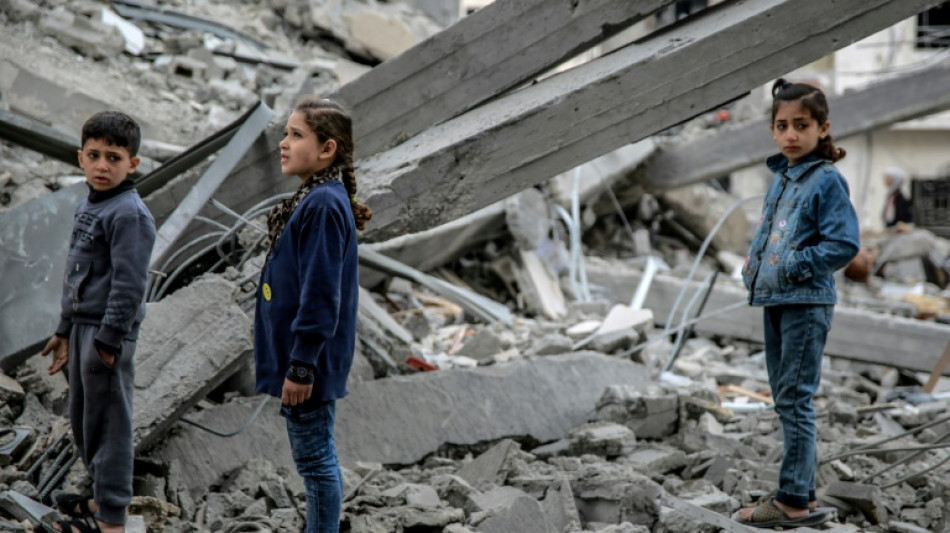
More than five months of war and an Israeli siege have led to dire humanitarian conditions in the Gaza Strip, where the United Nations has repeatedly warned of looming famine for the coastal territory's 2.4 million people.
As the flow of aid trucks into Gaza has slowed, a second ship was due to depart from Cyprus along a new maritime corridor to bring food and relief goods, Cypriot officials said.
On Saturday the US charity World Central Kitchen said its team had finished unloading supplies from a barge towed by Spanish aid vessel Open Arms which had pioneered the sea route.
The United Nations has reported particular difficulty in accessing north Gaza, where residents say they have resorted to eating animal fodder, and where some have stormed the few aid trucks that have made it through.
Shelling and clashes were reported in south Gaza's main city of Khan Yunis and elsewhere.
The territory's health ministry said 12 members of the same family, whose house in Deir al-Balah was hit, were among those killed overnight.
The head of the UN's World Health Organisation, Tedros Adhanom Ghebreyesus, appealed to Israel "in the name of humanity" not to launch an assault on Rafah.
- 'Humanitarian catastrophe' -
An evacuation planned by the Israeli army ahead of launching its assault was not a practical solution, Tedros argued, noting that Palestinians there do not "have anywhere safe to move to".
"This humanitarian catastrophe must not be allowed to worsen," he said on social media platform X.
The war was triggered by Hamas's October 7 attack on southern Israel that resulted in about 1,160 deaths, mostly civilians, according to an AFP tally of official figures.
Israel's retaliatory campaign against Hamas has killed at least 31,645 people in Gaza, most of them women and children, according to the health ministry.
Palestinian militants also seized about 250 Israeli and foreign hostages in the attack. Dozens were released during a week-long truce in November, and Israel believes about 130 remain in Gaza including 32 presumed dead.
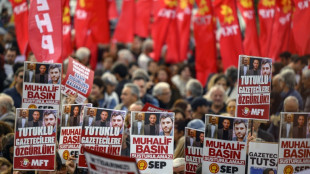
Israeli Prime Minister Benjamin Netanyahu has faced domestic pressure to secure the release of the captives, with protesters in Tel Aviv on Saturday carrying banners urging a "hostage deal now".
"The civilians... need to demand from their leaders to do the right thing," said demonstrator Omer Keidar, 27.
The Hamas proposal calls for an Israeli withdrawal from "all cities and populated areas" in Gaza during a six-week truce and more humanitarian aid, according to an official from the Palestinian group.
With the situation on the ground increasingly dire, aid donors have turned to deliveries by air or sea.
Multiple governments have begun daily airdrops of food over Gaza, while the new maritime corridor is to be complemented by a US-military-built temporary pier.
- Malnutrition and disease -
But air and sea missions are no alternative to land deliveries, UN agencies say. Humanitarian groups have cited Israeli restrictions as among the obstacles they face.
The United States, which provides Israel with billions of dollars in military assistance, has also grown increasingly critical of Netanyahu over his handling of the war.
Washington has said it cannot support Israel's long-threatened operation against Hamas in Rafah without a "credible, achievable, executable plan" to protect Palestinian civilians.
The crisis has only grown worse in Rafah, said medical staff at a clinic run by Palestinian volunteers that offers treatment for displaced Gazans.
"We're facing shortages of medications, especially paediatric medicines," said Dr Samar Gregea, herself displaced from Gaza City in the north.
"Children require foods high in sugars, like dates, which are currently unavailable."
G.Wouters--LCdB