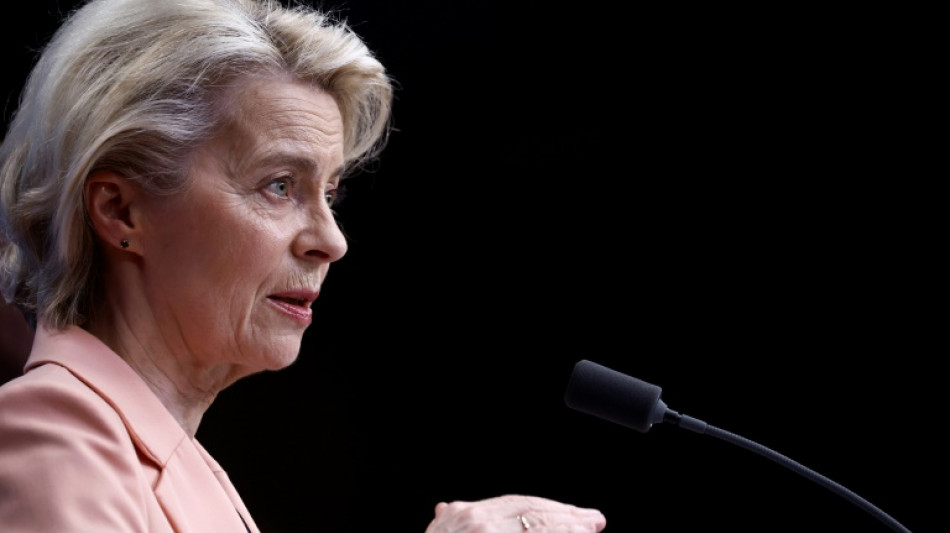
EU agrees to move ahead on using Russian assets for Ukraine / Photo: KENZO TRIBOUILLARD - AFP
EU leaders on Thursday agreed to "take work forward" on a plan to use the profits from frozen Russian central bank assets to arm Ukraine, as Kyiv pleaded for more ammunition for its outgunned forces.
More than two years into Moscow's war against its neighbour, Kyiv's troops are struggling to hold back the Russian army as Western deliveries of weapons have faltered.
Meanwhile, Putin has tightened his iron grip over his country by winning a new six-year term at elections after opposition was crushed.
The proposal, at the heart of talks between leaders at a summit in Brussels, could unlock some three billion euros ($3.3 billion) a year for Kyiv -- once given a final green light.
"I'm glad that leaders endorsed our proposal to use the extraordinary revenues from immobilised Russian assets. This will provide funding for military equipment to Ukraine," European Commission chief Ursula von der Leyen told reporters.
The EU froze around 200 billion euros of Russian central bank assets held in the bloc as part of punishing sanctions imposed on Moscow for sending troops into its neighbour in February 2022.
The push by the EU to find more funds for Ukraine comes as a $60 billion support package from the United States, Kyiv's other major backer, remains blocked in Congress.
Addressing the EU's 27 leaders via video link, Ukrainian President Volodymyr Zelensky told them the shortfall in ammunition facing his troops was "humiliating" for Europe.
"Europe can provide more -- and it is crucial to prove it now," he said, also calling for additional air-defence systems in the wake of a large-scale strike on Kyiv.
- Kremlin threatens retaliation -
EU leaders insisted the plan to target the interest being made by the frozen assets was legally sound.
But the Kremlin warned it would use legal and "other methods of retaliation" to hit back.
Alongside the efforts to get more weapons to Kyiv, the leaders debated ways to boost Europe's defence industry to be able to arm Ukraine and build up its own forces.
Brussels has put forward a raft of proposals aimed at ramping up capacity but there are complaints that Europe is still not moving fast enough.
While Russia has put its economy on a war footing, the EU has fallen well short of a promise made last year to supply Ukraine with a million artillery shells by this month.
But the Czech Republic has spearheaded its own initiative aimed at getting hundreds of thousands of shells available around the world to send to Kyiv.
France and Estonia pitched the idea of using joint borrowing -- similar to the massive package of support the EU came up with during the Covid pandemic -- to fund defence spending.
But a majority of member states, led by so-called "frugal" countries such as Germany, have flatly rejected going anywhere near that far.
Instead, the leaders issued a call for the EU's lending arm, the European Investment Bank, to expand its funding for the defence sector.
At the moment, the bank is limited to investing in only a small number of "dual-use products" that can have both military and civilian functions.
- Call for Gaza truce -
While the response to the conflict in Ukraine dominated the summit, EU leaders managed to put on a rare show of unity on the war in Gaza.
The leaders -- split between staunch supporters of Israel and those who are more pro-Palestinian -- said they were "appalled by the unprecedented loss of civilian lives and the critical humanitarian situation".
Closer to home, they also gave a green light to opening membership talks with Bosnia, as Russia's war has sparked a push to expand the bloc.
But they tempered the good news by saying that the negotiations could only begin in earnest once the Balkan country has completed more reforms.
V.Renard--LCdB