Anti-migrant rhetoric surging amid flurry of elections: UN / Photo: Herika MARTINEZ - AFP
With 2024 set to see more elections worldwide than any previous year, the United Nations' migration chief says increasing anti-migrant rhetoric from politicians seeking to score points is harming societies.
While the expected rematch between US President Joe Biden and his predecessor Donald Trump in November has drawn keen attention, numerous other high-stakes ballots are also coming up this year.
Amy Pope, who last year became the first woman to head the UN's International Organization for Migration (IOM), told AFP in an interview this week that with so many elections looming, anti-migrant rhetoric was ramping up "around the world ... to fuel campaigns".
Politicians, the IOM head said, were taking "what can be a very easy route to lay whatever has gone wrong within society, whether it's crime rates or inflation, unemployment or insecurity ... at the feet of migrants".
With around half the global population due to go to the polls in 2024, migrants were "easy" targets, she said, because "migrants don't vote".
In the United States, where migration has arguably become one of the main focuses of the presidential contest, Trump has claimed there is an "invasion" at the southern border, and suggested recently that some of those entering the country are "not people".
Such comments can have serious consequences, warned Pope, a 50-year-old US lawyer who has worked for both Democratic and Republican administrations.
- 'Dehumanising' -
"When there's dehumanising of any population, there are increasing reports of violence, increasing reports of discrimination," she said.
"Ultimately, that is bad for society."
And, she stressed, the fear-mongering is rarely rooted in what is happening on the ground.
"Rhetoric and reality just don't meet," she said.
Some countries where anti-migrant rhetoric is rampant actually need more migrants to keep their societies thriving, she said, pointing for instance to the significant "labour shortages in countries across Europe".
"In reality, the need for migration is not only existent... but it is going to increase fairly significantly in future years."
In the United States, meanwhile, Pope pointed to a recent report by The Economist magazine indicating that high immigration enabled the US economy to rebound quickly after the Covid-19 pandemic.
Migration meant the country "had enough people to come in and drive the innovation, the labour, the economic demands", she said.
Pope said a more positive narrative around migration was vital, as was creating more safe and legal migration pathways for people to travel.
Recent IOM statistics showed that 8,565 people died on irregular migrant routes across treacherous deserts and seas in 2023, making it the deadliest year since records began a decade ago.
"Certainly the (real) number is much, much, much higher," she acknowledged, adding that the upward trend was likely to continue.
"The number of people on the move is at a historic high and the pressures on them to move are only going to grow," she said.
- 'Needs are urgent' -
Creating more safe and regular migration pathways was the best way to avoid people setting off on dangerous journeys, Pope said, adding that it would also benefit the countries they are trying to reach.
"No-one wants to see large numbers of irregular migrants come across borders or come across the Mediterranean or come across the Channel," she said, acknowledging that that can "create pressures on societies".
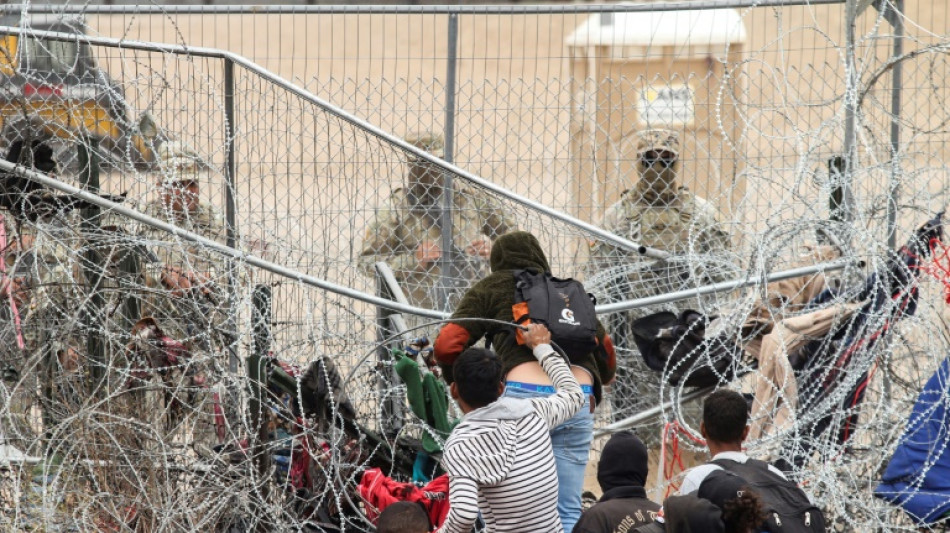
Asked about the situation at the US southern border, Pope said her "number-one concern is that people have the right to seek asylum".
At the same time, Pope warned that the huge US backlog of cases indicated that asylum was seen as the only route into the country.
"This points to the real urgency to come up with better ways of dealing with (US) migration needs," she said.
Without finding a "better match between people and opportunity, we will continue to see pressure at the border".
C.Timmermans--LCdB