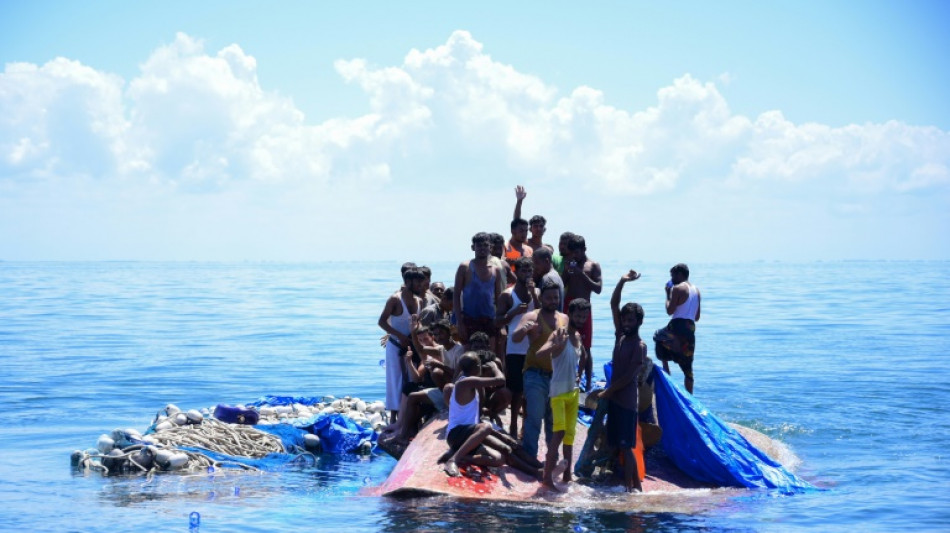
Indonesia ends search for Rohingya refugees after boat capsized / Photo: Zahlul AKBAR - AFP
Indonesian rescuers called off the search for Rohingya refugees missing at sea after their boat capsized, despite reports from some of the survivors that dozens of people were swept away.
Friday's announcement comes a day after authorities staged a dramatic rescue of 69 Rohingya who had been adrift at sea for weeks, with many found clinging to the hull of their overturned vessel.
The mostly Muslim Rohingya are heavily persecuted in Myanmar, and thousands risk their lives each year on long and expensive sea journeys, often on flimsy boats, to try to reach Malaysia or Indonesia.
"The search ended on Thursday. All Rohingya refugees on top of the boat yesterday have been rescued," Muhammad Fathur Rachman, an official from the search and rescue agency in Aceh, said through a spokesperson.
The search ended because there was no list of passengers, he added.
Survivors estimated there were "around 150 people on the boat", West Aceh fishing community secretary-general Pawang Amiruddin told AFP by phone on Wednesday.
Those included the group of 69 who were found off Aceh Province on Thursday and six others who were rescued by fishermen a day earlier.
Survivors indicated many more may be missing, according to local fishermen and officials.
But rescuer Rachman said there was "no additional information that we received about missing persons, and there is no manifest of the boat".
"Our analysis is the boat cannot hold 150 people."
A protection associate for the United Nations refugee agency (UNHCR), Faisal Rahman, told AFP that one of the survivors said "the boat took 151 people -- once the boat capsized, approximately around 50 people (were) maybe missing and passed away".
- Local anger -
At least eight of the refugees were hospitalised on Thursday evening. The search and rescue agency said they were admitted for dehydration.
The others were taken to a temporary shelter at an old Red Cross building in a village near West Aceh district capital Meulaboh.
Many Acehnese, who themselves have memories of decades of bloody conflict, are sympathetic to the plight of their fellow Muslims.
But others say their patience has been tested, claiming the Rohingya consume scarce resources.
From mid-November to late January, 1,752 refugees, mostly women and children, landed in the Indonesian provinces of Aceh and North Sumatra, according to the UNHCR.
The UN agency said it was the biggest influx into the Muslim-majority country since 2015.
Z.Barbier--LCdB