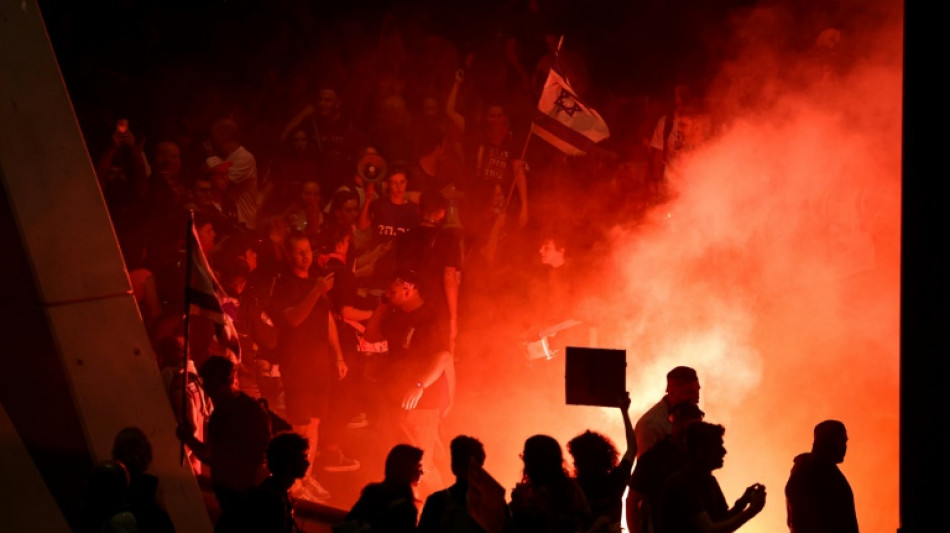
Israelis march against Netanyahu in mass protest / Photo: AHMAD GHARABLI - AFP
Thousands of Israelis calling for boosted efforts to free the hostages held in Gaza and the ouster of Prime Minister Benjamin Netanyahu marched in Jerusalem Sunday, the second consecutive night of mass protests.
Demonstrators blocked a main city highway after earlier rallying in front of the Israeli parliament, lighting fires and waving Israeli flags.
Police used water cannon against them, jostling and pushing protesters back as they shouted that Netanyahu "must go".
Protesters claimed the Jerusalem protest was the biggest since the war in Gaza broke out in October.
Pressure has been growing on Netanyahu as those opposed to his ring-wing government and the hostages' families have found common cause.
Families of the hostages held in Gaza say they will take to the streets every night this week in a bid to "bring them home".
Thousands who gathered Saturday in two separate protests in Tel Aviv -- Israel's largest city -- blocked the city main motorway for nearly two hours.
Others picketed Netanyahu's Jerusalem home Saturday chanting slogans and calling for him to quit.
- Calls for elections -
Protester Dana Rabfogel Shor, who demonstrated on both nights, told AFP that anger at Netanyahu over the Hamas's October 7 attack and his handling of the country was reaching boiling point.
"People are raging, they are tired, they want elections. They blame Bibi (Netanyahu) and the government, which says it is not responsible for anything," she said.
The art therapist from Tel Aviv held a placard with a picture of her distant cousin Itay Svirsky, who was killed in the Hamas attack.
Many protesters carried placards of Netanyahu's face covered in blood, accusing him of failing to protect the country from Hamas.
"UR the boss, UR to blame," read messages written on signs held by the protesters. Others said "Elections now!"
Even before the war, Netanyahu -- who said he is having to undergo hernia surgery -- faced months of street protests over controversial judicial reform.
Israel has been traumatised by the unprecedented Hamas attack that resulted in about 1,160 deaths in Israel, mostly civilians, according to an AFP tally of Israeli official figures.
Israel's retaliatory campaign has killed at least 32,782 people, mostly women and children, according to the health ministry in Hamas-run Gaza.
B.Hendrix--LCdB