Bodies of foreign aid workers killed in Gaza strike to be repatriated / Photo: - - AFP
The bodies of six foreign aid workers killed in a Gaza strike were expected to be transported out of the war-torn Palestinian territory via Egypt on Wednesday as Israel faced a chorus of outrage over their deaths.
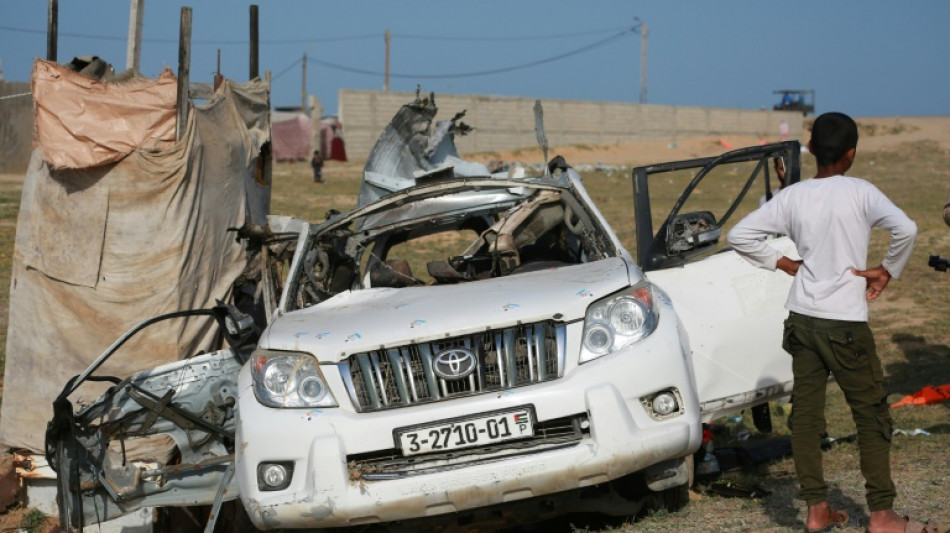
Israeli bombardment killed seven staff of the US-based food charity World Central Kitchen on Monday in an attack that UN chief Antonio Guterres labelled "unconscionable" and "an inevitable result of the way the war is being conducted".
The remains of the six international staff, who were killed alongside one Palestinian colleague, were set to be taken out of Gaza through the Rafah crossing with Egypt, said Marwan Al-Hams, director of the city's Abu Youssef Al-Najjar Hospital.
Israel's armed forces chief Herzi Halevi called the attack a "grave mistake", which he blamed on nightime "misidentification", adding in a video message that "we are sorry for the unintentional harm to the members of WCK".
Israeli Prime Minister Benjamin Netanyahu had earlier pledged the "tragic case" would be investigated "right to the end".
The seven deaths piled more pressure on Israel, whose war since the Hamas attack of October 7 has brought devastation and mass civilian casualties to Gaza, where the UN warns the population of 2.4 million is on the brink of famine.
US President Joe Biden charged that Israel "has not done enough to protect aid workers trying to deliver desperately needed help to civilians" and called for a "swift" investigation into what he said was not a "stand-alone incident".
- 'Anger and concern' -
Australian Prime Minister Anthony Albanese said he had voiced his "anger and concern" in a phone call with Netanyahu, while Britain summoned the Israeli ambassador and demanded "full accountability".
Poland's Prime Minister Donald Tusk wrote on X to Netanyahu and Israel's ambassador, saying "the tragic attack against volunteers and your reaction are generating an understandable anger."
The charity said it was mourning the loss of its seven "heroes" and "beautiful souls". It said they had been killed in a "targeted attack" that was launched despite the group having coordinated its movements with the Israeli forces.
It named those killed as Palestinian Saifeddine Issam Ayad Abutaha, 25; Australian Lalzawmi (Zomi) Frankcom, 43; Brits John Chapman, 57, James (Jim) Henderson, 33, and James Kirby, 47; Pole Damian Sobol, 35; and US-Canadian Jacob Flickinger, 33.
After their deaths, the charity suspended operations and a ship that had carried food aid from Cyprus to Gaza turned back to the Mediterranean island with around 240 tonnes of supplies that had not been unloaded.
- Mass protests -
The bloodiest-ever Gaza war erupted with Hamas's October 7 attack, which resulted in about 1,160 deaths in Israel, mostly civilians, according to an AFP tally based on Israeli official figures.
Israel's retaliatory campaign has killed at least 32,916 people, mostly women and children, according to the health ministry in Hamas-run Gaza.
Overnight, Israeli strikes killed at least 60 more people, the ministry said.
The army said its forces had "killed and apprehended a number of terrorists" in combat and an air strike, in fighting near the Al-Amal Hospital in the southern city of Khan Yunis, where they had also located numerous weapons.
Palestinian militants on October 7 also seized around 250 hostages. Israel believes about 130 remain in Gaza, including 34 who are presumed dead.
Thousands gathered in front of parliament Tuesday, with former prime minister Ehud Barak blaming Netanyahu for the October 7 "disaster" and demanding new elections.
The Palestinians, meanwhile, have revived their application to become a full member state in the United Nations.
In a letter to Guterres that was seen by AFP, Palestinian UN envoy Riyad Mansour requested "upon instructions of the Palestinian leadership" that an application dating back to 2011 be reconsidered this month by the Security Council.
burs-jm/fz/kir
X.Hardy--LCdB