Israel pounds Gaza as Iran attack threat puts region on edge / Photo: - - AFP
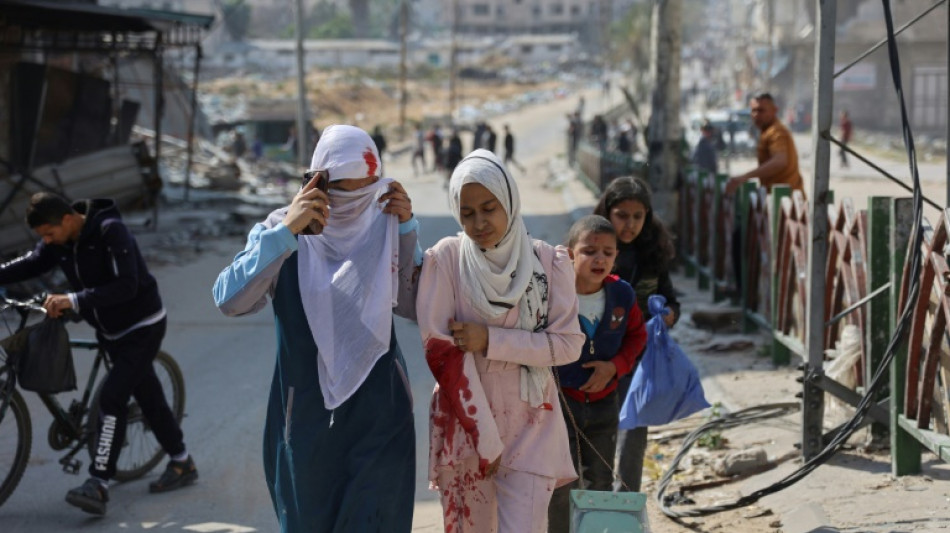
Residents reported heavy Israeli fire in central Gaza on Friday, with regional tensions soaring after Iran threatened reprisals over a strike in Syria this month that killed two Iranian generals.
As ceasefire talks aiming to pause the six-month-old war dragged on, fears that Iran could soon launch an attack on Israel spurred France to recommend its citizens avoid travelling to the region.
Mohammed al-Rayes, 61, told AFP that he fled Israeli "air strikes and artillery shelling" in Nuseirat, central Gaza overnight.
"It was all fire and destruction, with so many martyrs lying in the street," he said.
Another resident, Laila Nasser, 40, reported "shells and missiles" throughout the night.
"They will do to Nuseirat what they did to Khan Yunis," said Nasser, vowing to flee to the southernmost city of Rafah, like most of Gaza's population.
Israel last week pulled its troops from the devastated city of Khan Yunis after months of fighting, but officials said they were preparing for operations against Hamas militants in Rafah, near the Egyptian border.
Authorities in the Hamas-ruled coastal Palestinian territory on Friday reported dozens of new air strikes in Gaza's central region.
The Hamas media office said 25 people were taken to hospital in Deir al-Balah city "as a result of an air strike on a house of the al-Tabatibi family."
- Syria strikes -
Israel's military said its aircraft had struck more than 60 militant targets in Gaza over the previous day.
The war began with Hamas's unprecedented October 7 attack against Israel which resulted in the deaths of 1,170 people, mostly civilians, according to Israeli figures.
Israel's retaliatory offensive has killed at least 33,634 people in Gaza, mostly women and children, according to the territory's health ministry. The ministry's updated toll on Friday included at least 89 deaths over the previous day.
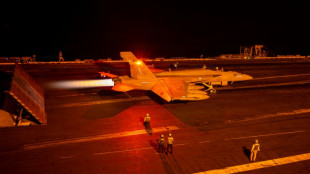
The latest bombardments in Gaza came after Israel said it was strengthening air defences and paused leave for combat units, following a deadly April 1 air strike that destroyed Iran's consulate building in Damascus.
Iran blamed Israel, its arch foe, which has stepped up strikes against Iran-linked targets in Syria since the Gaza war began.
Among the targets have been fighters from Lebanon's Hezbollah movement in Syria. The group has also exchanged regular deadly fire with Israel over the Lebanese border since October.
Iranian Foreign Minister Hossein Amir-Abdollahian said late Thursday he had received phone calls from German Foreign Minister Annalena Baerbock as well as her British and Australian counterparts.
- 'Significant attack' -
In a post on X, the Iranian minister said he had told them that "when the Zionist regime breaches the immunity of diplomatic persons and places" and the UN Security Council fails to condemn it, "legitimate defence... is a necessity".
He added that "Iran does not seek to expand the scope of the war."
United States President Joe Biden had on Wednesday said Iran is "threatening to launch a significant attack on Israel," and pledged "ironclad" support for Washington's top regional ally despite diplomatic tensions over Israel's military conduct in Gaza.
US Central Command chief, General Michael Kurilla, was in Israel on Thursday to discuss the situation with Defence Minister Yoav Gallant, the Pentagon said.
France on Friday warned its nationals against travelling to Iran, Israel, Lebanon or the Palestinian territories, after the US embassy in Israel announced it was restricting the movements of its diplomats over security fears.
Moscow and Berlin urged restraint.
German airline Lufthansa extended a temporary suspension of flights to and from Tehran until Saturday.
In their October attack, Hamas militants seized about 250 hostages, 129 of whom remain in Gaza, including 34 the Israeli army says are dead.
Netanyahu leads a coalition including religious and ultra-nationalist parties, and is under pressure from anti-government protesters and relatives of the hostages demanding the government get them home.
Tens of thousands have taken to the streets.
On Thursday night, hundreds demonstrated near Netanyahu's Jerusalem residence with a different call -- for the war to continue.
- Father's appeal -
"You, members of the cabinet, must state clearly that the fighting will not stop, that the IDF and our good sons will continue to crush the enemy until a complete victory," said Itzik Buntzel, the father of Israeli soldier Amit Buntzel who was killed in Gaza.
Washington has ramped up pressure on Netanyahu to agree to a truce, increase aid flows and abandon plans to send troops into Rafah.
Israeli Defence Minister Gallant said on Wednesday that Israel would "flood Gaza with aid", using an Israeli crossing point, streamlined checks, the Ashdod port and two new routes organised with Jordan.
However, on Thursday the United Nations Security Council said "more should be done to bring the required relief given the scale of needs in Gaza".
The UN says famine is imminent in Gaza, much of which has been reduced to a bombed-out wasteland.
World Health Organization chief Tedros Adhanom Ghebreyesus said an assessment team that visited Khan Yunis found "destruction disproportionate to anything one can imagine" and three medical centres that were no longer functioning.
Truce talks which started on Sunday in Cairo have brought no breakthrough on a plan presented by US, Qatari and Egyptian mediators, which Hamas said it was studying.
The framework plan would halt fighting for six weeks and see the exchange of about 40 hostages for hundreds of Palestinian prisoners, as well as more aid deliveries.
Israel on Thursday accused Hamas of "walking away" from what government spokesman David Mencer called "a very reasonable offer on the table".
burs-jd/it/dl
U.Smet--LCdB