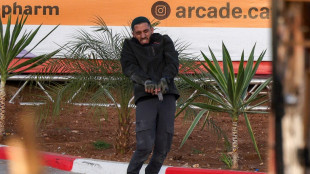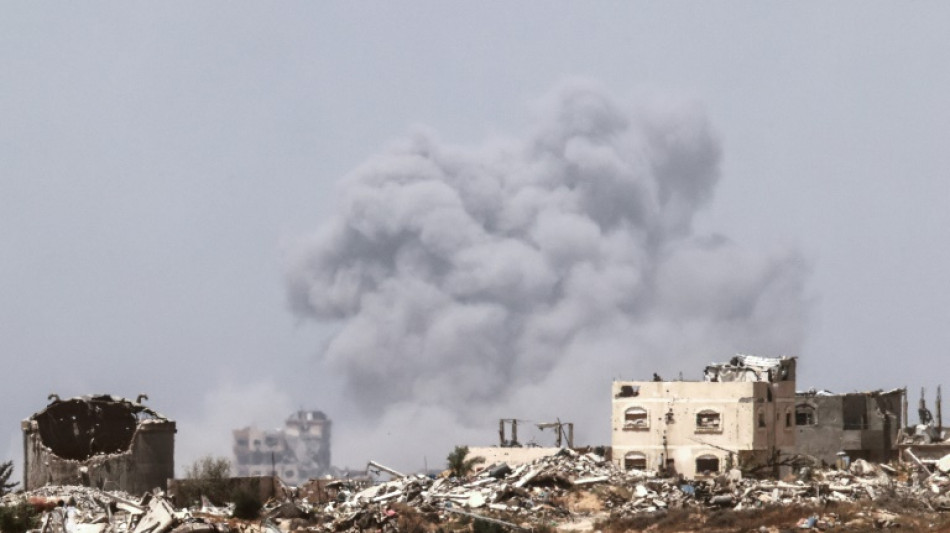
Israel launches 'offensive action' in Lebanon as Gaza pummelled / Photo: JACK GUEZ - AFP
Israel said Wednesday its forces were carrying out "offensive action" in Lebanon after launching cross-border strikes targeting Hamas ally Hezbollah as Israeli aircraft and tanks pounded the Gaza Strip.
Since the Israel-Hamas war erupted on October 7, Lebanon's powerful Iran-backed Hezbollah group and Israeli forces have traded near-daily fire, heightening fears of a wider conflict breaking out.
In war-battered Gaza, there has been mounting concern over Israeli plans to launch an assault on the southern Gazan city of Rafah, where 1.5 million people have sought refuge, many in makeshift encampments.
Aid groups warn any invasion would create catastrophic conditions for civilians, but government spokesman David Mencer said Israel was "moving ahead" with its operation in Rafah, which Israeli officials have described as the "last" major Hamas stronghold where militants may be holding hostages.
Hamas on Wednesday released a video showing a man it said was one of the 129 hostages Israel estimates remain in Gaza, a number that includes 34 presumed dead.
Also on Wednesday, US President Joe Biden signed a bill authorising $13 billion in military aid to close ally Israel.
The bill also included $1 billion in humanitarian aid for Gaza, which Biden demanded Israel allow reach Palestinians "without delay".
Regional tensions remain high more than 200 days into the devastating war, which was triggered by Hamas's October 7 attack on Israel.
Defence Minister Yoav Gallant said that "many forces are deployed" along Israel's northern border, claiming the military has eliminated "half of Hezbollah's commanders in southern Lebanon" in months of violence.
Israel has struck increasingly deeper into Lebanon, while Hezbollah has stepped up rocket fire and drone attacks on Israeli military bases across the border.
"IDF (military) forces are currently carrying out offensive action throughout southern Lebanon", Gallant said, without specifying whether ground troops had crossed the border.
- 'No safe place' -
Early Wednesday, hospital and security sources in Gaza reported Israeli air strikes in Rafah as well as the central Nuseirat refugee camp.
An AFP correspondent and witnesses reported heavy bombardment in northern Gaza overnight.
Government spokesman Mencer said "Israel is moving ahead with our operation to target Hamas in Rafah", without providing a timeline.
Israeli Prime Minister Benjamin Netanyahu has repeatedly insisted the assault on Rafah will go ahead, despite opposition from humanitarian groups and countries including the US.
Citing Egyptian officials briefed on the Israeli plans, the Wall Street Journal has said Israel was planning to move civilians to nearby Khan Yunis over a period of two to three weeks, before gradually sending in troops.
"There is no safe place in all of Gaza except for this area here," displaced Palestinian man Samer Felfel told AFP at a makeshift displacement camp near the territory's border with Egypt.
If Israeli troops enter Rafah, "there will be no safe place left", he added.
Satellite images shared by Maxar Technologies showed new blocks of tents that had been set up in recent weeks in southern Gaza.
Ismail al-Thawabta, head of the Hamas government media office said an invasion would be a "crime" and that central Gaza and Khan Yunis "cannot accommodate the numbers of displaced people in Rafah".
The war began with an unprecedented Hamas attack on October 7 that resulted in the deaths of around 1,170 people, according to an AFP tally of Israeli official figures.
In retaliation, Israel launched a military offensive that has killed at least 34,262 people in Gaza, mostly women and children, according to the Hamas-run territory's health ministry.
- 'We need our people home' -
Israeli media identified the hostage appearing in Hamas's latest video as 23-year-old Hersh Goldberg-Polin, a dual US-Israeli citizen kidnapped on October 7 from the site of a music festival near the Gaza border.
AFP has not been able to independently verify the authenticity and timing of the video which was posted on Hamas's official Telegram account.
His mother Rachel Goldberg said earlier this month "we need results" out of stalled mediation efforts to end the war and free the captives.
"We need our people home," she said.
Exchanges of fire between Israel and Lebanese militants since October 7 have killed at least 380 people in Lebanon, mostly Hezbollah fighters but also 72 civilians, according to an AFP tally.
Israel says 11 soldiers and eight civilians have been killed on its side of the border.
The Israeli army on Wednesday said its forces struck around 40 Hezbollah targets in southern Lebanon, with Lebanese official media reporting at least 13 strikes on several villages.
The strikes came after Hezbollah announced a fresh barrage of rockets across the border in retaliation for a deadly strike that killed two civilians.
Gallant said the military's objectives include enabling the safe return of residents of the border area displaced by the violence, who number in their tens of thousands in both northern Israel and southern Lebanon.
- Hospital bodies -
The European Union and the UN rights office have called for a probe into reports of mass graves found at the Gaza Strip's two biggest hospitals after Israeli raids.
Israel has repeatedly targeted hospitals during the war, accusing Hamas of using them as command centres and to hold hostages abducted on October 7. Hamas denies the accusations.
Gaza's Civil Defence agency said nearly 340 bodies were uncovered at the Nasser Hospital in the southern city of Khan Yunis.
The Israeli army said "corpses buried by Palestinians" had been examined by soldiers searching for hostages but did not directly address allegations that Israeli troops were behind the killings.
UN human rights office spokeswoman Ravina Shamdasani said some of the bodies found at Nasser Hospital were allegedly "found with their hands tied and stripped of their clothes", though efforts were underway to corroborate the reports.
The war has left much of Gaza in ruins, including the besieged territory's health system.
"We lack sufficient operating theatres to address them" as well as "specialised facilities" for kidney and heart patients, he said.
burs-pjm/ami/dl
F.Cornelis--LCdB