Thousands of Druze mourn youths killed in Golan rocket attack / Photo: Jalaa MAREY - AFP
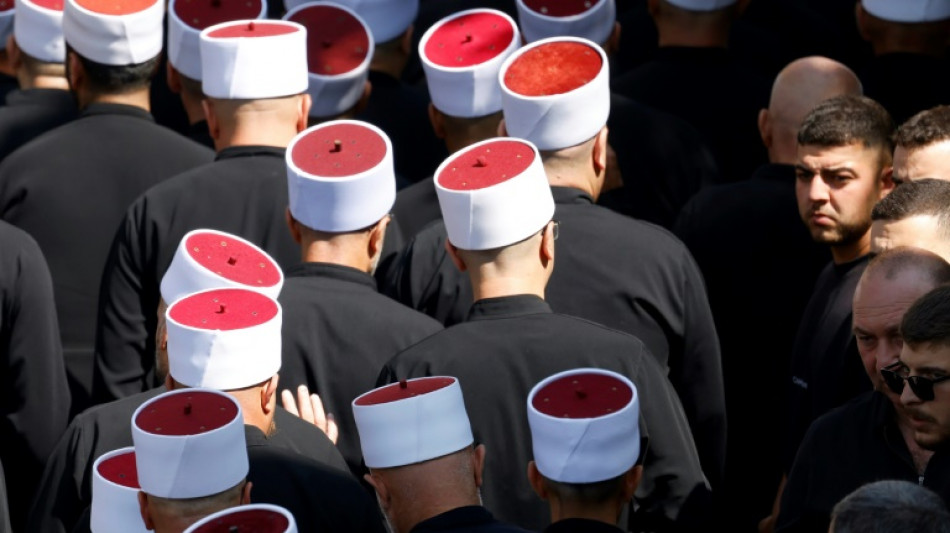
Thousands of Druze men and women, many dressed in black, arrived for the funeral Sunday of several of the 12 youths killed in a rocket attack on the Israeli annexed Golan Heights the day before.
The Israeli military said they were struck by an Iranian-made rocket carrying a 50-kilogram warhead that Lebanon's Iran-backed Hezbollah group fired at a football field in the Druze Arab town of Majdal Shams.
Hezbollah has denied responsibility for the strike.
Local authorities said the dead were aged between 10 and 16 years.
Druze follow an offshoot of Shiite Islam. Early on Sunday morning, Druze women gathered around the coffins covered in white shrouds ahead of the funeral.
Several women dressed in black abayas cried as they laid flowers on the caskets, an AFP correspondent reported.
Many held pink flowers, while hundreds of men dressed in traditional Druze attire, including white caps topped with red, arrived for the ceremonies.
"Everybody you see here is worried all the time," he said. "We are so very sad. We lost children, children playing soccer."
Under scorching sun, religious leaders led hundreds at a prayer meeting in a local municipal building, with the entire town at a standstill.
Shops closed, and checkpoints were set up at the entrance of every village in the Golan.
Israel's army called Saturday's rocket strike "the deadliest attack on Israeli civilians" since the October 7 attack by Hamas on southern Israel that triggered war in Gaza.
In Majdal Shams many residents have not accepted Israeli nationality since Israel seized the Golan Heights from Syria in 1967.
That October 7 attack resulted in the death of 1,197 people, mostly civilians, according to an AFP tally based on official Israeli figures.
Israel's military retaliation in Gaza has killed 39,324 people, according to the health ministry in the Hamas-run territory, which does not provide details on civilian and militant deaths.
Q.Ceulemans--LCdB