Hundreds in Qatar farewell slain Hamas chief / Photo: KARIM JAAFAR - AFP
Hundreds of people gathered at a mosque in Qatar on Friday to farewell slain Hamas leader Ismail Haniyeh after his killing in Tehran, an attack blamed on Israel that deepened fears of a regional war.
Haniyeh, the Palestinian armed group's political chief, played a key role in mediated talks aimed at ending nearly 10 months of war between Hamas and Israel in Gaza.
His killing triggered calls for revenge and raised questions about the continued viability of such negotiations.
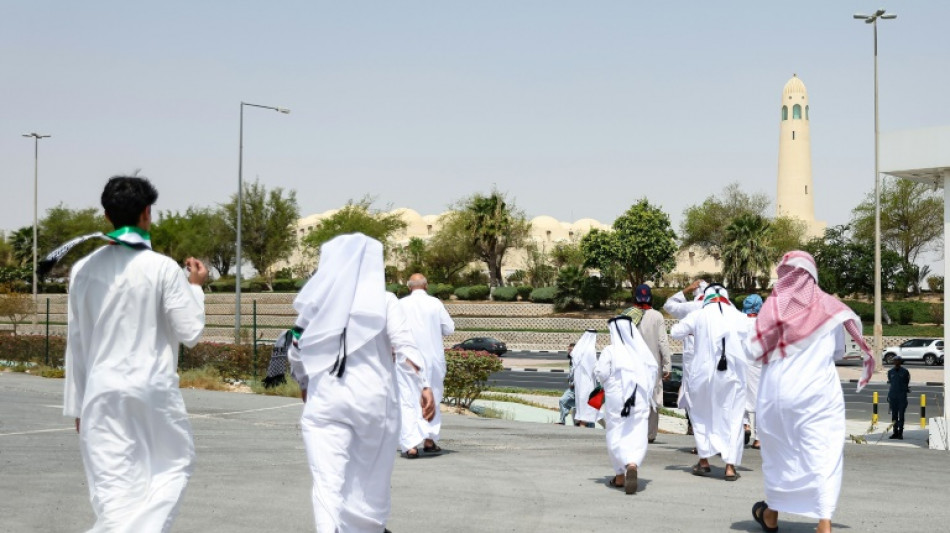
Mourners lined up for funeral prayers inside Imam Muhammad bin Abdul Wahhab Mosque, the Gulf emirate's largest. Others prayed on mats outside in temperatures that reached 44 degrees Celsius (111 degrees Fahrenheit).
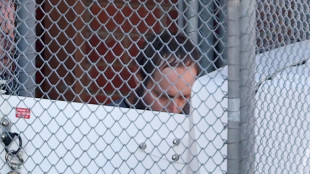
Draped in a Palestinian flag, his casket was carried briefly into the mosque before leaving again for burial in Lusail, north of the Qatari capital.
The killing of Qatar-based Haniyeh is among several incidents since April that have sent regional tensions soaring during the Gaza war which has drawn in Iran-backed militant groups in Syria, Lebanon, Iraq and Yemen.
Turkey and Pakistan announced a day of mourning on Friday to honour Haniyeh, while Hamas called for a "day of furious rage".
Many Doha mourners were dressed in crisp white traditional robes, others in street clothes. But most wore scarves that combined the Palestinian flag with a checkered keffiyeh pattern and the message in English: "Free Palestine".
Doha traffic police and Qatar's internal security forces monitored all approaches and police lined highway embankments adjoining the mosque grounds.
Iran's First Vice President Mohammad Reza Aref and Turkish Foreign Minister Hakan Fidan were among the officials due at the funeral.
- High-profile killings -
Haniyeh and a bodyguard were killed in a pre-dawn "hit" on their accommodation in Tehran early on Wednesday, Iran's Revolutionary Guards said. Haniyeh was in Iran to attend the swearing-in of President Masoud Pezeshkian a day earlier.
Israel, accused by Hamas, Iran and others of the attack, has not directly commented on it.
"Two scenarios were discussed: a simultaneous response from Iran and its allies or a staggered response from each party," said the source who had been briefed on the meeting and requested anonymity to discuss sensitive matters.
During the Gaza war, Hezbollah and Israeli forces have engaged in near-daily exchanges of fire, and did so again on Thursday.
The Hamas leader's assassination came hours after Israel struck a southern suburb of Beirut, killing Fuad Shukr, the military commander of Hezbollah which supports Hamas.
Haniyeh's deputy, Saleh al-Aruri, had already been killed in south Beirut early this year in a strike which a US defence official said Israel carried out.
In another high-profile killing, Israel's army on Thursday confirmed that an air strike in July killed Hamas military chief Mohammed Deif in Gaza.
Israel "delivered crushing blows to all our enemies", said Prime Minister Benjamin Netanyahu.
In Tehran on Thursday, Iran's supreme leader Ayatollah Ali Khamenei led prayers for Haniyeh, having earlier threatened "harsh punishment" for his killing.
Netanyahu has vowed to destroy Hamas in retaliation for its October 7 attack on Israel that ignited the war in Gaza.
The territory's Civil Defence agency on Friday reported several people killed in the Gaza City area, and Israel's military said it had killed around 30 militants near Rafah, in Gaza's south.
Hamas's October 7 attack resulted in the deaths of 1,197 people, mostly civilians, according to an AFP tally based on official Israeli figures.
Militants also seized 251 hostages, 111 of whom are still held captive in Gaza, including 39 the military says are dead.
Israel's retaliatory campaign against Hamas has killed at least 39,480 people in Gaza, according to the Hamas-run territory's health ministry, which does not give details of civilian and militant deaths.
- Deal 'off the table' -
The New York Times, citing Middle Eastern officials, reported that Haniyeh was killed by an explosive device planted several weeks ago at a Tehran guesthouse.
Asked about the report, Israeli military spokesman Daniel Hagari told journalists "there was no other Israeli aerial attack... in all the Middle East" on the night of Shukr's killing in Lebanon.
Hugh Lovatt, an analyst at the European Council on Foreign Relations, said Haniyeh's killing, at the very least "will mean that a ceasefire deal with Israel is now totally off of the table".
Still, the international community called for calm and a focus on a Gaza truce -- which Haniyeh had accused Israel of obstructing.
The White House said US President Joe Biden spoke with Netanyahu by telephone on Thursday and affirmed his commitment to defend Israel's security "against all threats from Iran".
"We have the basis for a ceasefire. He should move on it and they should move on it now," Biden told reporters after the call.
In Israel, hundreds of Israelis again marched in Tel Aviv to demand Netanyahu's government reach a deal that would bring home the remaining hostages.
Hezbollah chief Hassan Nasrallah, addressing the funeral of Shukr, said Israel and "those who are behind it must await our inevitable response" to the twin killings.
Israel said Shukr's assassination was a response to deadly rocket fire which killed 12 youths last week in the annexed Golan Heights.
P.Verhoeven--LCdB