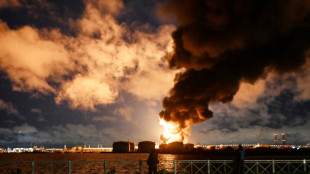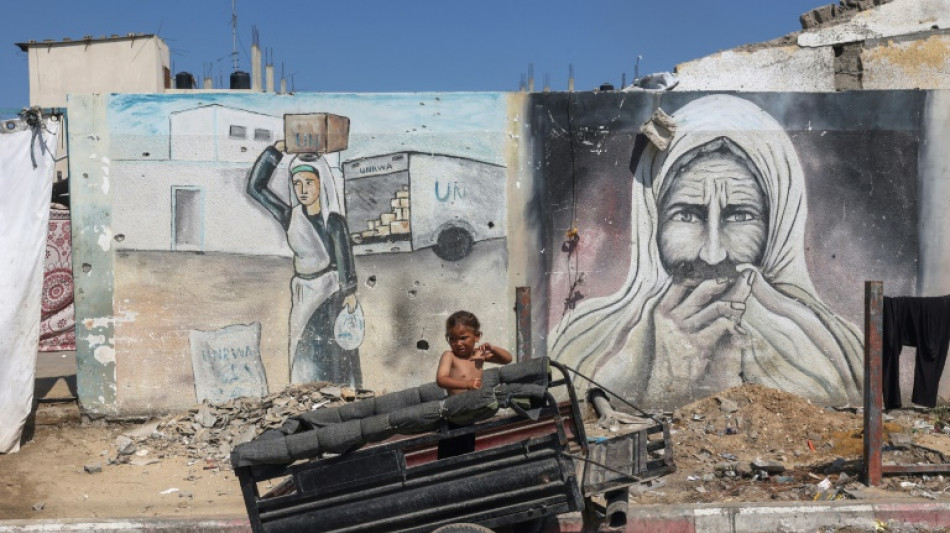
Israel pounds Gaza ahead of ceasefire talks / Photo: Eyad BABA - AFP
Israeli air strikes targeted Gaza on Wednesday ahead of ceasefire talks that the United States hopes will stop Iran striking Israel in retaliation for the killing of a Hamas leader.
Iran and its allies blamed Israel for the July 31 killing of Hamas political leader Ismail Haniyeh in Tehran during a visit for the inauguration of President Masoud Pezeshkian. Israel has not commented.
The West has urged Iran to stand down its threat to avenge his death, which came hours after an Israeli strike in Beirut killed a senior commander of Hezbollah, the powerful Iran-backed militant group in Lebanon.
The escalation has raised fears of a wider conflict after more than 10 months of war in Gaza, which has claimed nearly 40,000 lives, according to the health ministry in the Hamas-run Palestinian territory.
So far, there has been only one, week-long truce in the Gaza fighting, in November, when dozens of hostages in Gaza were released in exchange for Palestinian prisoners held in Israeli jails.
Ahead of Thursday's ceasefire talks, a Hamas official said the Islamist movement was "continuing its consultations with the mediators".
"Hamas really wants an end to the war and a ceasefire agreement on the basis of the (Biden) plan," another Hamas official said, referring to a proposal US President Joe Biden laid out on May 31.
The office of Israeli Prime Minister Benjamin Netanyahu on Tuesday detailed its conditions for a truce, including "a veto on certain prisoners" being released from its jails.
Biden said on Tuesday that a Gaza ceasefire deal could deter Iran from attacking Israel.
Asked if a truce between Israel and Hamas could stave off an Iranian assault, Biden said: "That's my expectation". He added that while negotiations were "getting hard", he was "not giving up".
His envoy for the conflict, Amos Hochstein, was in Beirut on Wednesday where he warned the clock was ticking for a Gaza ceasefire.
"There is no more time to waste and there's no more valid excuses from any party for any further delay," he said after talks with Lebanon's parliament speaker Nabih Berri.
Iran has rejected Western calls for restraint, with foreign ministry spokesman Nasser Kanani saying the demand "brazenly asks Iran to take no deterrent action against a regime which has violated its sovereignty and territorial integrity".
- Israel on 'high alert' -
Israeli President Isacc Herzog said on social media platform X that the country remained on "high alert".
"I want to express my appreciation and thanks to our allies standing united with us in the face of the hate-filled threats of the Iranian regime and its terrorist proxies," he said.
The escalation has prompted Western governments to issue advisories against travel to Lebanon as well as prepare contingency plans to evacuate their nationals from the region if full-scale war breaks out.
A ferry seen off Limassol, Cyprus was on standby to provide assistance "in the event of an evacuation of the conflict zone", a spokesperson for its charterer said.
Fearing an attack by Iran and Hezbollah, the Tel Aviv Museum of Art said it had stashed away its most valuable pieces, including paintings by Pablo Picasso and Gustav Klimt.
"In the last three, four, five days, when this new threat from Hezbollah and from Iran came on the table again, we understood that we needed to take other precautions," said museum director Tania Coen-Uzzielli.
The Biden administration approved more than $20 billion in new weapons sales to Israel on Tuesday, including 50 F-15 fighter jets.
The United States has deployed an aircraft carrier strike group and a guided missile submarine to the region in support of Israel.
- Gaza toll nears 40,000 -
The Gaza war began with Hamas's October 7 attack on southern Israel which resulted in the deaths of 1,198 people, mostly civilians, according to an AFP tally of Israeli official figures.
Militants also seized 251 people, 111 of whom are still held captive in Gaza, including 39 the military says are dead.
Israel's retaliatory military offensive in Gaza has killed at least 39,965 people, according to the latest toll from the territory's health ministry, which does not provide a breakdown of civilian and militant deaths.
In the latest violence, the Israeli military said it carried out dozens of air strikes across the Gaza Strip.
It said its troops were "continuing precise, intelligence-based operational activity in the area of Tel al-Sultan" in the southern city of Rafah.
In the past 24 hours, the army said it had "struck over 40" sites across Gaza, including structures from which militants fired anti-tank missiles.
Residents of central Gaza's Nuseirat refugee camp said it was struck by a missile after midnight.
"We were sleeping... and were surprised by a missile targeting the neighbours, children, their father and mother," Jihad al-Sharif told AFPTV.
"The explosion was terrible," he said, adding his family emerged to find the remains of children in the middle of the street.
burs-dv/kir
O.Seuren--LCdB