West Bank city buries three Palestinians killed in Israeli raids / Photo: Zain JAAFAR - AFP
Funerals were held Thursday in the occupied West Bank city of Jenin after Israeli forces killed three Palestinians during a raid in the area.
Violence in the West Bank has soared since the war in Gaza erupted on October 7 last year after Hamas's attack on Israel, and since then Israeli forces have mounted several raids targeting Jenin's refugee camp, a known stronghold for militant groups.
Around 100 people paid tribute to the three killed, including a paramedic and two fighters from the Islamist movement Hamas's military wing, the Ezzedine al-Qassam Brigades.
Some in the crowd waved Hamas's characteristic green flag, as they chanted.
The Israeli army said its operation killed a total of nine Palestinians in the Jenin area "in the past two days".
"You are in your house and you are targeted," said Muhammad Jasser, father of Firas, a paramedic who was buried Thursday. "They consider us not to be human beings, unfortunately. But we say, 'Thank God', we are steadfast."
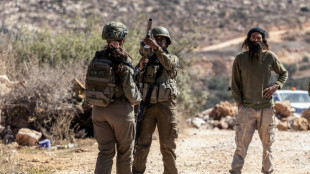
In a joint statement Thursday, Israel's army and domestic security agency Shin Bet said they had been conducting a "counterterrorism operation" in the Jenin area over the past two days together with border police.
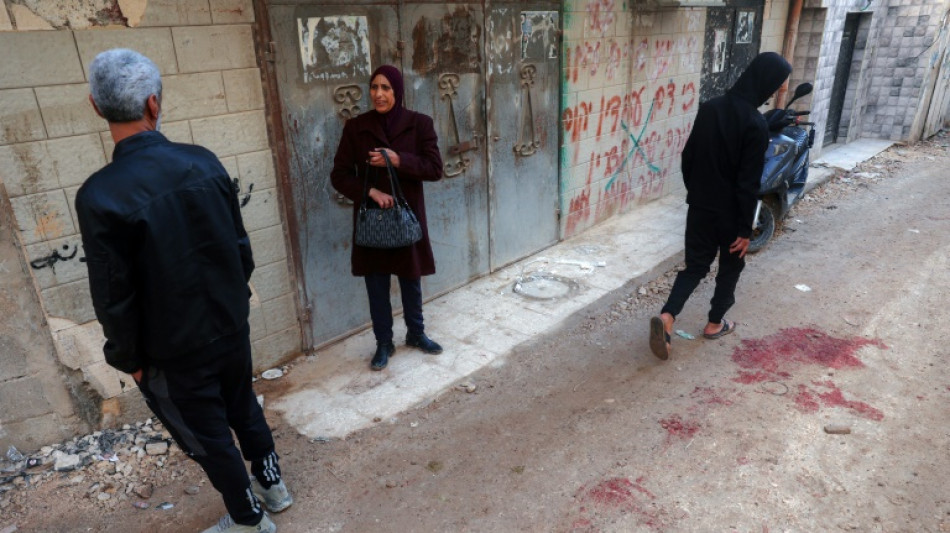
The Palestine Red Crescent said two were killed in the Jenin refugee camp Tuesday, and one in the nearby town of Kfar Dan Wednesday after being shot in the chest by Israeli forces.
Wissam Bakr, Jenin government hospital director, told AFP the Israeli army was still holding the bodies of another three Palestinians killed in a separate incident in the nearby town of Qabatiyah Tuesday.
Israeli authorities had said three militants died in an exchange of fire in Qabatiyah.
- 'Burned the whole house' -
Jenin, Qabatiyah and Kfar Dan are all in Jenin governorate. Nineteen people were injured during the Israeli incursions Tuesday and Wednesday, the Red Crescent said.
The army did not answer AFP requests on the matter.
AFP journalists said Israel's operation continued Thursday afternoon in Jenin refugee camp, where roads were stripped of their tarmac.
Buildings closest to the raids showed blackened facades, broken glass and tiles, and charred furniture.
Some particularly badly hit buildings had walls taken down by military bulldozers, which the army says look for improvised explosive devices hidden under roads.
"The necessities of life have disappeared. Water lines, infrastructure and everything has been completely destroyed, as have the electricity lines and streets", resident Hamza Awis said.
Another resident, Ameer Abu Al-Rakez, showed AFP the physical damage his house bore.
"The army entered all the streets and entered here in this house and threw a hand grenade and burned the whole house," he said.
Israeli troops or settlers have killed at least 777 Palestinians in the West Bank since the start of the Gaza war, according to the Ramallah-based health ministry.
Palestinian attacks on Israelis have also killed at least 24 people in the West Bank in the same period, according to Israeli official figures.
Israel has occupied the West Bank since 1967.
G.Wouters--LCdB