Fears for Gaza hospitals as fuel, other aid run low / Photo: Omar AL-QATTAA - AFP
The health ministry in Hamas-run Gaza said Friday that hospitals have only two days' fuel left before they must restrict services, after the UN warned aid delivery to the war-devastated territory is being crippled.
The alarm came a day after the International Criminal Court issued arrest warrants for Israeli Prime Minister Benjamin Netanyahu and former defence minister Yoav Gallant more than a year into the Gaza war between Israel and Hamas militants.
The United Nations and others have repeatedly decried humanitarian conditions, particularly in northern Gaza where Israeli security services said Friday they had killed two commanders involved in Hamas's October 7, 2023 attack that triggered the war.
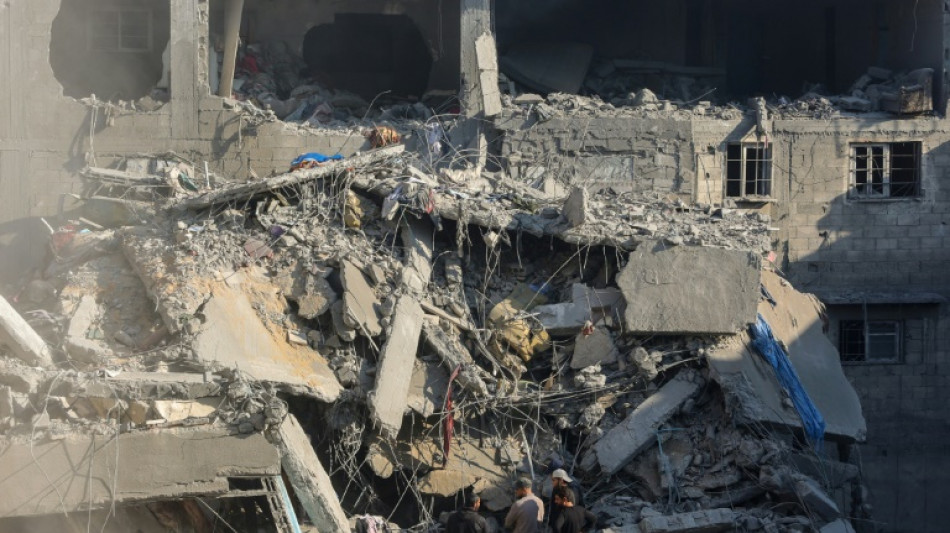
Medics in the Palestinian territory said an overnight Israeli raid on Beit Lahia and nearby Jabalia resulted in dozens killed or missing.
"We raise an urgent warning as all hospitals in Gaza Strip will stop working or reduce their services within 48 hours due to the occupation's (Israel's) obstruction of fuel entry," Marwan al-Hams, director of Gaza's field hospitals, said during a press conference.
The World Health Organization had already expressed grave concern Tuesday for hospitals still partly operating in Gaza.
"It's getting harder and harder to get the aid in," WHO spokeswoman Margaret Harris said in Geneva.
Late Thursday, the UN's humanitarian coordinator for the Palestinian territories, Muhannad Hadi, said: "The delivery of critical aid across Gaza, including food, water, fuel and medical supplies, is grinding to a halt."
In a statement, he said that for more than six weeks Israeli authorities "have been banning commercial imports" while "a surge in armed looting" has targeted aid convoys.
- 'Absurd and false' -
Vowing to stop Hamas from regrouping in northern Gaza, Israel on October 6 began its air and ground operation in Jabalia and then expanded it to Beit Lahia.
Gaza's civil defence rescue agency could not immediately give an exact toll after the latest Israeli raid, but the health ministry says Israel's operation in the north has killed thousands.
The UN says more than 100,000 have been displaced from the area, and an official told the Security Council last week that people "are effectively starving".
Issuing the warrants for Netanyahu and Gallant, the Hague-based ICC said there were "reasonable grounds" to believe they bore "criminal responsibility" for the war crime of starvation as a method of warfare, and crimes against humanity including over "the lack of food, water, electricity and fuel, and specific medical supplies".
The unprecedented move drew a furious reaction from Netanyahu, who said in a statement: "Israel rejects with disgust the absurd and false actions and accusations made against it."
Netanyahu also said the judges were "driven by anti-Semitic hatred of Israel".
On Friday he thanked his Hungarian counterpart Viktor Orban for his show of "moral clarity" for inviting him to visit in defiance of the ICC warrant which Orban branded "political".
Hungary currently holds the European Union's rotating presidency.
US President Joe Biden, whose country is Israel's top military supplier, called the warrants against Israeli leaders "outrageous", but other world leaders expressed support for the court.
Irish Prime Minister Simon Harris said Friday Netanyahu would be arrested if he set foot in the country.
- Warrant for Hamas chief -
The ICC also issued an arrest warrant for Hamas's military chief Mohammed Deif, saying it had grounds to suspect him of war crimes and crimes against humanity over the attacks on Israel that sparked the war, and including "sexual and gender-based violence" against hostages.
Israel said it killed Deif in July, but Hamas has not confirmed his death.
On the day the warrants were issued, a UN representative said an Israeli raid on Syria this week was "likely the deadliest" by Israel on the country so far. On Friday a war monitor said the strikes on Palmyra killed 92 pro-Iran fighters.
Israel again bombed Gaza on Friday.
In Gaza City, just south of Jabalia, one man who said he took his cousins to hospital after a strike urged "the world... to put an end" to the war.
"We've had enough," said Belal, who gave only his first name and said 10 members of his family had been killed.
"I'm the only one left," he said.
At least 44,056 people have been killed in Gaza during more than 13 months of war, most of them civilians, according to figures from Gaza's health ministry which the United Nations considers reliable.
Hamas triggered the war with the deadliest attack in Israeli history, which resulted in the deaths of 1,206 people, mostly civilians, according to an AFP tally of Israeli official figures.
The war expanded to Lebanon in late September when Israel escalated air strikes against Iran-backed Hezbollah and later sent in ground troops to southern Lebanon against the group, after nearly a year of tit-for-tat cross border clashes which Hezbollah said were in support of Hamas.
Lebanon's health ministry says more than 3,580 people have been killed in Lebanon, most of them since late September.
On Friday, Italian Foreign Minister Antonio Tajani said Hezbollah was probably behind a rocket attack that hit their position and left four Italian peacekeepers lightly hurt.
Israeli air strikes again hit Hezbollah's south Beirut stronghold Friday, as well as south Lebanon, the official National News Agency said.
W.Smets--LCdB