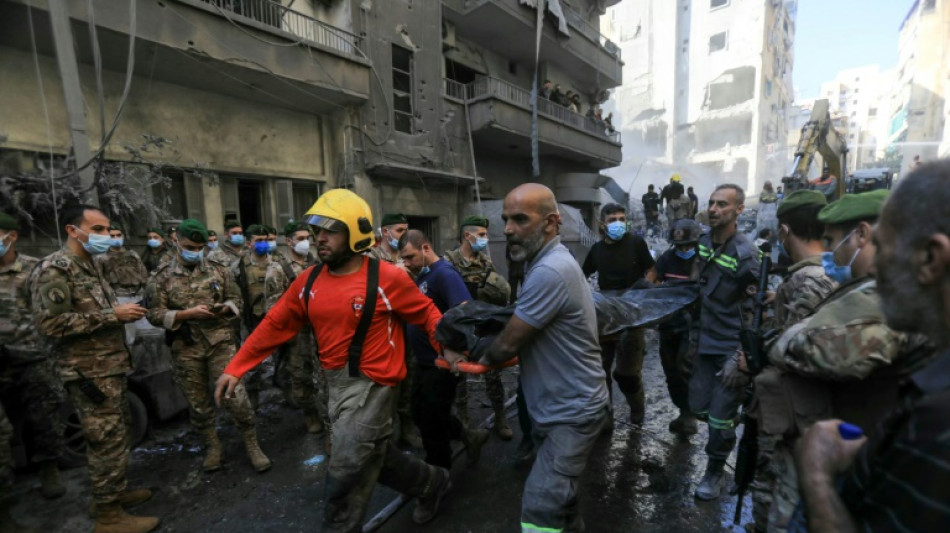
Fear in central Beirut district hit by Israeli strikes / Photo: - - AFP
When Lebanese carpenter Samir awoke in a panic Saturday to the sound of explosions and screams, he thought his own building in central Beirut had been hit by an air raid.
As it turned out, the early morning air strike -- which killed at least 15 people and injured 63, according to authorities -- had actually brought down an eight-storey building nearby, in the second such attack on the working-class neighbourhood of Basta in as many months.
A Lebanese security source told AFP the target had been a senior Hezbollah figure, without naming him.
"The strike was so strong it felt like the building was about to fall on our heads," said Samir, 60, who lives with his family in a building facing the one that was hit.
"It felt like they had targeted my house," he said, asking to be identified by only his first name because of security concerns.
There had been no evacuation warning issued by the Israeli military for the Basta area.
After the strike, Samir fled his home in the middle of the night with his wife and two children, aged 14 and just three.
On Saturday morning, dumbstruck residents watched as an excavator cleared the wreckage of the razed building and rescue efforts continued, with nearby buildings also damaged in the attack, AFP journalists reported.
The densely packed district has welcomed people displaced from traditional Hezbollah bastions in Lebanon's east, south and southern Beirut, after Israel intensified its air campaign on September 23, later sending in ground troops.
"We saw two dead people on the ground... The children started crying and their mother cried even more," Samir told AFP, reporting minor damage to his home.
- 'Screaming in terror' -
Since last Sunday, four deadly Israeli strikes have hit central Beirut, including one that killed Hezbollah spokesman Mohammed Afif.
Residents across the city and its outskirts awoke at 0400 (0200 GMT) on Saturday to loud explosions and the smell of gunpowder in the air.
"It was the first time I've woken up screaming in terror," said Salah, a 35-year-old father of two who lives in the same street as the building that was targeted.
"Words can't express the fear that gripped me," he said.
Saturday's strikes were the second time the Basta district had been targeted since war broke out, after deadly twin strikes early in October hit the area and the Nweiri neighbourhood.
Last month's attacks killed 22 people and had targeted Hezbollah security chief Wafiq Safa, who made it out alive, a source close to the group told AFP.
Salah said his wife and children had been in the northern city of Tripoli, about 70 kilometres away (45 miles), but that he had to stay in the capital because of work.
His family had been due to return this weekend because their school reopens on Monday, but now he has decided against it following the attack.
"I miss them. Every day they ask me: 'Dad, when are we coming home?'" he said.
Lebanon's health ministry says that more than 3,650 people have been killed since October 2023, after Hezbollah initiated exchanges of fire with Israel in solidarity with its Iran-backed ally Hamas over the Gaza war.
However, most of the deaths in Lebanon have been since September this year.
"Where else would I go?" he asked.
"All my relatives and siblings have been displaced from Beirut's southern suburbs and from the south."
P.Verhoeven--LCdB