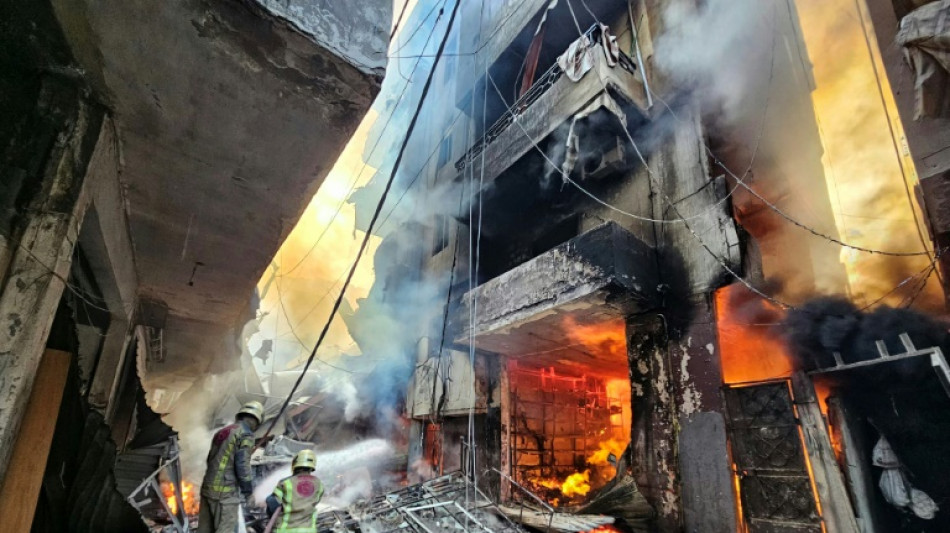
Lebanon says more than 55 killed in Israeli strikes / Photo: - - AFP
Lebanon said Israeli air strikes on Saturday killed more than 55 people, many of them in central Beirut, as Israel's defence minister vowed decisive action against Hezbollah, in a call with his US counterpart.
On Israel's second front, the more than 13-month war with Hamas militants in Gaza, rescuers said pre-dawn Israeli air strikes and tank fire killed 19 people and wounded more than 40.
Hamas's armed wing said an Israeli hostage, captured during the group's attack in October last year which triggered the war, had been killed. Israel's military said it could neither "confirm nor refute" the claim.
After nearly a year of limited cross-border exchanges of fire, in which Lebanon's Hezbollah said it was acting in support of Hamas, Israel escalated air strikes against Hezbollah targets in Lebanon on September 23.
A week later it sent in ground troops to southern Lebanon.
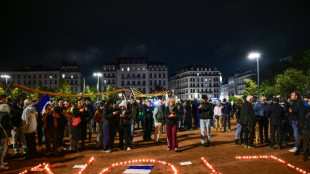
One strike on Saturday in the heart of Beirut brought down a residential building and jolted residents across the city.
The strike on the working-class Basta neighbourhood killed at least 20 people and wounded 66, Lebanon's health ministry said in a revised toll.
"We saw two dead people on the ground... The children started crying and their mother cried even more," said Samir, 60, who lives in a building facing the one destroyed.
The attack in the capital was followed by others in the city's southern suburbs after calls by the Israeli military to evacuate.
Israel has not commented on the strike in central Beirut but said it had again hit Hezbollah targets in the city's southern suburbs, a stronghold of the Iran-backed group.
A military statement said that over the past week, the air force "struck dozens of Hezbollah command centres, weapons storage facilities, and terrorist infrastructure in the Dahieh area".
- 'Diplomatic resolution' -
A Lebanese security source told AFP that the central Beirut strike had "targeted a leading Hezbollah figure", but a Hezbollah lawmaker, Amin Sherri, denied to Lebanese media that any official was present at the time of the attack.
Similar strikes carried out without warning outside of Hezbollah's traditional bastions -- which include southern Beirut but not the centre -- have tended to target senior figures.
The health ministry said Israeli air strikes also hit eastern Lebanon, killing 24 people including 13 in the town of Shmostar overlooking the Bekaa Valley, another Hezbollah stronghold.
In Lebanon's south, at least 14 were killed including five in the coastal city of Tyre, the ministry said.
In a telephone call with Israeli Defence Minister Israel Katz on Saturday, Washington's Defense Secretary Lloyd Austin "reiterated US commitment to a diplomatic resolution in Lebanon that allows Israeli and Lebanese civilians to return safely to their homes on both sides of the border", a Pentagon spokesperson said.
A spokesman for Katz said he commended the US efforts towards "de-escalation in Lebanon" and underscored that Israel would "continue to act decisively in response to Hezbollah's attacks on civilian populations in Israel".
United States envoy Amos Hochstein was in Lebanon and Israel this week, meeting with both countries' senior officials, to try to negotiate an end to the war.
After talks in Beirut he said a deal was "within our grasp" but as he headed to Israel both sides put out statements that dented hopes of rapid progress.
- Death in the darkness -
Lebanon says more than 3,670 people have been killed in the country since October 2023. Most of the deaths have been since September this year.
Hamas's October 7, 2023 attack on Israel that triggered the Gaza war resulted in the deaths of 1,206 people, mostly civilians, according to an AFP tally of Israeli official figures.
Israel's retaliatory campaign in Gaza has killed at least 44,176 people, most of them civilians, according to data from the Hamas-run territory's health ministry, which the United Nations considers reliable.
In the pre-dawn darkness of Gaza on Saturday, one strike killed seven people including children at a house in the Zeitun area of Gaza City, civil defence agency spokesman Mahmud Bassal told AFP.
AFPTV footage showed victims being brought in to Al-Ahli Arab Hospital including a bloody and dust-covered man, as a boy on a bed beside him struggled to reach the man and called for his father.
"We were sleeping, I was lying here. What happened?" one survivor, Abu Shaker Shaldan, said, lost for words at the scene of the strike, with blood trickling down his head.
In southern Gaza, another strike killed six people, three of them children, Bassal said.
The United Nations and others have repeatedly decried humanitarian conditions, particularly in northern Gaza.
The trickle of aid entering Gaza was the principal basis cited by the International Criminal Court in the arrest warrants it announced on Thursday for Prime Minister Benjamin Netanyahu and former defence minister Yoav Gallant, alleging starvation as a method of warfare and other crimes.
During their attack against Israel, Hamas militants seized 251 hostages, 97 of whom are still being held, including 34 who the Israeli military says are dead.
Abu Obeida, the spokesman for Hamas's armed wing, said on Saturday a female hostage had been killed in the north Gaza area but gave no further details.
Israel's military said it was examining the information.
Protesters held another of their regular Saturday rallies in the Israeli city of Tel Aviv to demand their government reach a deal to free remaining hostages.
Q.Ceulemans--LCdB