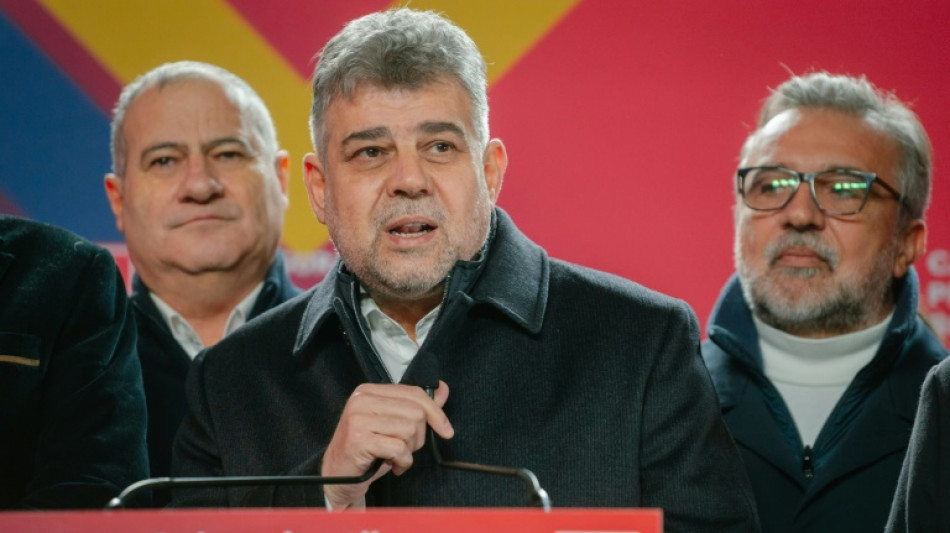
Romania PM fends off far-right challenge in presidential first round / Photo: Andrei Pungovschi - AFP
Romania's pro-European Prime Minister Marcel Ciolacu was leading in the first round of presidential elections Sunday according to exit polls, with the far right not yet assured of a place in the second round, despite a breakthrough in support.
With 25 percent of the vote according to two exit polls, Ciolacu appeared to be well ahead of far-right challengers looking to capitalise on this EU member's concerns about inflation and the war in neighbouring Ukraine.
The same exit polls gave second place to centre-right former journalist turned small-town mayor Elena Lasconi at 18 percent, with two far-right candidates scoring 15 and 16 percent.
In the absence of an outright winner in the first round -- scoring more than 50 percent -- the top two candidates go through to a second-round run-off in the poor NATO member on December 8.
Ciolacu, a Social Democrat, is leading a field of 13 contenders in the race to take over from President Klaus Iohannis in the largely ceremonial post.
He welcomed the exit polls putting him in the lead, but said all the votes would have to be counted before he knew who he would face in the second round.
Lasconi too, was cautious. "The scores are very tight, it's not yet time to celebrate," said the 52-year-old politician.
Far-right leader George Simion, 38, who some had forecast might take second place, is for the moment in fourth.
Exit polls put him just behind the 62-year-old pro-Russian candidate Calin Georgescu.
But Simion said Sunday evening: "We'll see the results of the ballot boxes at 11:00 pm (2100 GMT)."
- High stakes -
Ciolacu's party has shaped Romania's politics for more than three decades, and as he voted Sunday he promised stability and a "decent" standard of living.
But political analyst Cristian Parvulescu told AFP: "The far right is by far the big winner of this election."
Simion saw his popularity surge by tapping into voter anger over record inflation while promising more affordable housing.
Looking for a new election breakthrough for European far-right parties, Simion warned of possible "fraud" and "foreign interference" when voting.
But he added: "I am happy that we are giving Romanians hope and the prospect of a better future."
The stakes are high for Romania, which has a 650-kilometre (400-mile) border with Ukraine and has become more important since Russia invaded its neighbour in 2022.
The Black Sea nation now plays a "vital strategic role" for NATO -- as it is a base for more than 5,000 soldiers -- and the transit of Ukrainian grain, the New Strategy Center think tank said.
- Big Trump fan -
Donald Trump's victory in the US presidential election has further "complicated" Romania's choice, political analyst Cristian Pirvulescu told AFP.
Known for his fiery speeches, Simion is a Trump fan who sometimes dons a red cap in appreciation of his idol.
Simion opposes sending military aid to Ukraine, wants a "more patriotic Romania" and frequently lashes out against what he calls the "greedy corrupt bubble" running the European Union.
Having campaigned hard to win over Romania's large diaspora working abroad, he said the country had only "minions and cowards as leaders".
Pirvulescu predicted that if Simion reached the second round his AUR party would get a boost in the December parliamentary election.
"Romanian democracy is in danger for the first time since the fall of communism in 1989," he said.
- Russian 'spies' claim -
"I'm really afraid we'll end up with Simion in the second round," 36-year-old IT worker Oana Diaconu told AFP, expressing concern about the far-right leader's unpredictable nature and attacks on the European Union.
The campaign was marked by controversy and personal attacks, with Simion facing accusations of meeting with Russian spies -- a claim he has denied.
Ciolacu has been criticised for his use of private jets.
Sunday's exit polls appeared to suggest they were right.
During campaigning, she had said she wanted a future "where no one has to pack their suitcases and leave" the country and for "institutions that work".
A.Louis--LCdB