Germany's Scholz pledges aid on surprise visit to Ukraine / Photo: Handout - UKRAINIAN EMERGENCY SERVICE/AFP
Chancellor Olaf Scholz visited Ukraine on Monday to reaffirm German support for Kyiv after becoming the first major ally of the war-torn country to speak to Vladimir Putin in years to urge negotiations.
His surprise visit comes as Ukrainian forces are buckling across the eastern front and amid fears about future US support once Donald Trump returns to the White House in January.
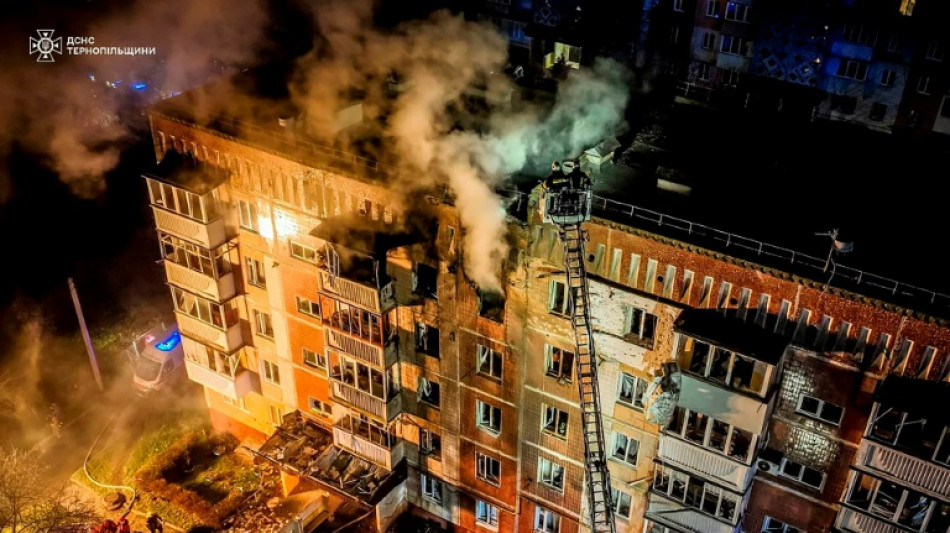
Russia launched another aerial barrage of hundreds of drones hours before Scholz arrived, leaving one dead and three wounded in the western Ukrainian city of Ternopil.
Scholz said he would meet with President Volodymyr Zelensky and announce another package of military support worth 650 million euros ($680 million) to be delivered by the end of the year.
"I would like to make it clear here on the ground that Germany will remain Ukraine's strongest supporter in Europe," said Scholz, who faces new elections in February after his coalition collapsed last month.
"Ukraine can rely on Germany -- we say what we do. And we do what we say," he added in a post on social media.
Scholz in mid-November spurred controversy and concern in Ukraine by becoming the first Western leader in years to speak by phone with Russian President Vladimir Putin.
- Low Kremlin expectations for visit -
Zelensky at the time slammed the call, saying it had opened a "Pandora's Box" by weakening Putin's international isolation.
In the call, Scholz condemned the war and "urged Russia to show willingness to negotiate with Ukraine with the aim of achieving a just and lasting peace", the chancellor's office said.
The Kremlin said Monday that it had no expectations from Scholz's visit.
"I would not say we have expectations from this visit. Germany is continuing its line of unconditional support to Ukraine," Kremlin spokesman Dmitry Peskov said, adding that Putin had not passed on a message to Zelensky through Scholz.
Ukraine faces a tough winter, with Russia unleashing drone and missile attacks against its power grid.
The air force said Russia had attacked overnight with 110 drones, including the Iranian-designed Shahed unmanned aerial vehicle from four regions of Russia.
The bombardment killed a 45-year-old man in Ternopil, a town of around 224,000 people, where strikes last month left thousands without electricity, authorities said.
"Unpunished evil never stops. And it will not limit itself by our borders," Zelensky's chief of staff Andriy Yermak wrote on social media in response to the attack.
Scholz's visit comes ahead of the January 20 inauguration of Trump, who has pledged to speedily end the war, raising fears he will try to force Ukraine to accept a deal on Moscow's terms.
- 'Russian roulette' -
Separately, German Foreign Minister Annalena Baerbock on Monday warned her Chinese counterpart that Beijing's support for Moscow would impact ties and instead urged China to help end the Ukraine conflict.
Zelensky said Sunday that his country needed security guarantees from NATO and more weapons to defend itself before any talks with Russia.
He made the comments after meeting the EU's new head of diplomacy Kaja Kallas and EU Council chief Antonio Costa, who were visiting Kyiv as a show of support on their first day in office.
Under Scholz, Germany has become the second-biggest arms supplier to Ukraine after the United States, but has refused to send Kyiv long-range missiles that could strike deep inside Russia.
Berlin has stuck to that approach even after US President Joe Biden gave the green light for Ukraine to fire long-range ATACMS missiles into Russia for the first time.
Speaking to his Social Democratic Party, Scholz said that confronting Moscow, a nuclear power, with such a threat would amount to playing "Russian roulette" with Germany's security.
O.Seuren--LCdB