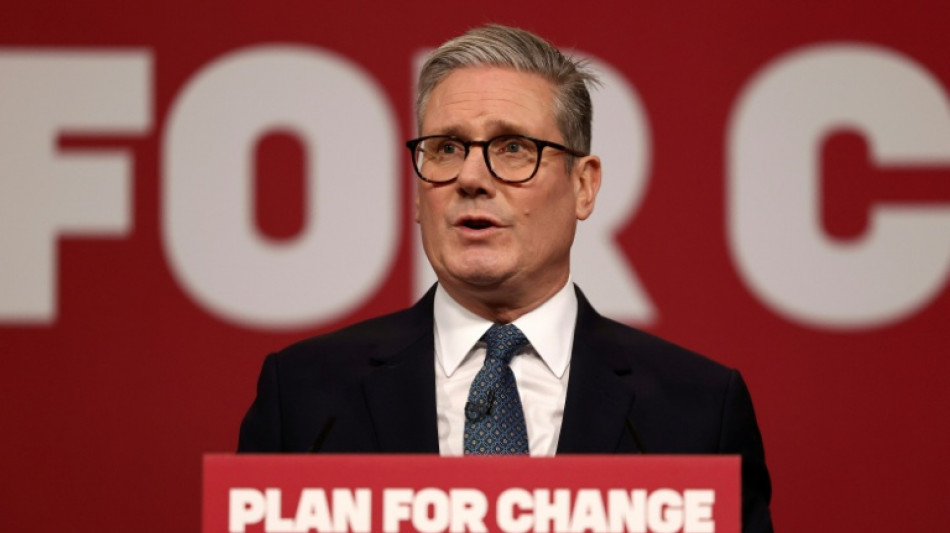
UK's Starmer vows to 'take country forward' in reset bid after 150 days / Photo: Darren Staples - POOL/AFP
UK Prime Minister Keir Starmer Thursday unveiled "ambitious and credible" plans to reform housing, boost police numbers and fix ailing health services in a de facto relaunch of his government after a bumpy first five months in power.
The Labour leader laid out six targets to "take the country forward" on which voters can judge his administration, seeking to move on from several unpopular decisions that have overshadowed his fledgling premiership.
"Today, we publish new milestones, measurable milestones that will also give the British people the power to hold our feet to the fire," Starmer said in a speech from a film studio in Buckinghamshire, east of London.
The "plan for change" includes "missions to make our country strong, missions to make working people better off, missions this government will deliver", Starmer added.
Starmer recommitted to pre-election pledges including targeting "the highest sustained growth in the G7" to improve living standards, and building 1.5 million new homes by the end of his five-year term.
Other pledges previously announced included a target to cut NHS waiting lists and an additional 13,000 police to patrol Britain's streets to crack down on anti-social behaviour.
A new pledge to improve pre-school education for children and a repeated committment to achieve 95 percent clean energy by 2030 completed the six milestones, which aim to renew public faith in the government.
The prime minister also announced a target of 150 "major infrastructure projects" as part of the government's building ambitions.
- Immigration -
Notably missing from Starmer's milestones was a target to bring down immigration numbers, which he insisted is a priority for his government.
"We are committed to bringing down immigration, both legal and illegal," Starmer said in the speech, without committing to a figure.
Conservative and Opposition leader Kemi Badenoch criticised what she dubbed an "emergency reset" for having "nothing concrete on immigration".
"This relaunch can't hide the reality of a government that doesn’t know what it is doing," Badenoch said on X.
The speech comes amid plunging approval ratings for Starmer and the government. In an Ipsos opinion poll on Wednesday, 53 percent of Britons said they were "disappointed" in what the Labour government had achieved so far.
Starmer's first weeks in office were dominated by controversies over scrapping winter fuel payments for millions of pensioners, keeping a child benefit restriction, and for accepting gifts from a wealthy donor.
They were also overshadowed by the departure of his chief of staff Sue Gray following intense media scrutiny over her role. Last week, Starmer suffered his first ministerial resignation when Louise Haigh quit as transport secretary.
- 'Trade-offs' -
His finance minister's debut budget on October 30 failed to provide a more positive narrative after coverage focused on farmers and business owners angry at increases in inheritance tax and employer payroll contributions.
Critics say the business tax rise, an increase in the national minimum wage and plans for higher state borrowing will undermine the Labour government's overriding mission to fire up an anaemic economy.
"(There is) no taking our country forward without levelling with you honestly about the trade-offs we must face together," Starmer said.
"The path of change is long. It's hard. There are a few thanks in the short term."
Starmer has repeatedly claimed he is taking "tough decisions" after 14 years of Conservative government. He has accused the Tories of leaving behind a £22 billion ($28 billion) "black hole" in the public finances, a prison system bursting at the seams and a National Health Service (NHS) on its knees.
His government has pointed to several policies already announced, including the launching of a publicly owned clean energy company and the lifting of a ban on new onshore wind farms.
His plan is "designed to push and drive the reform that we are going to need if we are going to ensure that we bring about the change that is so desperately needed," Starmer said.
B.Francois--LCdB