Accusations and walkouts as Ukraine, Russia ministers clash at Malta / Photo: Alberto PIZZOLI - POOL/AFP
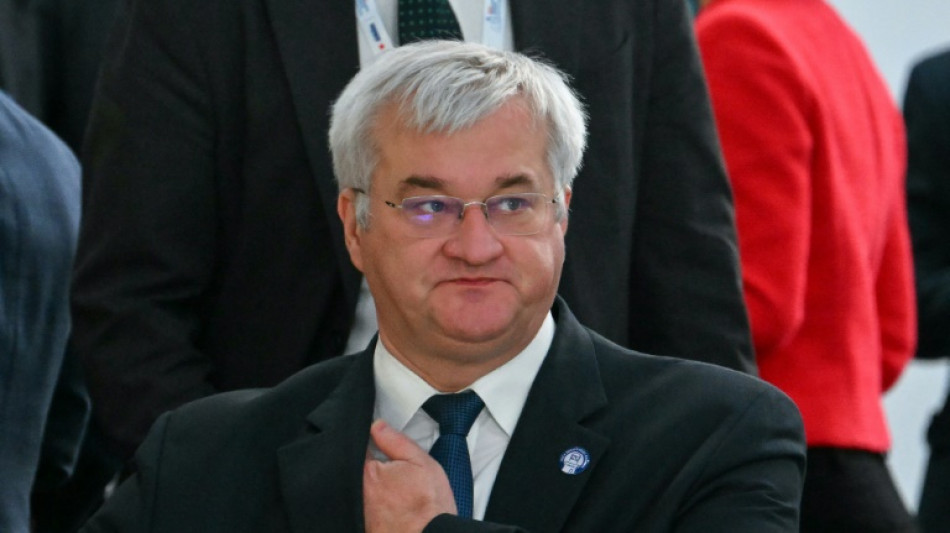
Ukraine's foreign minister called Russia's top diplomat Sergei Lavrov a "war criminal" Thursday as they both attended an international meeting in Malta, the latter's first visit to an EU country since the 2022 invasion.
Ukraine's Andriy Sybiga also accused Moscow of being "the biggest threat to our common security" as both ministers sat at the same huge table for a meeting of the Organization for Security and Cooperation in Europe (OSCE).
The ministers from Poland and Latvia and half a dozen other delegates walked out when Lavrov addressed the meeting in Ta'Qali, near Malta, according to a diplomatic source.
Polish Foreign Minister Radoslaw Sikorski said earlier Thursday he refused to "listen to those lies", and then repeated a call for Russia to be suspended from the OSCE.
The 57-nation body was formed in the midst of the Cold War, but has been largely paralysed since Moscow's invasion of Ukraine, with Russia vetoing major decisions that require unanimous consent.
Lavrov, sitting between the representatives of San Marino and Romania, accused NATO and the EU of politicising the OSCE and making it irrelevant.
He said the West was behind a "reincarnation of the Cold War, only now with a much greater risk of a transition to a hot one", according to Russia's RIA Novosti agency.
Speaking to reporters afterwards, Lavrov also accused the West of failing to heed Moscow's "very clear warnings" over the dangers of dispatching troops to support Ukraine, amid speculation over possible deployments.
When it was his turn to speak, US Secretary of State Antony Blinken blasted Russian President Vladimir Putin for an "imperial project to erase Ukraine from the map".
He also accused Lavrov -- who by that point had left the room -- of "drowning listeners with a tsunami of misinformation".
Blinken left Malta without meeting his Russian counterpart.
- 'Channels of communication' -
Ukraine has also previously called for Russia to be excluded from the OSCE, and last year boycotted the organisation's annual ministerial summit in North Macedonia over Lavrov's attendance.
But Sybiga attended this year, at a delicate time for Kyiv.
US president-elect Donald Trump has vowed to press for a quick deal to end the war, leaving Kyiv scrambling to obtain security guarantees from Western allies and supplies of key weaponry before the January inauguration.
Sybiga told the OSCE ministers that Russia's participation in the organisation was "a threat to cooperation in Europe" and "the biggest threat to our common security".
"Ukraine continues to fight for its right to exist. And the Russian war criminal at this table must know: Ukraine will win this right and justice will prevail," he said.
The OSCE, founded in 1975, is made up of members from Turkey to Mongolia, and also includes Britain, Canada and the United States.
It helps its members coordinate issues such as human rights and arms control, but it has been increasingly unable to operate, its budget frozen since 2021 and the post of secretary general vacant since September.
German Foreign Minister Annalena Baerbock told reporters that the OSCE "stands for security and freedom and we will defend it".
In 2022, OSCE host Poland refused to let Lavrov attend their summit, and Poland's minister questioned why Moscow was still allowed to be part of the organisation.
A spokesman for Malta's chairmanship of the OSCE told AFP Wednesday that while Lavrov faced an EU asset freeze, there was no travel ban on him. He had been invited to "keep some channels of communication open".
- Top appointments -
The summit runs until Friday, and host Ian Borg, Malta's foreign minister, told AFP he was "cautiously optimistic" they would agree on a new secretary general.
Ambassadors have already agreed on Turkish diplomat Feridun Sinirlioglu to replace Germany's Helga Maria Schmid, a diplomatic source told AFP, but this must be confirmed by the ministers.
Russia blocked NATO member Estonia from holding the chairmanship this year. Finland, which joined NATO last year, is up for the post in 2025.
The OSCE sends observers to conflicts and to elections around the world. It also runs programmes aimed at combatting human trafficking and ensuring press freedom.
K.Cox--LCdB