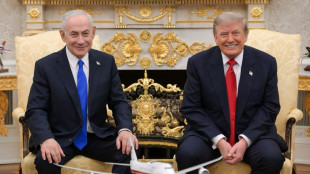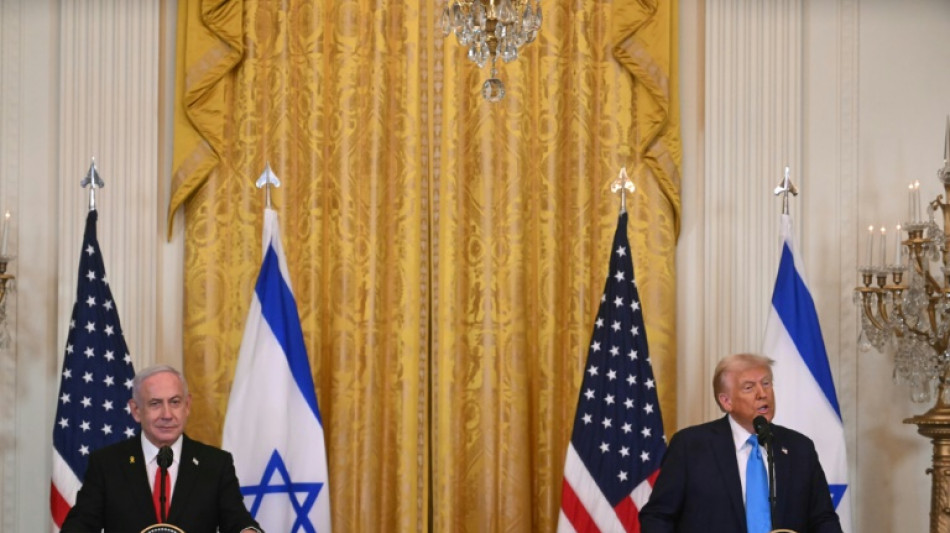
Trump says US will 'take over' Gaza as he welcomes Netanyahu / Photo: Jim WATSON - AFP
President Donald Trump made an extraordinary proposal for the United States to "take over" the Gaza Strip, as he hosted Israeli Prime Minister Benjamin Netanyahu for crucial talks on the truce with Hamas.
Trump also doubled down on his call for Palestinians to move out of the war-battered territory to Middle Eastern countries like Egypt and Jordan, despite the Palestinians and both nations flatly rejecting his suggestion.
"The US will take over the Gaza Strip and we will do a job with it, too. We'll own it," Trump told a joint press conference with Netanyahu.
Trump said the United States would get rid of unexploded bombs, "level the site" and remove destroyed buildings, and "create an economic development that will supply unlimited numbers of jobs and housing for the people of the area."
But Trump appeared to suggest that it was not Palestinians who would return there.
"It should not go through a process of rebuilding and occupation by the same people that have really stood there and fought for it and lived there and died there and lived a miserable existence there," he said.
He said Gaza's two million inhabitants should instead "go to other countries of interest with humanitarian hearts."
Netanyahu hailed Trump as the "greatest friend Israel has ever had."
He said the US president's Gaza plan could "change history" and was worth "paying attention to."
- 'Great force' -
Egypt and Jordan have flatly rejected Trump's suggestion of moving Palestinians from Gaza.
The Palestinian envoy to the United Nations meanwhile said world leaders should "respect" the wishes of Palestinians.
Gazans have also denounced Trump's idea. "Trump thinks Gaza is a pile of garbage -- absolutely not," said 34-year-old Hatem Azzam, a resident of the southern city of Rafah.
The US president has claimed credit for securing the first six-week phase of the Israel-Hamas truce after more than 15 months of fighting and bombing, and he was expected to urge Netanyahu to move to the next phase aimed at a more lasting peace.
Netanyahu earlier said "we're going to try" when asked how optimistic he was about moving on to phase two.
He hailed Trump's "great force and powerful leadership" in sealing the original ceasefire deal, and took a swipe at former president Joe Biden, with whom he had tense relations over the death toll in Gaza.
"When the other side sees daylight between us -- and occasionally in the last few years they saw daylight -- it's more difficult. When we cooperate, chances are good," Netanyahu said.
Israel said hours ahead of the White House talks it was sending a team to mediator Qatar to discuss the second phase of the agreement.
Hamas said Tuesday negotiations for the second phase had begun, with spokesman Abdel Latif al-Qanou saying the focus was on "shelter, relief and reconstruction".
Under the first phase of the ceasefire, Palestinian militants and Israel have begun exchanging hostages.
Eighteen hostages have been freed so far in exchange for some 600 mostly Palestinian prisoners from Israeli jails.
The war began when Hamas attacked Israel on October 7, 2023, taking into Gaza 251 hostages, 76 of whom are still held in the Palestinian territory including 34 the Israeli military says are dead.
Families of the Israeli hostages have been urging all sides to ensure the agreement is maintained so their loved ones can be freed.
Since the Gaza ceasefire took effect on January 19, Israel has launched a deadly operation against militants in the occupied West Bank's north.
UN aid agency UNRWA -- which is now banned in Israel -- warned that the heavily impacted refugee camp of Jenin was "going into a catastrophic direction".
On Tuesday, the Israeli army said a gunman killed two soldiers before being shot dead in an attack south of Jenin.
Hamas's October 7 attack resulted in the deaths of 1,210 people on Israeli side, mostly civilians, according to an AFP tally based on official Israeli figures.
Israel's retaliatory response has killed at least 47,518 people in Gaza, the majority civilians, according to the Hamas-run territory's health ministry. The UN considers these figures as reliable.
burs-dk/st
D.Jacobs--LCdB