Hamas says stops Gaza hostage release 'until further notice' / Photo: Eyad BABA - AFP
Hamas announced Monday it would postpone any further hostage-prisoner exchanges under a fragile Gaza ceasefire accusing Israel of violations, while Israel said its military was readying for "any possible scenario".
The ceasefire that went into effect on January 19 largely halted more than 15 months of fighting in the Gaza Strip and saw five groups of Israeli hostages freed in exchange for hundreds of Palestinians in Israeli custody.
A spokesman for Hamas's armed wing, the Ezzedine al-Qassam Brigades, said in a statement that the next hostage release, "which was scheduled for next Saturday, February 15, 2025, will be postponed until further notice", accusing Israel of failing to comply with the terms of the truce.
The spokesman, Abu Ubaida, said the resumption of hostage-prisoner exchanges was "pending the (Israeli) occupation's compliance and retroactive fulfilment of the past weeks' obligations", without specifying.
"We reaffirm our commitment to the terms of the agreement as long as the occupation adheres to them," he said.
The statement was issued as negotiators were due to meet in the coming days in Qatar to discuss the implementation of the truce's first 42-day phase, as well as potentially the next phases which have yet to be finalised.
Israeli Defence Minister Israel Katz said the Hamas announcement was a "complete violation" of the ceasefire agreement, signalling that fighting could resume.
"I have instructed the IDF (military) to prepare at the highest level of alert for any possible scenario in Gaza," Katz said in a statement.
- Trump says 'would own' Gaza -
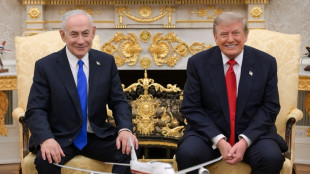
Tensions have been running high since a shock proposal by US President Donald Trump to take over the Gaza Strip and remove its more than two million inhabitants.
On Sunday Israeli Prime Minister Benjamin Netanyahu praised the displacement proposal as "revolutionary", striking a triumphant tone in a statement to his cabinet following his return from Washington.
And on Monday the US president told Fox News Channel's Bret Baier that Palestinians would not have the right to return to Gaza.
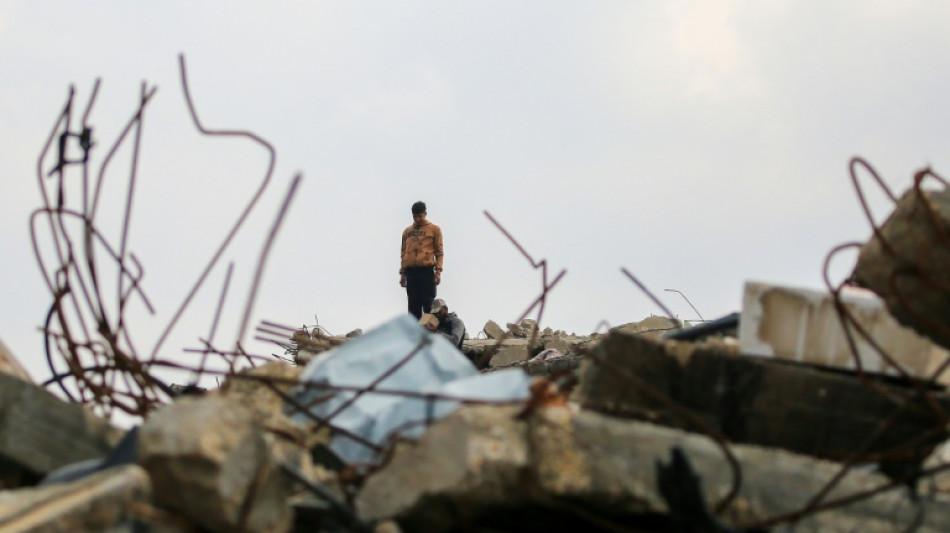
"I'm talking about building a permanent place for them because if they have to return now, it'll be years before you could ever -- it's not habitable," said Trump of the devastated Gaza Strip.
Asked if the Palestinians would have the right to return, Trump said: "No, they wouldn't, because they're going to have much better housing."
He said he would build "beautiful communities" for Gazans elsewhere, and "in the meantime, I would own this. Think of it as a real estate development for the future."
For Palestinians, any attempt to force them out of Gaza would evoke dark memories of what the Arab world calls the "Nakba" or catastrophe -- the mass displacement of Palestinians during Israel's creation in 1948.
Trump stunned the world when he announced out of the blue last week that the United States would "take over the Gaza Strip," remove rubble and unexploded bombs and turn it into the "Riviera of the Middle East".
- Help from mediators -
The Gaza war was triggered by Hamas's October 7, 2023 attack, the deadliest in Israel's history, which resulted in the deaths of 1,210 people, mostly civilians, according to an AFP tally of official Israeli figures.
Militants also took 251 hostages, of whom 73 remain in Gaza, including 34 the Israeli military says are dead.
The health ministry in Hamas-run Gaza says the war has killed at least 48,208 people in the territory.
Under the current ceasefire, Israel and Hamas on Saturday completed their fifth hostage-prisoner exchange, with three Israeli hostages and 183 Palestinian prisoners released.
Netanyahu's office said "all the families of the hostages were informed" of Hamas's announcement on Monday and "made aware that the State of Israel is committed to respecting the agreement".
The Hostage and Missing Families Forum campaign group said it had "requested assistance from the mediating countries to help restore and implement the existing deal effectively".
The truce has also allowed displaced Gazans to return to the territory's hard-hit north and facilitated a surge of badly needed humanitarian aid.
While the violence has subsided in Gaza, Israeli forces have carried out deadly raids in the occupied West Bank, which is separated from Gaza by Israeli territory.
I.Kusters--LCdB