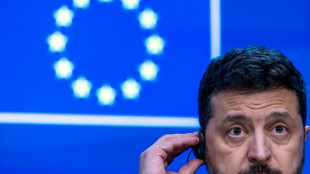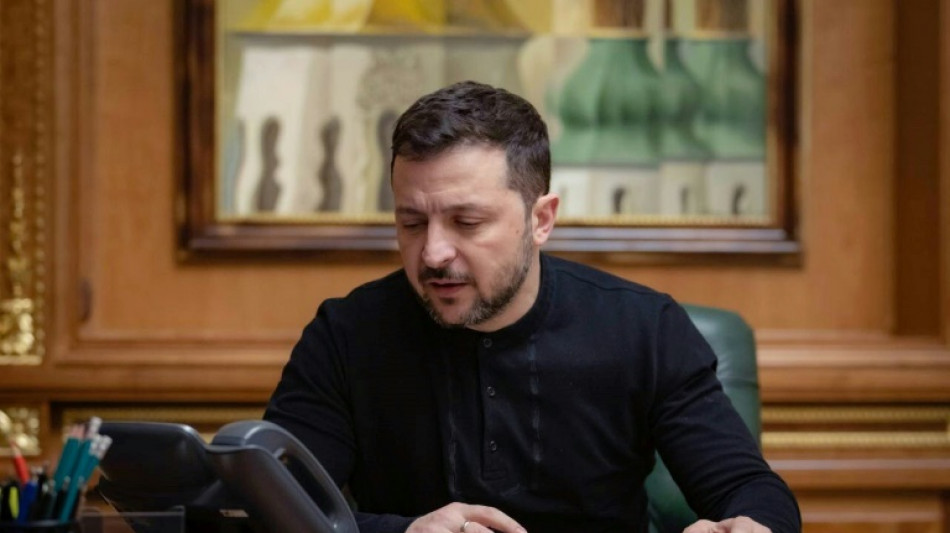
Zelensky wants plan to 'stop Putin' before US-Russia talks / Photo: Handout - UKRAINIAN PRESIDENTIAL PRESS SERVICE/AFP
Ukraine's President Volodymyr Zelensky said Thursday the United States should agree on a joint plan to stop Russia before talks with Moscow, as European leaders warned Washington not to hatch a deal behind their backs.
Meeting NATO partners the day after President Donald Trump revealed he plans to start peace talks with Russia's Vladimir Putin, Pentagon chief Pete Hegseth denied it meant a betrayal of Kyiv's three-year war effort.
But Trump's move stunned Ukraine and European allies -- several of whom openly called his strategy into question.
Zelensky said it was "not very pleasant" that Trump had called Putin first before speaking to him, adding the US president had said he wanted to speak to both leaders together.
The Ukrainian leader -- who is set to meet US Vice President JD Vance in Munich on Friday -- said he wanted to hammer out a "plan to stop Putin" with the United States before any talks happen.
After a 90-minute phone call with Putin on Wednesday, Trump's first since returning to power, the US president said he expected to meet the Russian leader in Saudi Arabia for Ukraine peace talks -- sparking fears Kyiv would be frozen out.
The Kremlin said Putin and Trump had agreed the "time has come to work together," insisting it wanted to organise a face-to-face meeting promptly and that broader European security should be on the agenda.
Ukraine's European backers rejected any move to force a settlement on Kyiv and criticised Washington's apparent willingness to give all its cards to Moscow.
German Chancellor Olaf Scholz rejected any "dictated peace" and his defence minister called it "regrettable" that Washington was already making "concessions" to the Kremlin.
In a blunt address to reporters at NATO talks in Brussels, EU top diplomat Kaja Kallas insisted that no deal "behind our backs" could work, as she accused Washington of "appeasement" towards Russia.
"We shouldn't take anything off the table before the negotiations have even started because it plays to Russia's court and it is what they want," she said.
"Any quick fix is a dirty deal," she said. "It will just simply not work."
That came after Trump's administration poured cold water on Ukraine's goals of reclaiming all its territory and pushing to join NATO.
"There is no betrayal there. There is a recognition that the whole world and the United States is invested and interested in peace," Hegseth said at NATO.
"That will require both sides recognising things they don't want to," added the US defence chief.
Trump, who has been pushing for a quick end to the war, denied that Ukraine was being excluded from direct negotiations between the two nuclear-armed superpowers.
Ukraine's defence minister Rustem Umerov told Kyiv's NATO backers "we're continuing, we're strong, we're capable, we're able, we will deliver".
Zelensky meeting with Vance in Munich will be the latest in a flurry of high-level European encounters for top Trump officials.
US Treasury Secretary Scott Bessent held talks in Kyiv on Wednesday on granting Washington access to Ukraine's rare earth deposits in return for security support.
- 'Overwhelming share' -
Trump's outreach to Putin had been broadly expected, but the quick pace of his peace push has left heads spinning after three years of staunch Western support for Kyiv.
Kyiv's European backers are terrified that Trump could force Ukraine into a bad peace deal that will leave them facing an emboldened Putin -- while fronting the lion's share of costs for post-war security.
Hegseth said Europe must now start providing the "overwhelming share" of aid to Ukraine and that the United States would not deploy troops as a security guarantee under any deal.
Throughout Russia's war on Ukraine since 2022 it has been a mantra for Western powers that there should be no decisions taken on Ukraine's future without Kyiv.
NATO chief Mark Rutte on Thursday said it was crucial that Kyiv was "closely involved" in any talks about what happens in Ukraine.
"There can be no negotiation about Ukraine without Ukraine, and Ukraine's voice must be at the heart of any talks," he said.
Russia's ally China meanwhile said it was "happy" to see the United States and Russia "strengthen communication".
S.Denis--LCdB