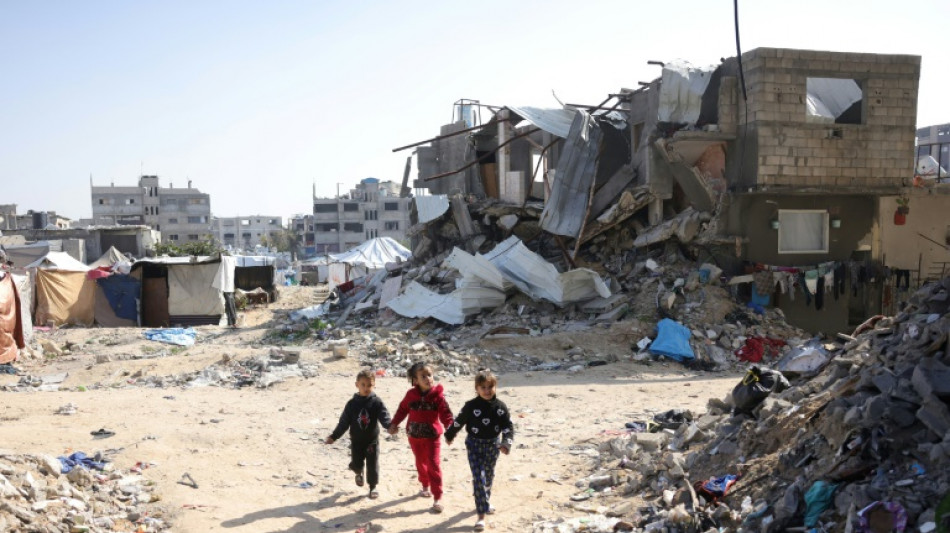
Israel says committed to Trump plan for Gaza displacement / Photo: BASHAR TALEB - AFP
Israel expressed commitment on Monday to a US proposal to take over Gaza and displace its Palestinian residents, as Washington's top diplomat held talks in Saudi Arabia where he was expected to push the plan opposed by Arab states.
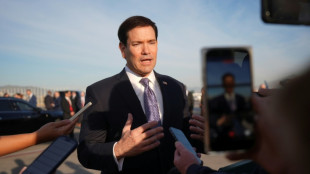
Arriving in the kingdom after talks in Israel, Secretary of State Marco Rubio -- on his first visit to the Middle East -- met de facto ruler Crown Prince Mohammed bin Salman, the State Department said.
A Saudi source had earlier told AFP that Riyadh would host a regional summit later this week "to discuss Arab alternatives" to President Donald Trump's widely criticised plan for Gaza.
Egypt, Jordan, the United Arab Emirates, Bahrain, Saudi Arabia, Oman, Qatar and Kuwait will be represented at the Friday summit, the source said.
In a statement on Monday, Israeli Prime Minister Benjamin Netanyahu said he was "committed to US President Trump's plan for the creation of a different Gaza", also promising that after the war, "there will be neither Hamas nor the Palestinian Authority" ruling the territory.
The United States, Israel's top ally and weapons supplier, says it is open to alternative proposals from Arab governments, but Rubio has said for now, "the only plan is the Trump plan".
The proposal lacked detail but Trump said Palestinians had "lived a miserable existence" in Gaza and suggested the coastal territory could become the "Riviera of the Middle East" following redevelopment after more than 15 months of war.
The United States has also been pushing for a historic deal in which Saudi Arabia would recognise Israel. In return, Riyadh demands the establishment of a Palestinian state -- long opposed by Israeli leaders and potentially in contradiction to Trump's Gaza plan.
On Monday Egypt hosted the latest meeting of the Global Alliance for the Implementation of the Two-State Solution, which initially gathered in Saudi Arabia last year.
Egypt's foreign ministry stressed Cairo's "full commitment to implementing the two-state solution" to the Israeli-Palestinian conflict, and "the necessity of establishing an independent Palestinian state".
Trump's proposal has strained a truce between Israel and Palestinian militants Hamas, the first phase of which would expire in early March.
Negotiations on a second phase, aimed at securing a more lasting end to the war, could begin this week in Doha, a Hamas official and another source familiar with the talks have said.
Netanyahu's office said he would convene a meeting of his security cabinet on Monday to discuss phase two.
It said negotiators dispatched to Cairo would "receive further directives for negotiations" on the second phase after the cabinet meeting.
- Hoping truce holds -
Earlier, Netanyahu said he spoke with Rubio about "Trump's bold vision for Gaza's future" -- which experts have warned would violate international law -- and about ways to "ensure that vision becomes a reality".
Out of 251 people seized in Hamas's October 7, 2023 attack on Israel, which sparked the war, 70 remain in Gaza, including 35 the Israeli military says are dead.
The families of the hostages still in Gaza on Monday marked 500 days of their captivity, holding pictures of their loved ones and banners reading "Home Now".
Dozens marched towards Netanyahu's residence in Jerusalem before they met lawmakers in parliament.
"My eyes burn from the tears I have shed for the past 500 days," said Einav Tzangauker, whose son Matan is among those held in Gaza.
Israeli campaign group the Hostages and Missing Families Forum encouraged people to observe a 500-minute fast on Monday in solidarity with the hostages.
Rubio called in a statement for the immediate release of all remaining captives.
In Gaza, over the 500 days since Hamas's attack sparked the war, Mohammed Abu Mursa said he has known only "humiliation, suffering and bloodshed".
Abu Mursa and his family have been displaced more than a dozen times trying to survive.
"I just hope the ceasefire holds and that the exchange of prisoners continues," he said.
- 'Gross violation' -
The Gaza war has rippled across the Middle East, triggering violence in Yemen and Lebanon, where Iran backs militant groups.
An Israeli strike Monday in the southern Lebanese city of Sidon killed a Hamas commander, Mohammed Shahine, whom the Israeli military accused of planning attacks.
Netanyahu said that with the support of the Trump administration, "I have no doubt that we can and will finish the job" against Iran.
Iran on Monday condemned Netanyahu's remarks, calling them "a gross violation of international law".
Hamas's attack on Israel resulted in the deaths of 1,211 people, mostly civilians, according to an AFP tally of Israeli official figures.
Israel's retaliatory campaign has killed at least 48,271 people in Gaza, the majority of them civilians, according to figures from the health ministry in the Hamas-run territory that the United Nations considers reliable.
burs/jsa/it/ami
X.Thijs--LCdB