CMSC
0.0800
Volodymyr Zelensky was meeting Thursday with US envoy Keith Kellogg after Donald Trump branded the Ukrainian leader a "dictator" and said the Russians "have the cards" in any talks to end the war.
The United States has provided essential funding and arms to Ukraine, but the US president has rattled Kyiv and its European backers by opening talks with Moscow they fear could end the war on terms unacceptable to them.
Zelensky has also hit out at Trump, saying he had succumbed to Russian "disinformation" by repeating Kremlin talking points.
Amid the war of words between Kyiv and its biggest ally, Zelensky's spokesman said there would no be public statements in Kyiv following the talks with Kellogg.
Typically visiting envoys, especially from such a close backer, would hold a joint press conference following talks.
"At the request of the American side, the format of the meeting provides for protocol filming and does not include statements or questions," Zelensky's spokesman Sergiy Nykyforov told reporters.
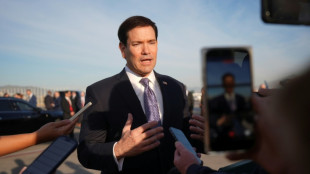
In the United States, Trump's top security adviser said Thursday that Zelensky's criticism of the US president was "unacceptable" and urged him to sign a deal giving preferential access to Ukraine's critical minerals and natural resources.
"We're getting all this pushback... they need to tone it down and take a hard look and sign that deal," National Security Advisor Mike Waltz told Fox News.
- 'They have the cards' -
Under former US president Joe Biden, the United States lauded Zelensky as a hero and hammered Moscow with sanctions as Ukraine battled against advancing Russian troops.
But Trump has been critical of Zelensky, claiming he has subverted democracy and blaming him for starting the war that began with Russia's full-scale invasion three years ago.
"I think the Russians want to see the war end... But I think they have the cards a little bit, because they've taken a lot of territory, so they have the cards," Trump told reporters late Wednesday.
"A Dictator without Elections, Zelenskyy better move fast or he is not going to have a Country left," he wrote on his Truth Social platform.
Zelensky was elected in 2019 for a five-year term and has remained leader in line with Ukrainian rules under martial law, imposed as his country fights for its survival.
While Zelensky's popularity has fallen, the percentage of Ukrainians who trust him has never dipped below 50 percent since the conflict started, according to the Kyiv International Institute of Sociology (KIIS).
- Shock at Trump attack -
Trump's invective drew shock reactions from Europe.
German Chancellor Olaf Scholz said it was "wrong and dangerous" to call Zelensky a dictator.
And in Washington, Trump's former vice president Mike Pence also issued a stinging rebuke.
"Mr. President, Ukraine did not 'start' this war. Russia launched an unprovoked and brutal invasion claiming hundreds of thousands of lives," he wrote on X.
In contrast, the Kremlin hailed Trump's comments. Spokesman Dmitry Peskov said it "absolutely" agreed with Trump after he urged Zelensky to "move fast" to end the conflict.
Both sides are trying to improve their situation on the battlefield amid Trump's push for a ceasefire.
Russian aerial attacks on the east Ukrainian city of Kostiantynivka killed four people Thursday, the national police said.
- Moscow buoyed -
Moscow has been buoyed by its rapprochement with Washington and Trump's attacks on Zelensky.
Kyiv was not invited to the Riyadh talks as Moscow and Washington moved to sideline both Ukraine and Europe.
Putin said US allies "only have themselves to blame for what's happening," suggesting they were paying the price for opposing Trump's return to the White House.
Tensions between Zelensky and Trump over the new US position on the war had been building for weeks.
But Zelensky struck a more positive tone ahead of Thursday's meeting with Kellogg, saying "it is very important for us that the meeting and our work with America in general be constructive."
Russia, which for years has railed against the US military presence in Europe, wants a reorganisation of the continent's security framework as part of any deal to end the Ukraine fighting.
burs-jc/oc/jj
Y.Simons--LCdB