Serbia police issue fresh denial over use of 'sound cannon' on protesters
/ Photo: STRINGER - AFP
Serbia politicians and police on Wednesday again denied they had deployed a "sound cannon" against protesters over the weekend during a massive anti-corruption rally in the capital Belgrade.
For days, there have been repeated allegations that the authorities targeted protesters with an unknown auditory, crowd-control device that briefly caused panic on Saturday night.
Social media footage showed a street crowd part suddenly for unknown reasons, prompting claims that they had been targeted with a sonic weapon or "sound cannon".
Serbia's police, defence ministries, the security agency and the government have all firmly denied using such a device, which emits bursts of ear-piercing noise and is designed to control unruly crowds.
One petition launched by activists, which has reportedly gathered more than half a million signatures, has called for a swift investigation and for an official probe by the United Nations.
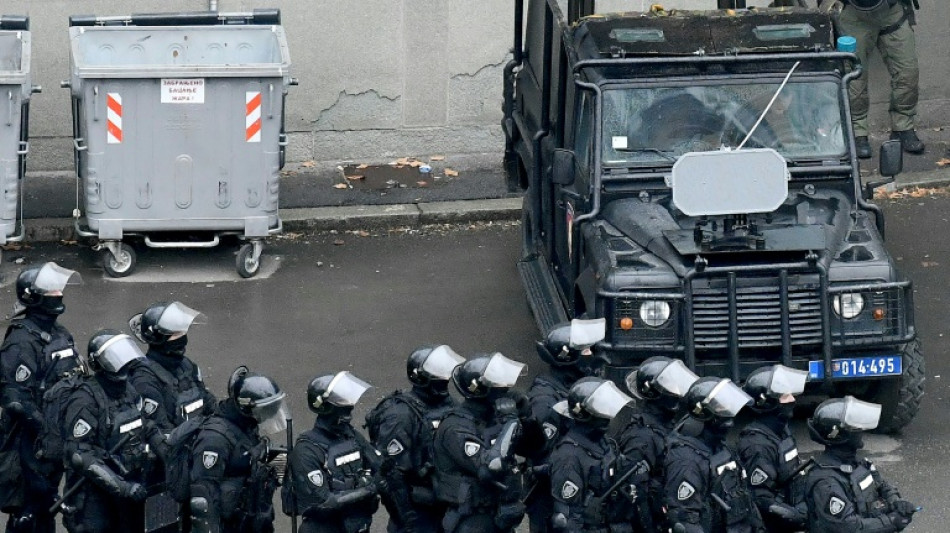
Focus on the issue has zeroed in on photos of a police vehicle at Saturday's protest with a large piece of equipment placed on its hood.
Interior Minister Ivica Dacic on Wednesday denied that the equipment had been used to target protesters.
The vehicle parked by the parliament "remained stationary, and the device was not used elsewhere, nor was sound played from it, except during preparations, drills, and what's necessary for the operation of these units," Dacic said.
"Its use as a sound cannon is prohibited" he added.
Aleksander Radic, a Belgrade-based military analyst, told AFP that the equipment in the picture resembled a American-made LRAD 450 long-range acoustic device.
Between 100,000 and 300,000 people are estimated to have taken part in Saturday's protest, the biggest turn-out yet since a deadly roof collapse at a railway station last year sparked a national protest movement.
Fifteen people were killed in the railway station roof collapse in the city of Novi Sad in November following a massive government-backed renovation of the facility.
The disaster unleashed long-building rage over alleged corruption and lax oversight in construction projects, prompting the resignation of several high-ranking officials, including the prime minister Milos Vucevic.
N.Moens--LCdB