Turkey detains 1,100 protesters since Erdogan rival held / Photo: YASIN AKGUL - AFP
Police have detained more than 1,100 people, officials said Monday -- including journalists -- since the arrest of President Recep Tayyip Erdogan's main rival triggered some of Turkey's worst unrest in years.
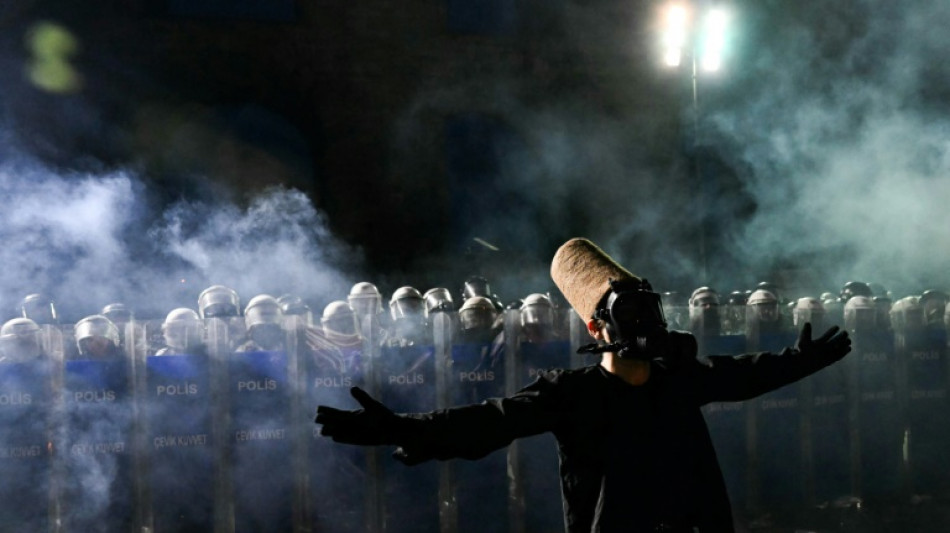
The demonstrations began in Istanbul after Ekrem Imamoglu's arrest last week and have since spread to more than 55 of Turkey's 81 provinces, sparking clashes with riot police and drawing international condemnation.
The popular 53-year-old has been widely seen as the only politician who could defeat Turkey's longtime leader Erdogan at the ballot box.
In just four days he went from being the mayor of Istanbul -- a post that launched Erdogan's political rise decades earlier -- to being arrested, interrogated, jailed and stripped of the mayorship as a result of a graft and terror probe.
On Sunday, he was overwhelmingly voted in as the main opposition CHP's candidate for the 2028 presidential run, with the ballot -- that was opened beyond the party's 1.7 million members -- attracting 15 million votes.
A party spokesman on Monday confirmed his election as the party's candidate.
Observers said it was the looming primary that triggered the move against Imamoglu, the main political rival of Erdogan who has dominated Turkey's politics since 2003, first as prime minister and then as president.
His jailing drew a sharp condemnation from Germany, which called it "totally unacceptable".
Early on Monday, police detained 10 Turkish journalists at home, including an AFP photographer, "for covering the protests", the MLSA rights group said in a statement.
It said most of them were covering the mass demonstrations outside City Hall, where tens of thousands rallied late Sunday, a move denounced by Imamoglu's wife.
"What is being done to members of the press and journalists is a matter of freedom. None of us can remain silent about this," wrote Dilek Kaya Imamoglu on X.
Police have detained more than 1,133 people over "illegal activities" since the protests began Wednesday, Interior Minister Ali Yerlikaya said.
- Lawyers detained -
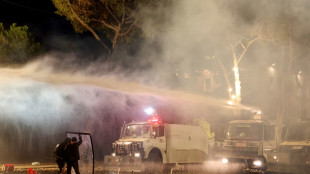
As on previous nights, Sunday's gathering -- the fifth such mass protest -- descended into fierce clashes with riot seen kicking and beating people in Istanbul and elsewhere, AFP correspondents said.
There was no immediate word on overnights arrests but the Izmir Bar Association in the western coastal city said police had arrested two local lawyers, including its former head, who were representing protesters.
Early Monday, Istanbul governor Davut Gul accused demonstrators of "damaging mosques and cemeteries", warning: "Any attempt to disrupt public order will not be tolerated," he wrote on X.
As he was being shipped off to Silivri prison on the megacity's western outskirts, Imamoglu had denounced the judicial moves against him as a political "execution without trial".
In a later message from prison as tens of thousands rallied for a fifth night, he sounded a defiant tone.
"I wear a white shirt that you cannot stain. I have a strong arm that you cannot twist. I won't budge an inch. I will win this war," he said in the message passed through his lawyers.
Throughout Sunday, millions voted in the CHP's highly symbolic primary -- which effectively became a de facto referendum.
"Out of a total of 15 million votes, 13,211,000 are solidarity votes," City Hall said, referring to the number of ballots cast by those who were not CHP members.
"We object to multiple court orders from the Turkish Information and Communication Technologies Authority to block over 700 accounts of news organisations, journalists, political figures, students, and others within Turkiye," its communications team said in a statement.
E.Willems--LCdB