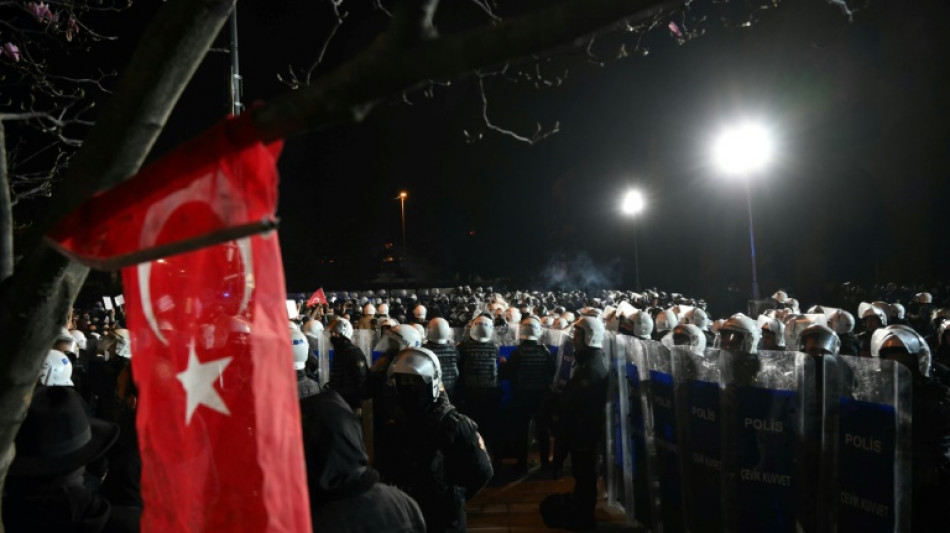
Turkey protesters defiant despite mass arrests / Photo: Angelos Tzortzinis - AFP
Protesters were defiant Wednesday despite a growing crackdown and nearly 1,500 arrests as they marked a week since the start of Turkey's biggest street demonstrations since 2013.
The protests erupted on March 19 after the arrest of Istanbul opposition mayor Ekrem Imamoglu as part of a graft and "terror" probe, which his supporters denounced as a "coup".
Vast crowds have hit the street daily, defying protest bans in Istanbul, the capital Ankara and Izmir with the unrest spreading across the country.
In a possible shift in tactics, the main opposition Republican People's (CHP) party said it was not calling for another nightly protest Wednesday outside the Istanbul mayor office for people to attend a mega rally on Saturday.
But it was far from certain that angry students, who have taken an increasingly prominent role in the protests and are far from all CHP supporters, would stay off the streets.
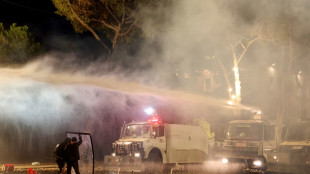
Most nights, the protests have turned into running battles with riot police, whose tough crackdown has alarmed rights groups. But there were no such clashes on Tuesday, AFP correspondents said.
By Tuesday afternoon, police had detained 1,418 people, Interior Minister Ali Yerlikaya said.
Among them were 11 Turkish journalists covering the protests, seven of whom were remanded in custody on Tuesday, including AFP photographer Yasin Akgul.
The move was sharply denounced by rights groups and the Paris-based news agency, which said the 35-year-old's jailing was "unacceptable", demanding his immediate release.
Imamoglu, 53, who himself was jailed on Sunday, is seen as the only politician capable of defeating Turkey's longtime leader Recep Tayyip Erdogan at the ballot box.
- 'No room left in Istanbul prisons' -
Addressing the vast crowds gathered for a seventh straight night at Istanbul City Hall, opposition leader Ozgul Ozel said the crackdown would only strengthen the protest movement.
"There is one thing that Mr Tayyip (Erdogan) should know: our numbers won't decrease with the detentions and arrests, we will grow and grow and grow!" he vowed.
The extent of the crackdown, he said, meant there was "no room left in Istanbul's prisons".
His words came shortly after the interior minister warned there would be "no concessions" for those who "terrorise the streets".
So far, the courts had jailed 172 for "provoking recent social events, being involved in violence, hiding their faces with masks and using sticks", the Anadolu state news agency.
It said 35 others had been granted conditional release, and one was freed.
Overnight, there were reports of dozens more arrests, according to posts on X by unions and youth movements, although there was no immediate update from the interior ministry.
Erdogan himself has remained defiant a week into the protests, denouncing the rallies as "street terror".
"Those who spread terror in the streets and want to set fire to this country have nowhere to go. The path they have taken is a dead end," said Erdogan, who has ruled the NATO member for a quarter of a century.
- 'We are not terrorists' -
Although the crackdown has not reduced the numbers, the vast majority of students who joined a huge street rally on Tuesday had their faces covered, an AFP correspondent said.
"We want the government to resign, we want our democratic rights, we are fighting for a freer Turkey right now," a 20-year-old student called Mali told AFP.
"We are not terrorists, we are students and the reason we are here is to exercise our democratic rights and to defend democracy."
Like most protesters, his face was covered and he refused to give his surname for fear of reprisals.
Another masked student called Lydia, 25, urged more people to hit the streets, saying the protesters were being hunted down "like vermin".
Unlike previous days, the CHP's Ozel said there would be no rally at City Hall on Wednesday, but called protesters to rally instead on Saturday in the Istanbul district of Maltepe to demand early elections.
F.Claes--LCdB