Ukraine reels from deadly Russian strikes, EU fears deeper gas cuts / Photo: SERGEY BOBOK - AFP
Ukraine said Monday Russian forces were readying to scale-up an offensive for key cities in the eastern Donbas region while fresh strikes over the country's second-largest city killed at least three people.
The attacks on Kharkiv in the northeast Ukraine came as Europe was bracing for deeper cuts in gas supplies from Russia as routine maintenance began on the Nord Stream 1 pipeline with Italy and Austria announcing further reductions from Moscow.
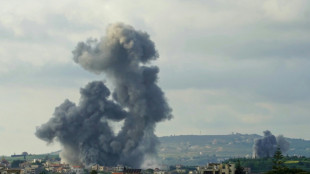
"Residential blocks came under fire. Twenty-eight people were injured, including a 16-year-old child. Three people died," the deputy head of the Ukrainian presidency Kyrylo Tymoshenko said in a statement.
The early morning strikes on Kharkiv with Russian Smerch rockets are the latest deadly attacks with Moscow mounting pressure in the east and grinding slowly across the entire front line.
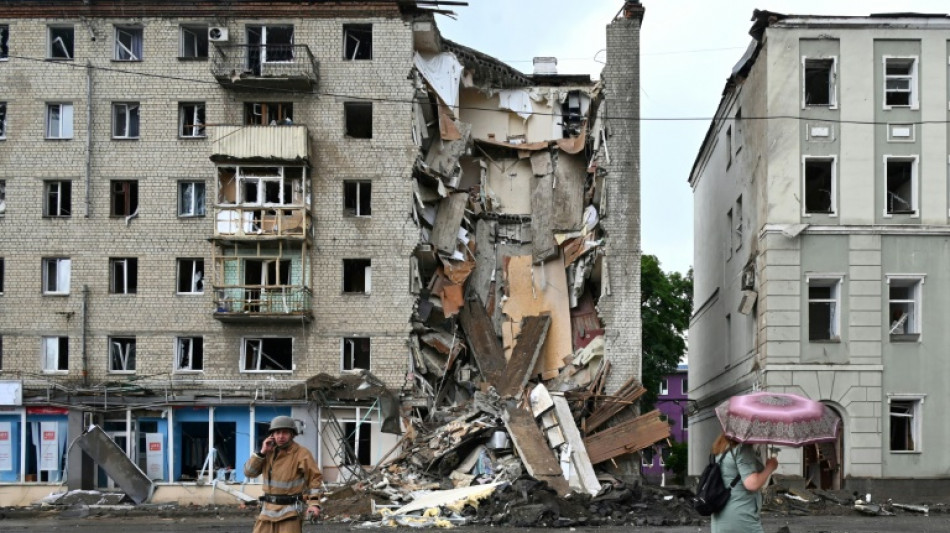
Ukrainian officials said Monday 18 people died over the weekend in devastating strikes by Russia on the town of Chasiv Yar in the Donetsk region.
The emergency services said their work to clear rubble was ongoing and that they had managed to establish verbal contact with two people trapped under the remains of the destroyed residential building.
"Everyone who gives orders for such strikes, everyone who carries them out targeting our ordinary cities, residential areas, kills absolutely deliberately," President Volodymyr Zelensky said late Sunday, vowing the perpetrators would be brought to justice.
Russian defence ministry spokesman Igor Konashenkov claimed Monday meanwhile that "more than 300" Ukrainian combatants had been killed in a Russian strike near Chasiv Yar without giving a date.
- 'No safe place' -
Having fought long battles to capture areas of the eastern Lugansk region, Russian troops are now turning their focus to Donetsk as they look to take control of the whole Donbas.
But though the region was under persistent shelling with authorities reporting nearly 50 attacks on infrastructure, Russian ground attacks were all but paused, the Ukrainian army general staff Monday.
It warned, however, that Russian troops was likely planning to launch some of its heaviest attacks its attacks yet in the Donetsk region.
"There are signs of enemy units preparing to intensify combat operations in the direction of Kramatorsk and Bakhmut," it said, referring to two main cities still under Ukrainian control.
Moscow's slow but steady grind deeper into the east -- despite fierce Ukrainian resistance emboldened by recent deliveries of Western-supplied artillery -- contrasts with their failure to capture the capital Kyiv at the start of the invasion.
In Bucha, a town outside Kyiv, 36-year-old web designer Maxim was sitting around a table with his family outside his home, where just three months ago, Russian soldiers were rummaging through his home and sleeping in his children's bedroom.
"In this atmosphere, I feel like nothing can happen and that life is normal," he said.
"But we know there's a war and there's no place safe in Ukraine right now."
The repercussions of the conflict for Europe were felt Monday with Russian gas giant Gazprom beginning more than a week of routine maintenance on its Nord Stream 1 pipeline.
- Pipeline work fuels supply concerns -
Germany and other European countries are watching anxiously to see if the gas comes back on after Italy's Eni and Austria's OMV said Monday the Russian provider was further reducing the supply of gas.
"Gazprom announced that today it will supply to Eni volumes of gas for approximately 21 million cubic meters/day, while the average for the last few days was of about 32 million cubic meters/day," Eni said.
"OMV has been informed by Gazprom about a reduction in the gas supply. This means for today a reduction of about 70 percent of the amount that arrives at the Baumgarten natural gas hub" near the Slovak border, OMV said in a statement.
Following Russia's invasion of Ukraine in February, Germany suspended certification of a second pipeline, Nord Stream 2, as fears grew over Europe's massive dependence on Russian gas supplies.
Russian officials over the weekend in the eastern Ukrainian region of Kharkiv meanwhile announced the start of the harvest "in the liberated territories of the region".
Ukraine has repeatedly accused Russia of having stolen its wheat harvest in the occupied eastern regions, to illegally sell it on the international market.
W.Smets--LCdB