Saudi-backed forces make advances in Yemen's Hadramawt says military / Photo: - - ADEN INDEPENDENT CHANNEL (AIC TV)/AFP
Saudi-backed troops on Saturday made advances in Yemen's resource-rich Hadramawt province, military officials said, as confrontations between forces backed by Riyadh and Abu Dhabi deepened a rift between the two Gulf allies.
The Saudis and Emiratis have for years supported rival factions in Yemen's fractious government. But a recent offensive by the UAE-backed secessionist Southern Transitional Council (STC) to capture Hadramawt angered Riyadh and left the oil-rich regional powers on a collision course.
In a statement, the military of the Saudi-aligned government announced that "all military and civilian facilities" in Mukalla, the capital of Hadramawt province, had "been secured" by Riyadh-backed forces.
Earlier two government military officials told AFP they had taken control of Mukalla's principal military base.
The Saudi-led coalition has launched repeated warnings and air strikes over the past week, including one on an alleged Emirati arms shipment to the STC.
On Friday, a strike on the Al-Khasha military camp in Hadramawt left 20 dead, according to the separatist group.
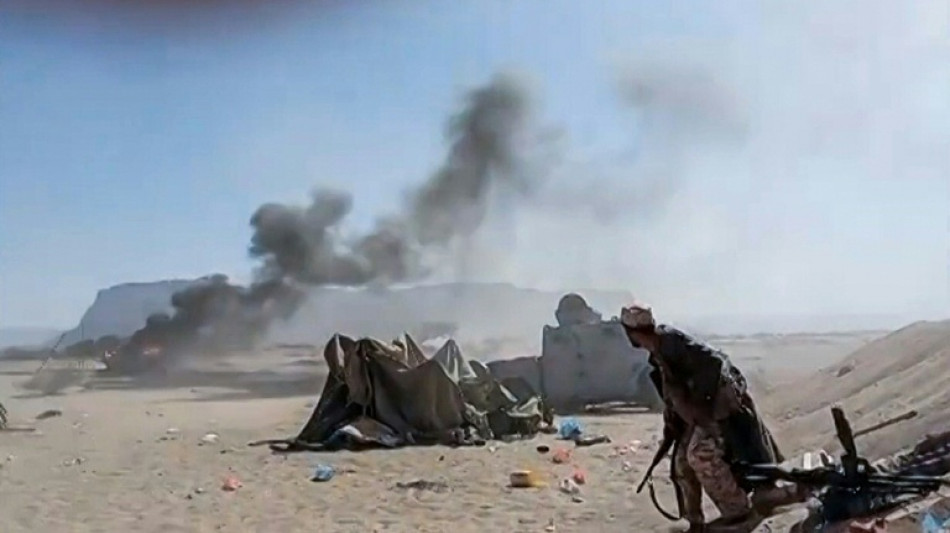
On Saturday, a military official with the STC told AFP Saudi warplanes had carried out "intense" air strikes on another of the group's camps at Barshid, west of Mukalla.
The official said the strike had resulted in fatalities, without giving a number of those killed.
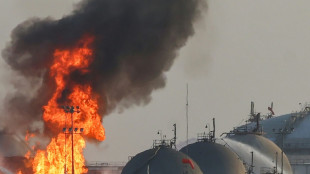
Footage aired by the Aden Independent Channel showed the moment one strike hit the STC forces, igniting a massive orange fireball and sending a plume of black smoke into the sky.
- 'Retreat of forces' -
According to an AFP journalist, gunfire could be heard in Mukalla early Saturday. While residents described a security breakdown there accompanied by looting, Saudi-backed forces appeared to advance with little resistance.
Hani Yousef, a Mukalla resident, said he "saw retreating forces using their military vehicles to transport motorbikes and household items, including refrigerators and washing machines".
In the province's city of Seiyun, 160 kilometres (100 miles) northwest of Mukalla, a government military official said pro-Saudi forces had taken control of the airport, targeted in Friday's strikes, as well as administrative buildings.
"We are working to secure them," the military official said.
The STC military official said: "There has been a retreat of our forces and we are resisting the attacking forces in Seiyun."
"We carried out a complete withdrawal from the areas of Al-Khasha... as a result of pressure from Saudi air strikes on us," he added.
Residents in Seiyun also said they heard gunfire and clashes.
- Call for dialogue -
Saudi Arabia on Saturday called for dialogue between factions in southern Yemen.
In a statement posted to social media, the Saudi foreign ministry called for "a comprehensive conference in Riyadh to bring together all southern factions to discuss just solutions to the southern cause".
Also on Saturday, the UAE urged Yemenis to "halt escalation and resolve differences through dialogue".
The STC is now pushing to declare independence and form a breakaway state, which would split the Arabian Peninsula's poorest state in two.
On Friday the separatists announced the start of a two-year transitional period towards declaring an independent state and said the process would include dialogue and a referendum on independence.
STC president Aidaros Alzubidi said the transitional phase would include dialogue with Yemen's north -- controlled by Iran-backed Houthi rebels -- and a referendum on independence.
But he warned that the group would declare independence "immediately" if there was no dialogue or if southern Yemen was attacked again.
The Saudi-backed coalition was formed in 2015 in an attempt to dislodge the Houthi rebels from Yemen's north.
But after a brutal, decade-long civil war, the Houthis remain in place while the Saudi and Emirati-backed factions attack each other in the south.
R.Lacroix--LCdB