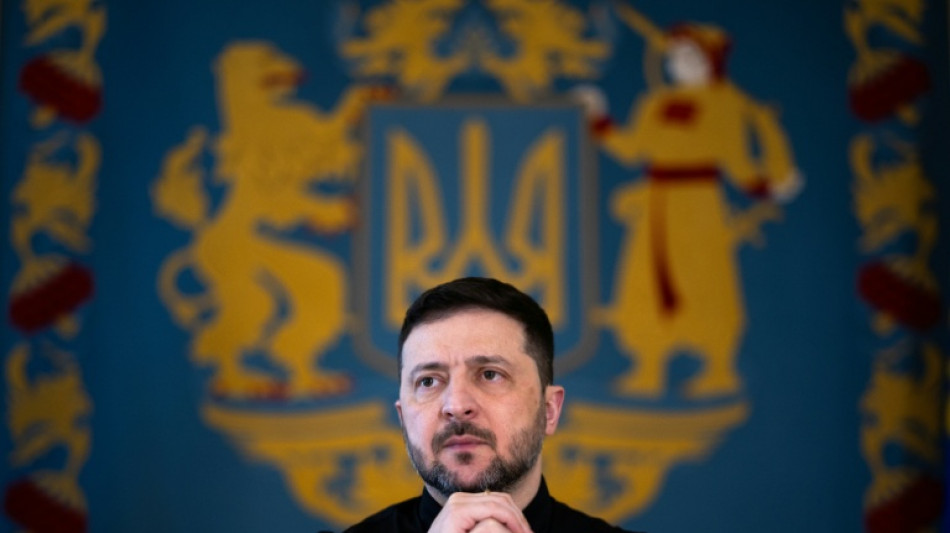
Putin failed to achieve goals in Ukraine, Zelensky says on war anniversary / Photo: HENRY NICHOLLS - AFP
President Volodymyr Zelensky marked the four-year anniversary of the Ukraine war by accusing Russian counterpart Vladimir Putin of trying to take over Ukraine, saying he had failed to achieve this and other war goals.
In a video address that showed Ukrainians carrying out acts of resistance against Russian soldiers in the opening days of the conflict, Zelensky added that Ukraine was ready to do "everything" it could to secure a strong, lasting peace.
Hundreds of thousands have died since Russia invaded its neighbour on February 24, 2022, unleashing the deadliest war on European soil since World War II.
Talks between the two sides, relaunched last year by the United States, have so far failed to halt the fighting, which has devastated the country and left it facing a mammoth reconstruction task.
"Putin has not achieved his goals. He did not break the Ukrainians. He did not win this war. We have preserved Ukraine, and we will do everything to achieve peace -- and to ensure there is justice," Zelensky said in his address.
"We want peace. Strong, dignified, and lasting peace," Zelensky said, adding that any agreement "must not simply be signed, it must be accepted by Ukrainians".
The leaders of Ukraine's allies, including Finnish President Alexander Stubb and Swedish Prime Minister Ulf Kristersson, were in the country on Tuesday to mark the anniversary.
European Commission chief Ursula von der Leyen was also there, saying she wanted to reaffirm that Europe stood "unwaveringly with Ukraine, financially, militarily, and through this harsh winter".
"And to send a clear message to the Ukrainian people and to the aggressor alike: we will not relent until peace is restored. Peace on Ukraine's terms," she said in a video posted to social media.
She is expected to attend a "commemoration ceremony" and visit a Ukrainian energy facility damaged by Russian strikes before meeting Zelensky and taking part in a videoconference with Kyiv's allies, including Britain, France and Germany.
- Territory dispute -
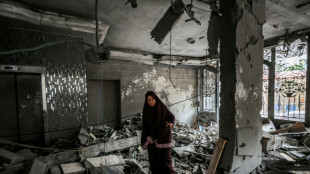
The United States has been pushing for an end to conflict, which has destroyed much of eastern and southern Ukraine, but Moscow and Kyiv remain at odds over territory.
Russia, which occupies around 20 percent of Ukraine, is pushing for full control of Ukraine's eastern Donetsk region as part of any deal.
It has threatened to take it by force if Kyiv does not cave at the negotiating table.
Ukraine has rejected the demand and said it would not sign a deal without security guarantees from allies including the US to deter Russia from invading again.
Moscow has in recent months escalated its attacks on Ukrainian energy infrastructure, cutting heating and power to millions of Ukrainians during winter.
Kyiv's allies have slapped heavy sanctions on Moscow, forcing it to redirect its key oil exports towards new markets, particularly in Asia.
Despite heavy losses, Russian troops have in recent months advanced slowly on the front line, particularly in the eastern Donbas region, which Moscow wants to annex.
Russia, though, has rejected Ukrainian proposals for the deployment of European troops in Ukraine after any ceasefire deal.
President Vladimir Putin has repeatedly warned that he will pursue his objectives by force if diplomacy fails.
- Reconstruction -
The grinding four-year war has devastated Ukraine, which even before the fighting was one of the poorest countries in Europe.
The cost of post-war reconstruction is estimated at around $588 billion over the next decade, according to a joint World Bank, EU and UN report with Kyiv, published on Monday.
Russia cast its decision to send troops into Ukraine as a defensive move to halt Ukraine's ambition to join NATO.
Ukraine, a former Soviet republic, considers the war to be a resurgence of Russian imperialism aimed at subjugating the Ukrainian people.
Ahead of the anniversary last week, Zelensky told AFP that Ukraine was not losing the war and urged European countries to deploy troops right on the front line in the case of any ceasefire, to protect against Russia attacking again.
X.Hardy--LCdB