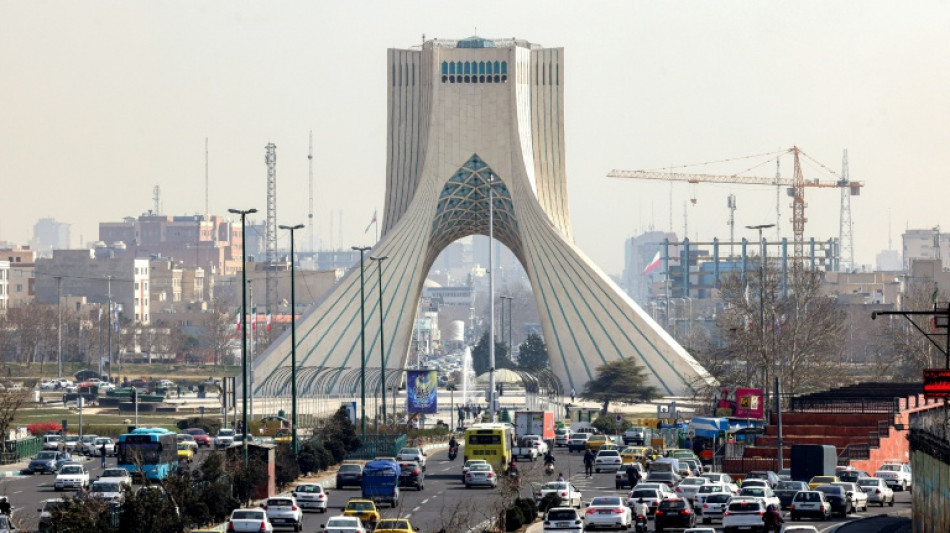
Iran says deal 'within reach' ahead of US talks / Photo: ATTA KENARE - AFP
Iran's foreign minister declared Tuesday that a deal to avoid a military clash with the United States was within reach, two days before talks between the foes were due to resume in Geneva.
Abbas Araghchi's appeal came as Iran issued a muted warning to student protesters maintaining pressure on the government, against the backdrop of mounting US threats of action to halt Tehran's nuclear programme.
"We have a historic opportunity to strike an unprecedented agreement that addresses mutual concerns and achieves mutual interests," Araghchi said in a social media post.
The minister added that a deal was "within reach, but only if diplomacy is given priority."
Tehran and Washington are due to hold a third round of negotiations on Thursday in Geneva, the latest since talks resumed earlier this month.
The talks will be held following a heavy US military deployment in the region in recent weeks and threats by President Donald Trump of a strike on Iran if no deal is reached.
Iran has repeatedly said it would respond firmly to any attack and on Monday the foreign ministry warned that any strike, even limited, "would be regarded as an act of aggression".
In his post on Tuesday, Araghchi vowed Iran will "under no circumstances ever develop a nuclear weapon," but insisted on the country's right to "harness dividends of peaceful nuclear technology".
"We have proven that we will stop at nothing to guard our sovereignty with courage," he added.
Iran and the US held five rounds of nuclear talks last year but those negotiations were brought to an end with Israel's unprecedented attack on Iran which triggered a 12-day war.
- 'Red lines' protest warning -
Meanwhile, university students in Tehran kicked off a new semester with gatherings in which they revived slogans from nationwide protests against the country's clerical leadership.
On Tuesday, the fourth consecutive day of the campus protests, videos verified by AFP showed two groups facing off in a large hall at a Tehran university before scuffles break out.
The day before, students had burned the flag that was adopted by Iran's Islamic republic after the 1979 revolution that toppled the monarchy, according to verified videos.
Iranian government spokeswoman Fatemeh Mohajerani, giving the first official reaction to the rallies, said that while students had a right to protest, they must "understand the red lines".
The flag, she added, was one "of these red lines that we must protect and not cross or deviate from, even at the height of anger".
- US military build-up -
The initial wave of protests began in December, sparked by economic woes in the sanctions-hit country, but soon grew into nationwide demonstrations that crested on January 8 and 9, posing one of the largest challenges to Iran's leaders in years.
The unrest prompted a violent government crackdown that killed thousands of people.
The US-based Human Rights Activists News Agency (HRANA) has recorded more than 7,000 deaths, while warning the full toll is likely far higher.
Iranian officials acknowledge more than 3,000 deaths, but say the violence was caused by "terrorist acts" fuelled by the United States and Israel.
The crackdown in January prompted Trump to threaten to intervene militarily on the protesters' behalf, though the focus of his threats soon shifted to Iran's nuclear programme, which the West believes is aimed at building an atomic bomb but Tehran insists is peaceful.
Washington deployed the aircraft carrier USS Abraham Lincoln to the Arabian Sea, and another, the USS Gerald R. Ford, has arrived at a US base in Crete en route to the region.
Z.Barbier--LCdB