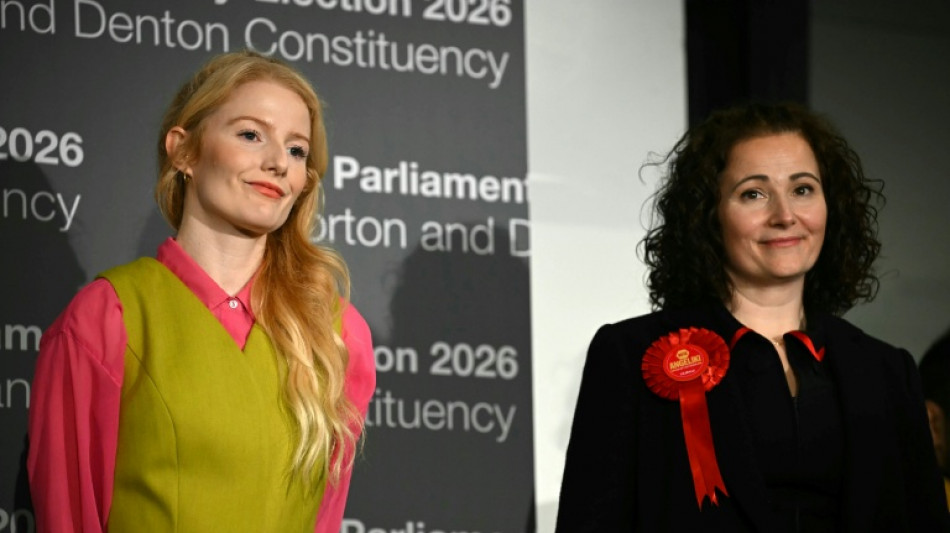
Starmer vows to fight 'extremes' after UK Labour election drubbing / Photo: Paul ELLIS - AFP
British Prime Minister Keir Starmer vowed Friday to fight "the extremes in politics" after left-wing and hard-right parties both beat his ruling Labour in what had been a traditional stronghold.
The embattled centrist leader called his party's third-place showing -- behind the victorious leftist Greens and anti-immigration Reform UK party -- in Thursday's by-election for a Manchester parliamentary seat "disappointing".
It came just weeks after he defied calls within his own party to resign following numerous policy U-turns and missteps, including appointing an ambassador to the US linked to Jeffrey Epstein.
But Starmer vowed on Friday to "keep on fighting".
The result in the Gorton and Denton constituency, which Labour had dominated for decades, encapsulated how the centre-left party is being squeezed by both ends of the political spectrum -- and how the country's traditional two-party system is fracturing.
It also showed voters were increasingly open to insurgent parties for answers on long-standing, hot-button issues like the high cost of living and irregular immigration.
In his first public comments following the contest, Starmer acknowledged voters were "frustrated".
But he criticised Reform for peddling the "politics of hatred and division" and the Greens for its left-wing policy platform.
"They are the extremes in politics," he told broadcasters, adding that the two parties could only "identify the grievances".
- 'Threat' -
Hannah Spencer, a 34-year-old plumber, won the Gorton and Denton seat comfortably to become the Greens' fifth sitting MP in the 650-seat British parliament.
Party leader Zack Polanski, a charismatic figurehead some liken to New York Mayor Zohran Mamdani who only took charge of the Greens last September, called it a "seismic" victory.
"People now recognise there is an alternative," he told a press conference.
The party's campaign was less focused on environmental concerns and more focused on cost-of-living pressures and other topical issues.
The contest was triggered by ex-lawmaker Andrew Gwynne resigning on health grounds.
Labour won the seat comfortably in the July 2024 general election landslide that swept Starmer to power and ousted the Conservatives after 14 years in office.
Less than two years later however, opinion polls suggest Starmer is deeply unpopular.
His party lost the only other by-election it has faced since taking power to Reform last year.
The next general election is not expected until 2029, but Thursday's defeat will intensify pressure on Starmer ahead of local polls in May, when the party is again expected to perform poorly.
University of Manchester politics lecturer Louise Thompson said it showed he must now "fight a war on two fronts".
"Whereas previously he's focused in a much more laser-like way on Reform... Labour will need to take the Green threat much more seriously," she told AFP.
- 'Values' -
The Greens had never won a parliamentary by-election before. Its grassroots campaign sought to mobilise the constituency's 28-percent Muslim population.
The party, which under Polanski has embraced a full-throated left-wing agenda including higher taxes on the wealthy, is avowedly pro-Palestinian.
The result was a blow for Brexit champion Nigel Farage, whose hard-right Reform party has led national polls for the past year.
He called it "a victory for sectarian voting and cheating", pointing to election observers reporting several dozen incidents of so-called "family voting" -- where two voters either confer, collude or direct each other.
Farage said Friday he had referred the cases to the Electoral Commission watchdog and Manchester police, which said it was reviewing the report.
"What was witnessed yesterday is deeply concerning and raises serious questions about the integrity of the democratic process in predominantly Muslim areas," he said.
Starmer has spent much of his time in office targeting Reform, in particular by toughening Labour's stance on immigration.
But that appears to be alienating elements of Labour's left-wing base, including young people.
"If the government wants to survive, it urgently needs to stand up for workers and defend the fundamental values of our movement," she added.
U.Smet--LCdB