Iran says war could destroy global economy, Trump vows to 'finish' job / Photo: ATTA KENARE - AFP
Iran warned it could wage a prolonged war with the United States and Israel that would "destroy" the world economy, even as US President Donald Trump vowed Thursday to "finish the job", saying there was little left for American forces to strike.
The statement from Tehran came as fighting around the strategic Strait of Hormuz -- the waterway carrying a fifth of the world's oil -- sent shockwaves through energy markets, prompting emergency releases from global reserves and a limited draw on US stockpiles.
Oil prices have surged since February 28, when the United States and Israel launched air strikes on Iran that killed its supreme leader and plunged the Middle East into conflict.
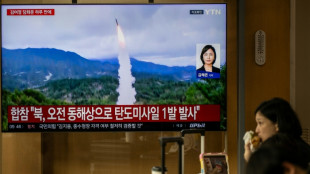
Iranian missile strikes and drone attacks have brought shipping through the strait almost to a halt, forcing governments to scramble to contain the fallout, but Trump said Wednesday the United States must "finish the job."
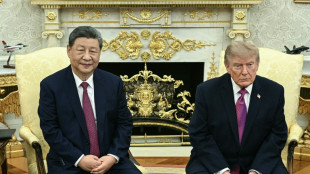
"We don't want to leave early, do we?" Trump said while talking about the US-Israeli operation during a speech in Hebron, Kentucky.
Trump said Washington would also tap US strategic reserves "a little" to help stabilise markets, while the International Energy Agency agreed to release a record 400 million barrels.
The president had earlier suggested the war itself might soon wind down. US forces have struck 28 Iranian mine-laying vessels, he said, adding that there was "practically nothing left to target".
"Any time I want it to end, it will end," he said in an interview with Axios.
Israel's military, however, signalled the campaign was far from finished, and that it still had "a broad bank of targets."
- Economic shock -
With the conflict in its 12th day, Iran's Revolutionary Guards (IRGC) warned they would strike "economic centres and banks" linked to US and Israeli interests, prompting more international firms to evacuate staff from Dubai.
The United States and Israel "must consider the possibility that they will be engaged in a long-term war of attrition that will destroy the entire American economy and the world economy," Ali Fadavi, an adviser to the Guards' commander-in-chief, told state television.
Iran said it targeted two commercial vessels in the Gulf after they entered the Strait of Hormuz "after ignoring the warnings" of its navy.
The IRGC also insisted Tehran retained full control over the strategic waterway, adding that "armed forces are not neglecting their duties for even a moment."
Analysts warn that a prolonged disruption to shipping through the strait -- which also carries roughly a third of the fertiliser used in global food production -- would deliver a severe economic shock, particularly in Asia and Europe.
The UN Security Council passed a resolution demanding Iran halt attacks on Gulf states, prompting the Islamic republic's ambassador to the United Nations to accuse it of a "blatant misuse" of its mandate.
The conflict has already disrupted two pillars of the Gulf economy -- energy production and commercial aviation.
On Wednesday, drones fell near Dubai airport, injuring four people, authorities said. Others struck fuel tanks at Oman's Salalah port, according to the Oman News Agency.
- Lebanon drawn in deeper -
In an apparent first since the war began, Israeli drones also struck targets in Tehran on Wednesday evening, killing members of the security forces, Iran's Fars news agency reported.
The IRGC said just after midnight on Thursday they had carried out a joint missile operation with Hezbollah against targets in Israel.
Pentagon officials have meanwhile briefed US lawmakers that the cost of the war exceeded $11.3 billion in its first six days, The New York Times reported, citing people familiar with the classified briefing.
Lebanon said the death toll from ten days of fighting between Israel and Iran-backed militant group Hezbollah had reached more than 630, while more than 800,000 people have registered as displaced.
The conflict has continued to spill across the region.
Lebanon was pulled into the war last week when Hezbollah attacked Israel following the killing of Iranian supreme leader Ayatollah Ali Khamenei.
Israeli strikes on Wednesday hit an apartment building in central Beirut. AFPTV footage captured the sound of an incoming strike followed by a fireball erupting from the building.
"I ran from room to room, pulled my wife and daughter out of the rooms and hid them behind a wall, then the second strike hit," said Fawzi Asmar, a bakery owner on the same street.
Israel later launched what it described as a "large-scale wave of strikes" in response to Hezbollah rocket fire. Lebanon's health ministry said eight people were killed in an Israeli strike in the country's east.
- 'Satan himself' -
The US-Israeli assault began only weeks after Iranian authorities crushed mass protests, though the allies insist regime change is not necessarily their goal.
Iranian officials warned dissent would be treated as treason.
Police chief Ahmad-Reza Radan said protesters would be viewed and dealt with as "enemies".
Iran's new supreme leader, Ayatollah Mojtaba Khamenei, has yet to appear in public, and officials said Wednesday he had been wounded but was "safe".
Iran's health ministry said on March 8 that more than 1,200 people had been killed in US and Israeli strikes. AFP could not independently verify the figure.
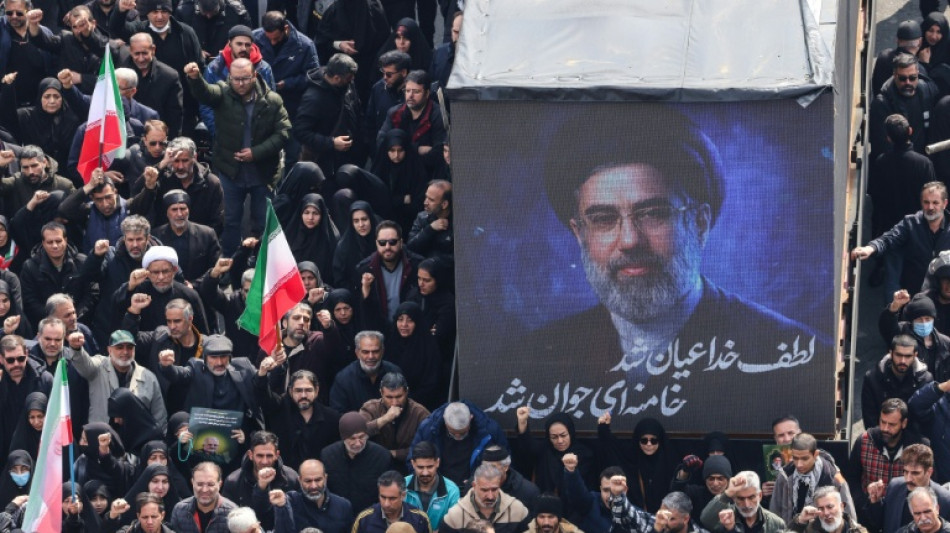
Thousands of mourners gathered in Tehran to commemorate commanders killed in the attacks, the largest public gathering since the war began, held under a heavy security presence.
Yahya Rahim Safavi, a senior adviser to the new supreme leader, also struck a defiant tone, calling Trump the "most corrupt and stupid American president" and "Satan himself."
C.Adam--LCdB