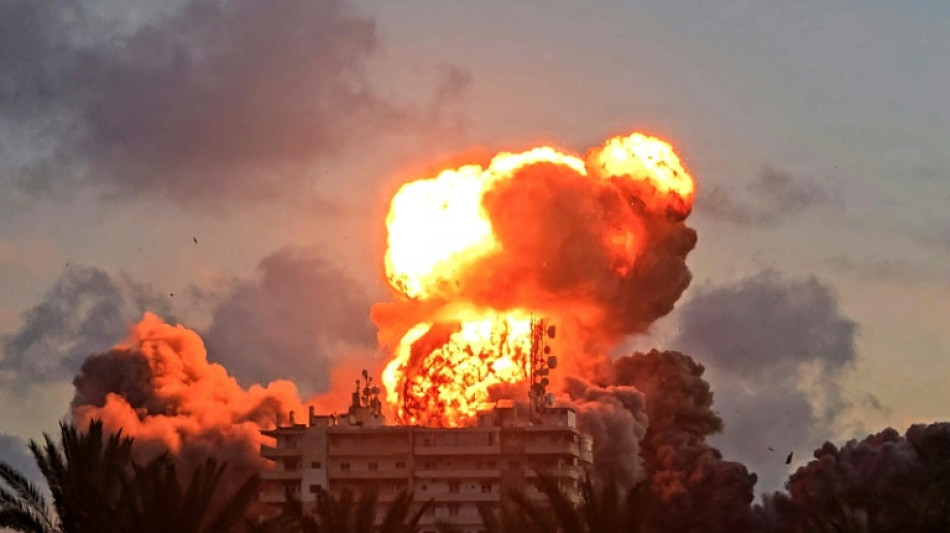
Israel strikes near Beirut, widening Lebanon offensive / Photo: KAWANT HAJU - AFP
Israel pounded south Lebanon and struck the Beirut area on Thursday, widening its offensive with the first strike near the country's capital in weeks despite a fragile ceasefire.
A Lebanese military source said an apartment south of Beirut was hit in the second such raid since the truce in the war between Israel and militant group Hezbollah came into effect on April 17, after war broke out in early March.
The escalation comes as Lebanon and Israel prepare for talks between military delegations at the Pentagon on Friday, and for US-brokered talks early next week -- the fourth round since the latest Israel-Hezbollah conflict erupted.
Hezbollah's parliamentary bloc on Thursday urged Lebanese authorities to withdraw from the negotiations, accusing Israel of "seeking to impose security coordination to benefit its aggression" in the military talks.
After heavy strikes that Lebanese authorities said killed at least 14 people including three children, Israel's military said it "precisely struck in Beirut", without identifying the target.
A Lebanese military source, requesting anonymity, told AFP that the strike "targeted an apartment in the Choueifat area".
AFPTV footage showed smoke rising from the area on the edge of Beirut's southern suburbs, a Hezbollah stronghold.
An AFP correspondent said the first two floors of a residential building were damaged, and saw residents packing cars and leaving.
It was the second Israeli strike on south Beirut since a ceasefire between Israel and the Iran-backed Hezbollah that was supposed to have taken effect on April 17 but has never been observed.
- 'Deeply concerned' -
Both sides accuse each other of violating it and justify their attacks by the other's alleged truce breaches.
Hezbollah on Thursday claimed around 20 attacks on Israeli troops in south Lebanon, including with rockets and drones.
Stephane Dujarric, spokesman for UN Secretary-General Antonio Guterres, expressed concern and called on both sides to respect the ceasefire.
The UNIFIL peacekeeping force in Lebanon said that "Wednesday saw around 670 projectiles fired -- the highest level since 17 April".
Lebanon's health ministry said Israeli attacks since then had killed 3,324 people, an increase of 55 compared to a day earlier.
Israel's army said in a statement that "approximately 2,500 Hezbollah terrorists have been eliminated" since March, including 800 since the ceasefire announcement.
An Israeli military official said Thursday around 400 explosive drones had been launched at Israeli targets since the truce.
On Wednesday, Israel's military declared all areas south of Lebanon's Zahrani River -- around 40 kilometres (25 miles) from the border and including the cities of Tyre and Nabatieh -- to be "combat zones" and told residents to evacuate, after Israel this week vowed to ramp up operations in Lebanon.
Lebanon's state-run National News Agency reported Israeli strikes on multiple south Lebanon locations, some of them deadly, including successive raids on the city of Nabatieh, one of which it said destroyed a mosque.
- 'Collective punishment' -
Israeli airstrikes hit Tyre and Sidon, both southern cities, early Thursday, AFP correspondents said.
AFP footage showed a fireball followed by smoke as a strike hit a building in Tyre's archaeological district.
Resident Ghazouane Halawani told AFP he believed Israel wanted to attack the ancient city's "history and its civilisation".
"We're staying here. This is our country, our land, our life," he added.
Prime Minister Nawaf Salam said on X that "nothing can justify the ongoing attacks on the Tyre and Nabatieh regions and the destruction of their historical landmarks" and decried ongoing Israeli attacks and evacuation orders there as "collective punishment".
Lebanon's health ministry said a strike in Tyre killed two Syrians including a child, and another in Sidon killed five people, including two women.
It said another strike on a vehicle in south Lebanon's Adloun killed six people "including two children, their mother and their father".
Lebanon was drawn into the Middle East war when Hezbollah launched rockets at Israel over the killing of Iran's supreme leader in US-Israeli attacks, prompting Israeli strikes and a ground invasion.
Iran has insisted any agreement to end the broader conflict must apply to Lebanon.
U.Smet--LCdB