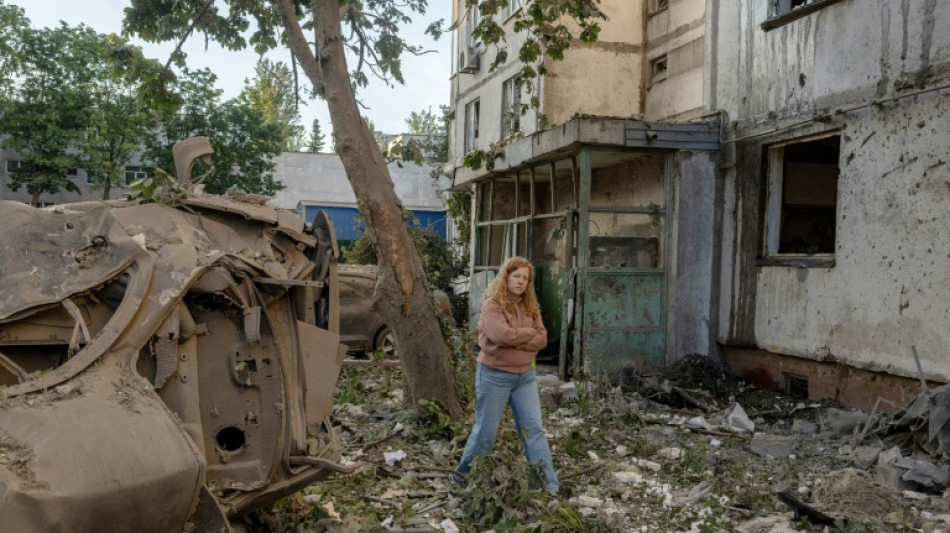
'In the queue': Busy with Iran, US has little energy for Kyiv / Photo: Roman PILIPEY - AFP
US Secretary of State Marco Rubio faced four different congressional panels this week on Washington's role in various global conflicts, but the war in Ukraine barely came up.
With the Trump administration consumed by the crisis in Iran, Ukraine has largely dropped off the radar, despite increasingly deadly attacks from Russia.
Speaking in Kyiv a day after 23 people were killed across Ukraine in the latest massive Russian aerial assault, Ukrainian President Volodymyr Zelensky on Wednesday lamented dwindling US attention.
"Today we are not in focus," Zelensky said alongside visiting NATO chief Mark Rutte. "Iran is the number one issue for the United States of America, and then comes the issue of Ukraine. Unfortunately, we are in the queue of these wars."
In an interview last week, Zelensky said Kyiv badly needs US air defense systems to protect against Russian missiles as well as a tougher stance on Russian President Vladimir Putin.
"We need more sanctions. I think we need more pressure," Zelensky told CBS.
- 'No military solution -
Trump ran for president on a promise to quickly end the war in Ukraine and invested months in shuttle diplomacy, putting pressure on Kyiv to make concessions and hosting Putin to try to nudge him towards a peace deal.
But the effort has produced only several short-lived ceasefires and prisoner exchanges, with Moscow and Kyiv remaining far apart on the issues of territory, security guarantees and sanctions relief.
When pressed to address the Ukraine conflict during about 10 hours of congressional testimony, Rubio conceded US-led negotiations between Moscow and Kyiv had reached a stalemate.
"Unfortunately... neither side has been willing to make concessions, particularly on the Russian side, necessary in order to bring peace about," Rubio told the House Foreign Affairs Committee.
"We think the war in Ukraine, devastating war, has no military solution, it can only be solved through a diplomatic route -- and it's been unfruitful."
With Russia's advance on the battlefield largely stalled, Moscow has intensified missile and drone attacks on Ukrainian cities while Kyiv increasingly targets military and infrastructure sites inside Russia.
Most recently, Ukrainian drones hit oil and military facilities in Russia's second-largest city of Saint Petersburg as it was hosting a major economic forum -- a move sure to have stung in the Kremlin.
Rubio said Ukraine's success in recent months in striking deep inside Russia was likely to be met with more aggression.
"The risk of escalation is real, more real than it was two years ago," Rubio told the Senate Appropriations Committee.
In his interview with CBS, Zelensky lamented that Trump's roving envoys Steve Witkoff and son-in-law Jared Kushner have never been to Kyiv, despite making several trips to Moscow.
"I think that we need to see (the) American negotiation group in Ukraine," Zelensky said. First "they have to come to Kyiv, and then go to Moscow."
- Europe to step in? -
Elina Beketova, a fellow at the Washington-based Center for European Policy Analysis, said the Kremlin had little genuine interest in negotiations.
"The recent strikes on Ukraine indicate that Russia is not ready to de-escalate," Beketova said.
"A window for negotiations may open only if the battlefield situation shifts -- if Ukraine strengthens its position as a resilient 'fortress state' and Russia becomes significantly exhausted both militarily and economically."
Increasingly, Zelensky has called on Europe to play a greater role, including through diplomacy with Moscow, something European leaders have largely avoided, focusing instead on isolating Russia with sanctions.
"We both agree that Europe must be involved in the negotiations," Zelensky wrote on Facebook last month after a call with European Council president Antonio Costa. "It is important for it to have a strong voice and presence in this process."
With Washington reducing military, financial and diplomatic engagement in Ukraine, the message is clear, said Michael Kimmage, director of the Kennan Institute.
"That maybe is the important trend line, a trend line of declining relevance of the Trump administration to the conflict overall," he said.
E.Celis--LCdB