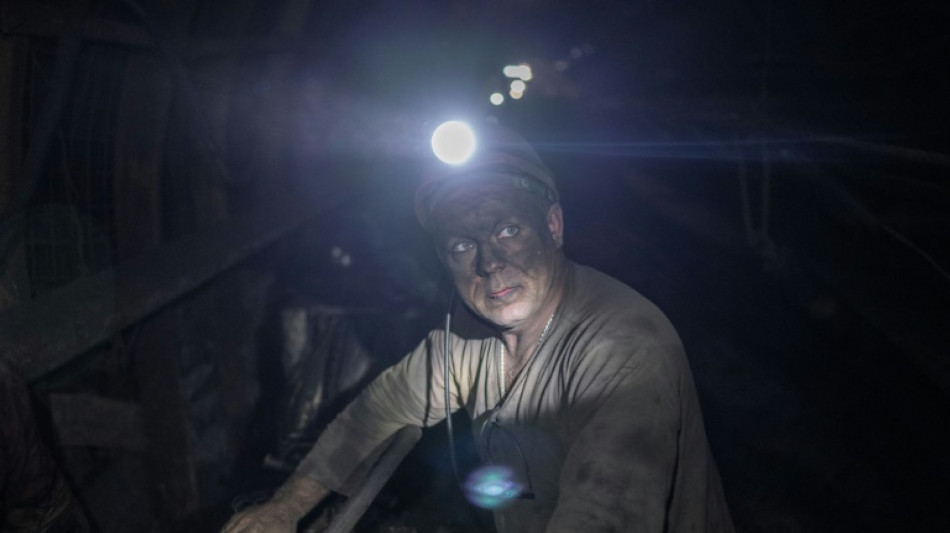
Miners toil for coal beneath the battle for east Ukraine / Photo: BULENT KILIC - AFP
Deep underground, not far from Ukraine's frontlines, coal miners burrowing in the bowels of the earth are preoccupied by the war but resigned to getting the job done.
Since Moscow's troops failed to storm Kyiv, the conflict has shifted to the agricultural south and industrial, coal-rich Donbas in the east.
At a mine founded 43 years ago, when Ukraine was still part of the USSR, outside the city of Pavlograd in the Dnipropetrovsk region, 4,000 workers toil on rotating shifts.
Just 170 kilometres (106 miles) from the pro-Russian separatist stronghold of Donetsk, miner Oleksandr Oksen says thoughts are often with colleagues on the frontlines.
"We are with them in spirit, but after all, the coal also needs to be mined by someone" the 42-year-old pit boss said.
Some 800 employees have been called up to serve as soldiers in the war raging 150 kilometres to the east, soon to enter its seventh month.
Mine officials insist output has nevertheless remained the same.
From the ground level, the facility has the air of a university campus. Willow fronds blow in the wind and a water feature spouts next to a waist-high giant chess set.
But 370 metres (1,200 feet) down a lift shaft, wailing with the sound of tortured metal during the descent, the hardships of working at the coalface begin.
The heat is smothering, and the air is saturated with percolating dust. It is said there is a ghost in the mine that helps the workers, but even here they are haunted by anxieties about the war.
Phones must be surrendered at the start of shifts and staff learn only of the latest developments -- and the safety of friends and family -- when they emerge back into the sunlight six hours later.
"Leaving the mine, the first thing they do is pick up the phone and call," said Vasyl, the director of the mining complex, who asked that his last name not be used.
After plunging into the tunnels, workers are ferried 3.6 kilometres in a squat train carriage -- like a giant filing cabinet turned on its side -- before travelling by foot up a narrow tunnel, the rock walls held back by rusted metal cages.
The slot in the rock is winnowed down further and further, until it is only one metre tall.
Deep inside, hunched at his post, is Volodymyr Palienko, 33, tinkering with the metal maw of a machine.
"What is happening in our country affects everyone," he says. "Everyone has friends and acquaintances who are involved in one way."
G.Wouters--LCdB