Israel detonates tunnel, strikes south Lebanon / Photo: ibrahim AMRO - AFP
The Israeli army destroyed an extensive tunnel built by Hezbollah in southern Lebanon, Prime Minister Benjamin Netanyahu and Defence Minister Israel Katz said Sunday, with Lebanese state media reporting strikes in the area.
The attacks came despite a trilateral framework agreement signed by Lebanon and Israel under US sponsorship on Friday to pave the way for peace between the two countries and disarm Iran-backed Hezbollah.
Lebanon's state-run National News Agency (NNA) reported several strikes Sunday, including on the southern city of Nabatieh, with the Lebanese health ministry saying two people were wounded by an Israeli stun grenade in the south.
"The tunnel, stretching more than 200 metres and reaching a depth of over 25 metres, contained hundreds of weapons as well as several launch shafts intended to target the State of Israel and its civilians," Katz and Netanyahu said in a joint statement.
"Israel informed the United States and the US representative in Lebanon in advance of the destruction of the infrastructure."
An AFP reporter in the coastal city of Tyre, situated about 10 kilometres (six miles) from the location of the detonation near the village of Majdal Zoun, saw smoke rising in the distance.
He said residents in towns south of Tyre left after hearing reports in the Lebanese media that Israel might detonate nearby.
-- Pressure on Hezbollah --
The incident, the first such detonation since the agreement, come a day after one person was killed in an Israeli strike on the south, according to Lebanon's health ministry.
The Israeli military said it had targeted Hezbollah members near its self-proclaimed "security zone", which reaches 10 kilometres (six miles) into Lebanon.
The Israeli army said one of its soldiers "fell in combat" in southern Lebanon, and later said it killed a "Hezbollah terrorist" who had clashed with its forces.
Hezbollah drew the country into the Middle East war in March with rocket fire aimed at Israel to avenge the killing of Iran's supreme leader in US-Israeli strikes.
Israel responded with massive airstrikes and a ground invasion.
Lebanese President Joseph Aoun told his US counterpart Donald Trump on Saturday that his country "would assume its responsibilities" in implementing the agreement.
The deal makes any Israeli withdrawal from occupied Lebanese land conditional on Beirut disarming Hezbollah by creating "pilot zones" that the Lebanese military will take over.
Israeli Prime Minister Benjamin Netanyahu called the deal historic for his country and a blow to Tehran.
Israel's Defence Minister Israel Katz has insisted troops will stay in Lebanon so long as Hezbollah remains armed.
- 'Internal conflict' -
Hezbollah strongly opposed the talks with Israel from the start and rejects the agreement.
Leader Naim Qassem said on Saturday that the group would treat the deal as "null and void" and described it as "a surrender of sovereignty".
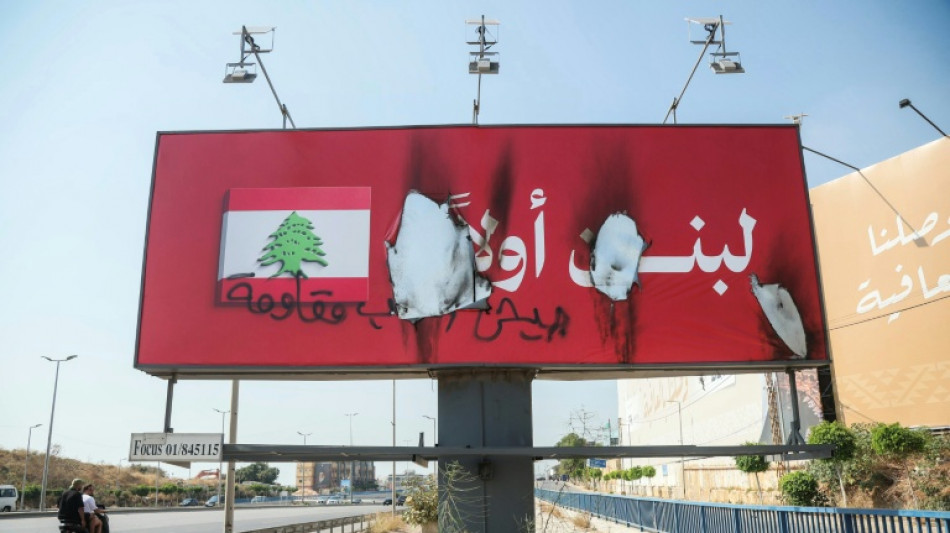
On Sunday, an AFP correspondent saw signs reading "Lebanon first" being burned along Beirut's airport road, which borders the city's southern suburbs, a Hezbollah stronghold, after previous billboards saying "thank you Iran" were removed.
Hezbollah lawmaker Hassan Fadlallah said Sunday that what "the authorities have done amounts to sedition aimed at pushing the country into chaos and shifting the conflict from one with the enemy to an internal conflict".
Hezbollah repeatedly asked Lebanese authorities to link themselves to Iran's negotiations to end its war with the US, while Tehran has insisted any ceasefire for the Middle East war should include Lebanon.
In a separate statement, Berri emphasised "the need to avoid internal strife in Lebanon and to make every effort to preserve and maintain stability and civil peace".
C.Timmermans--LCdB