Paris braces for Canada-style convoys against Covid rules
Thousands of protesters in convoys were heading to Paris from across France on Friday, with some hoping to blockade the capital in opposition to Covid restrictions despite police warnings to back off.
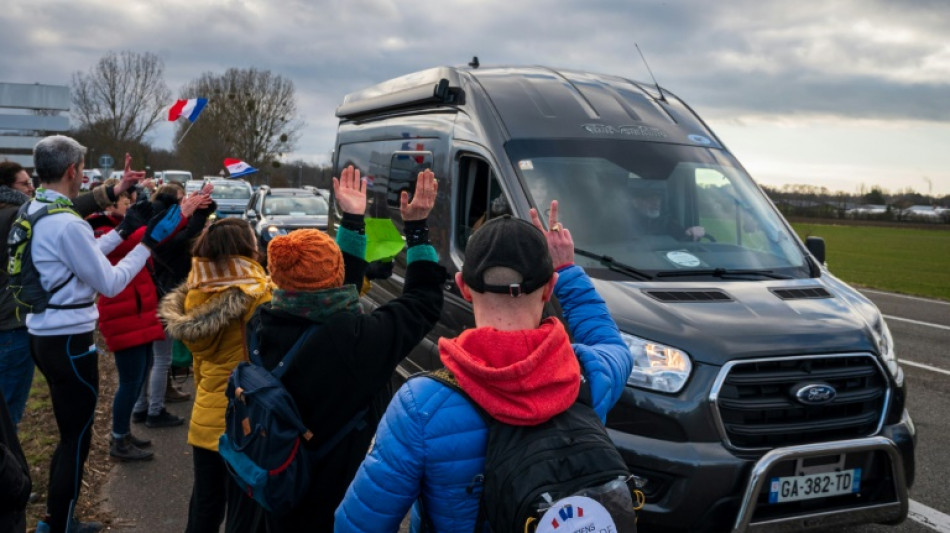
Inspired by Canadian truckers paralysing border traffic with the US, the French protesters have been setting off from Bayonne, Perpignan, Lyon, Lille, Strasbourg and elsewhere since Wednesday with the aim of converging on Paris by Friday evening.
They include many anti-Covid vaccination activists, but also people protesting against fast-rising energy prices that they say are making it impossible for low-income families to make ends meet.
"People need to see us, and to listen to the people who just want to live a normal and free life," said Lisa, a retired 62-year-old, as she joined a convoy of over 1,000 vehicles leaving Chateaubourg in the western Britanny region.
Like many protesters, Lisa has been an activist in the "yellow vest" movement which erupted in 2018 over fuel prices, but then became a platform for many other grievances linked to economic hardship.
The yellow vests have sometimes clashed with police, but Lisa said she hoped that the protests on Friday would go off peacefully. "It would really annoy me if things got out of hand," she told AFP.
After spending a cold night in a parking lot, the drivers in Chateaubourg set off around 9:00 am (0800 GMT) in a long single file of trucks, passenger cars and campers, as sympathetic passers-by waved from bridges and wished them luck.
- 'Population on our side' -
Paris police have been instructed to deal "firmly" with any attempt to block the capital's roads.
"If people want to demonstrate normally, they can," Interior Minister Gerald Darmanin said late Thursday. "If they want to block traffic, we will intervene."
The protesters meanwhile shared information about police deployment around Paris, often via the Telegram messaging service, and exchanged tips about the easiest access routes.
"It's important that we don't interfere with other people on the roads," said one activist, Robin, on his way from Illkirch-Graffenstaden in the eastern Alsace region. "That way we'll keep the population on our side, like they did in Canada," he said.
Many demonstrators are planning to stay in Paris overnight, and then join one of the regular Saturday protests against the government's vaccine pass.
Some then want to travel on to Brussels for a "European convergence" of protesters planned there for Monday.
The government has expressed some understanding for the protests, which its spokesman Gabriel Attal said were due to French people's "fatigue and weariness" after long-lasting Covid restrictions.
But, he said Friday, some politicians were trying to hijack the movement for their own aims.
"They are looking to gain political capital from this weariness and this fatigue in order to launch their own movements," Attal said, singling out Florian Philippot, a far-right candidate in April's presidential election.
Another hopeful for the presidential vote, left-wing firebrand Jean-Luc Melenchon, said Thursday he could give the movement his blessing.
"Yes, of course I could support them," he told the France 2 broadcaster, adding he would first see "how all this takes shape".
Another candidate, the Green party's Yannick Jadot, said he was against the demonstration. "I perfectly understand the government not wanting Paris to be blockaded," he said.
The government has meanwhile been announcing an easing of Covid rules, with indoor mask wearing set to go at the end of this month, except on transport.
burs-jh/sjw/lc
B.Francois--LCdB