Nice attack: what we know
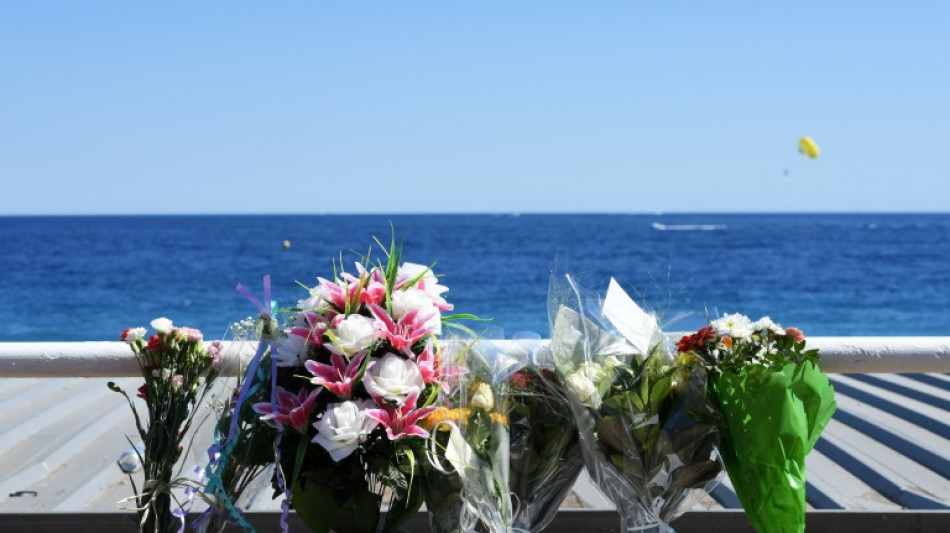
Eighty-four people were killed after a truck ploughed through crowds of people celebrating Bastille Day in the southern French city of Nice.
Here is what we know so far about last Thursday's attack that the Islamic State group claims was carried out by one of its "soldiers".
- How did the attack unfold? -
A Bastille Day firework display watched by some 30,000 people from the glitzy beachfront avenue, the Promenade des Anglais, had just ended and spectators were beginning to drift away at around 10:45 pm (2045 GMT) when three officers posted at one end of the walkway got word by radio that a truck had slammed into the crowd.
They ran up the famous palm-lined street overlooking the Mediterranean until they came upon a white 19-tonne rented refrigerator truck, according to an affidavit, seen by AFP, by one of the three officers.
The truck had been used by the driver to travel two kilometres (1.3 miles) through the crowd, ploughing through barriers and then mowing down people in its path.
Bodies lay crumpled behind the vehicle while others lay crushed beneath its wheels. The police could hear people weeping and crying for help as others scrambled for safety.
One onlooker climbed onto the side step of the truck on the driver's side, in an apparent attempt to overpower the driver but was held back by two police officers, the affidavit added.
After the driver fired at police, the officers fired some 20 rounds into the front of the lorry, killing the man at the wheel.
It has also emerged that the killer had staked out the seafront for two days before staging the attack.
- Who was the assailant? -
Anti-terror prosecutor Francois Molins named the driver as a 31-year-old Tunisian, Mohamed Lahouaiej-Bouhlel, who lived in Nice, and was described by neighbours as a loner who never responded to their greetings.
His identity papers were found in the truck, along with a pistol and ammunition and a number of fake weapons including two replica assault rifles. His body was found on the passenger seat, said the prosecutor.
Molins said Lahouaiej-Bouhlel had had various brushes with the law since 2010 for making threats, theft and violence, including a conviction in March this year for which he was given a six-month suspended sentence.
But he was "totally unknown" to the intelligence services, said Molins.
His estranged wife was held for questioning and later released. Six other people believed to be linked to him have also been detained.
An Albanian suspected of providing the driver with the pistol was arrested in Nice on Sunday.
The attacker's father, who lives in Msaken, eastern Tunisia, said his son had suffered from depression and had "no links" to religion.
While some who knew him said he was not religious, other witnesses said he had recently shown outward signs of becoming devout.
He appeared to have been radicalised very quickly, French authorities say.
- IS claims attack -
The Islamic State group claimed on Saturday that one of its "soldiers" carried out the attack "in response to calls to target nations of coalition states that are fighting (IS)".
The probe is being handled by anti-terrorism investigators.
The attack comes with France under a state of emergency following the Islamic State attacks in Paris in November that left 130 people dead.
- Government response -
President Francois Hollande announced that the state of emergency -- which he had said only the day before would end on July 26 -- will be extended by three months. Army reservists will be called up to boost security.
He also said France would strengthen its role in Iraq and Syria, where it is part of the international coalition fighting IS jihadists.
France later called on young "patriots" between 17 and 30 to join the reserves.
- Who are the victims? -
Eighty-four people were killed, including 10 children and adolescents, and around 300 sought treatment at hospitals.
Eighteen people, including one child, are still fighting for their lives in hospital, the health ministry said.
Hollande said "many foreigners and young children" were among those killed or injured.
The dead included nationals of Tunisia, France, Germany, the United States, Switzerland, Algeria, Poland, Morocco, Russia, Armenia and Madagascar.
Y.Simons--LCdB