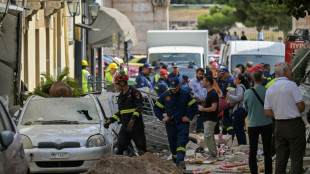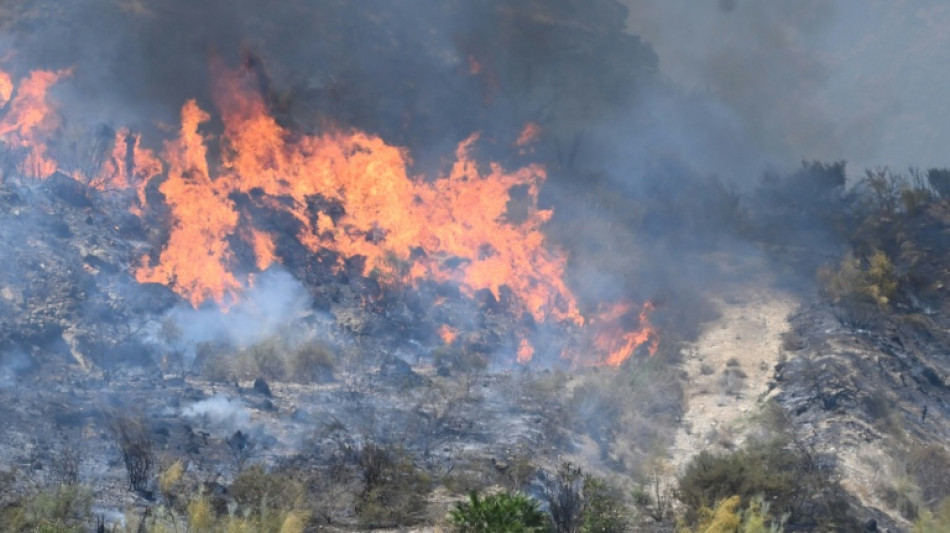
Firefighters gain upper hand on deadly Spain wildfire / Photo: JOSE JORDAN - AFP
Firefighters aided by better weather on Saturday gained the upper hand on one of Spain's deadliest wildfires as survivors described "horrific" and terrifying moments as they escaped the flames.
Around 500 firefighters backed by over 20 water-dropping aircraft were batttling the blaze which erupted Thursday in the Gallardos area of the southern region of Andalusia, home to many foreign residents.
"We were absolutely terrified. We could see the flames. It was horrific," Manoli Ramos, 72, a councillor in the small whitewashed village of Bedar where the victims were found, told AFP
She recalled another major wildfire in 2012 when residents had been able to return home the following day, saying: "This time it was like hell."
Officials said the 12 people who died were of different nationalities who had been trapped in vehicles and as they tried to flee on foot.
Austin Crilly, an 87-year-old British resident evacuated by police from the wildfire zone, told AFP he was watching television when he "saw a huge black cloud, well I thought it was a cloud".
"I thought, 'My God, I will shut the door'. Then, five minutes later, there was banging at the door. They said, 'Take your money, take your cards and get out'," he said.
Officials said some of those who died had not followed orders to evacuate or to shelter in place once the flames got too close.
- 'Best news' -
The fast-moving fire -- one of the deadliest in Spain's recent history -- showed signs of easing Saturday, allowing firefighters to directly attack the flames for the first time, officials said.
"The overnight evolution has been favourable and the weather conditions allow us to face the day with better prospects than yesterday," Antonio Sanz, the Andalusian regional government's emergency chief, told reporters.
"For the first time we will be able to carry out a direct attack on the fire. Until now, both the weather conditions and the nature of the blaze only allowed us to work defensively," he added.
Strong winds that had fuelled the fire had eased, humidity levels had risen and temperatures had fallen, Sanz said.
The blaze has so far burned around 6,600 hectares (16,300 acres) in an area of steep ravines that is hard for vehicles to reach, he said.
There was no immediate confirmation of the identities of the 12 who died but the authorities said many of the victims may be foreigners who were in Bedar.
"It wasn't good. Not good at all. I'd never seen anything like it. You see things like that in films, but never in real life," said Martin Smith, 63, a British tourist who was evacuated with his wife, Elizabeth, 65, from the campsite where they were on holiday.
Sanz said there had been no reports of additional deaths overnight, describing that as "the best news we could have".
- Missing people -
He said Spain's Civil Guard police had searched the affected areas without finding any further victims, although he cautioned that the search was continuing.
"That does not mean it cannot happen, but after the Civil Guard swept the area, including locations that were still hotspots, it gives us hope," he said.
Sanz said references to 23 missing people were misleading, explaining that the figure referred to people whose relatives had been unable to contact them and who could have reached evacuation centres or other safe locations.
He said seven formal missing persons reports had been filed.
However, officials said they could not establish a definitive toll until autopsies had been completed and the bodies recovered from the fire had been formally identified,.
Scientists agree that human-driven climate change is making extreme weather events such as heatwaves more likely and more intense.
I.Mertens--LCdB