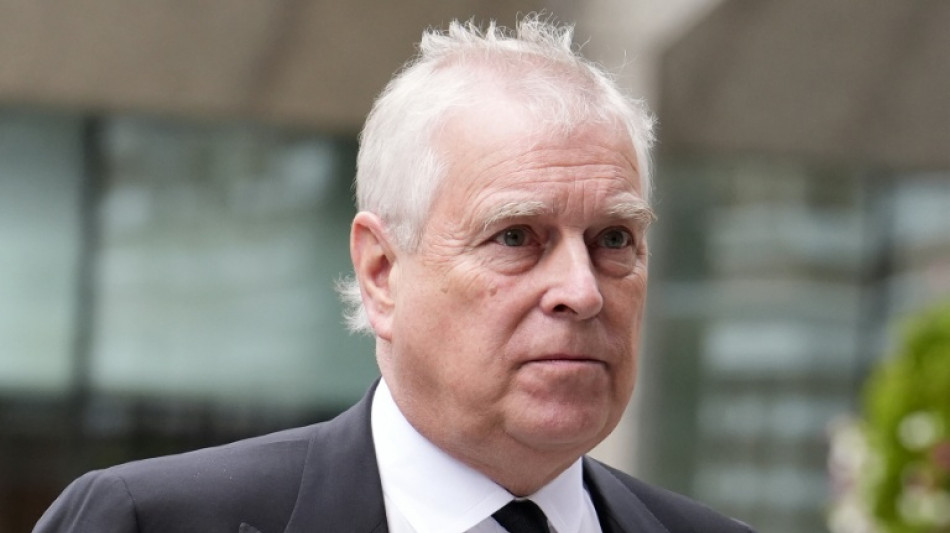
Ex-prince Andrew raid warrants ruled 'unlawful' but UK police maintain probe / Photo: Jordan Pettitt - POOL/AFP
Disgraced former prince Andrew Mountbatten-Windsor won a legal challenge over searches of his royal homes after police agreed the warrants they obtained were "unlawful", a High Court judge disclosed Thursday.
However, the London court must still decide whether police can continue to hold items seized in the raids, with both the judge and police stressing the investigation remained ongoing.
King Charles III's brother was arrested on his 66th birthday in February on suspicion of misconduct in public office related to links to late US sex offender Jeffrey Epstein.
He was released the same day, after hours of police questioning, but has remained under investigation. He has denied all wrongdoing in connection with the American financier.
Thames Valley Police (TVP) searched his former home in Windsor, west of London, and Sandringham, eastern England, but it has now emerged Andrew launched a legal challenge over the legality of the warrants used.
In reporting the challenge, the Daily Telegraph noted that it was the first time a member of Britain's royal family has challenged the lawfulness of criminal proceedings against them since the trial of Charles I in 1649.
- 'Warrants quashed' -
In the first detailed public disclosures about Andrew's action, judge Nicholas Hilliard on Thursday revealed the police had agreed "the search warrants were unlawful".
But "the fact that the search warrants were quashed does not bring an investigation to an end, or mean that the whole of the investigation was unlawful. TVP are continuing with their investigations," he added.
Hilliard said he would decide "in due course" on a June legal application by police to retain property obtained under an unlawful warrant "if it would be lawful to seize the property" under a new warrant.
"There would be little point in handing property back if it could then simply be lawfully seized under some other provision," he explained of the police request.
His 10-page order noted that Andrew "opposes the application" to keep the seized items, with a private court hearing on the matter to be held next year.
In a statement, the police said they accepted "the initial court's decision to issue warrants under the specific piece of legislation used was incorrect and therefore these must be legally quashed."
- 'Ongoing' probe -
But it added "legal proceedings are currently ongoing to decide how material seized during the searches will be managed and whether we can lawfully retain it in support of our ongoing investigation".
"We continue to pursue all reasonable lines of enquiry to effectively and fairly progress this investigation," the force said.
Royal commentator and historian Andrew Lownie told AFP the ruling was "psychologically... a boost for Andrew's campaign".
"He is quite bombastic, he does feel he's been wronged. And he now feels that he should be fighting back rather than just taking all the punches," said Lownie.
Andrew's arrest and the police searches marked a new low for the ex-prince, who was stripped of his royal titles last year and ousted from his Windsor home over his Epstein connections.
The government has even mulled passing a law to remove him from the line of succession.
Scandal has engulfed the king's younger brother since one of Epstein's accusers, Virginia Giuffre, claimed in her posthumous memoirs that she had been trafficked three times to have sex with Andrew when she was a teenager.
The police probe follows new revelations from documents relating to the American financier released by the United States this year, including emails in which Andrew appeared to share potentially confidential information with him.
jj-video/aks/jkb/tw
Y.Bernard--LCdB