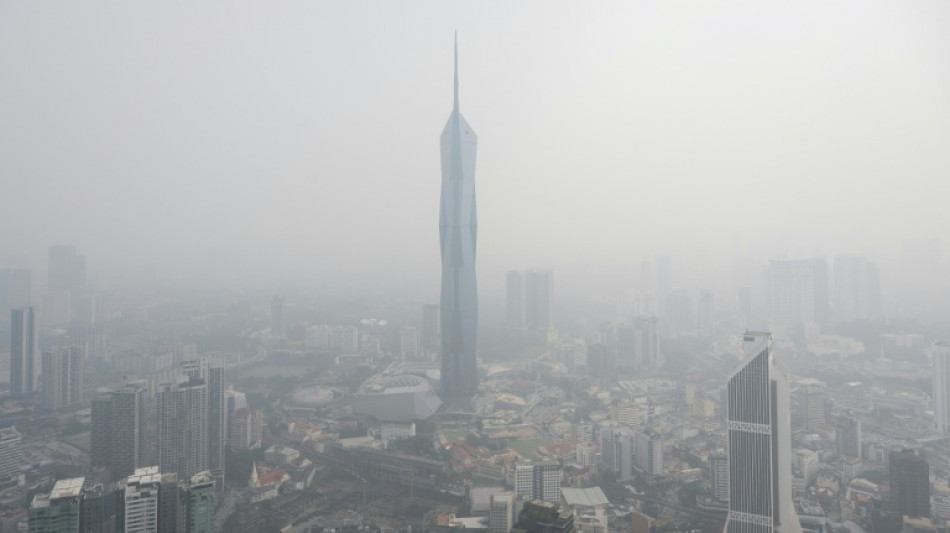
In Malaysia, frustration grows over Indonesia haze / Photo: Mohd Rasfan - AFP
Closed schools, shuttered sports centres and mass mask handouts. Indonesian wildfire haze has caused a regional pollution crisis and prompted growing frustration in neighbours, including Malaysia.
"You need to treat them as an outcast in the region," Malaysian parliamentarian Syed Saddiq Syed Abdul Rahman railed this week talking about the Indonesian fires.
His comments go much further than the gentle diplomatic pressure Malaysia's government has so far applied, but they reflect a simmering frustration with Indonesia's inability to control the fires.
"Malaysia and Indonesia are close neighbours, but that relationship must also come with responsibility," Malaysian parliamentarian Syerleena Abdul Rashid told AFP.
"Why should Malaysians continue paying the price for irresponsible actions beyond our borders?" she said.
Malaysia's Prime Minister Anwar Ibrahim on Thursday defended the approach, saying the Southeast Asian nation "has done everything we can" to engage neighbouring Indonesia on the issue.
- 'Do the right thing' -
But at the popular Batu Caves tourist site, visitors and workers alike expressed frustration.
"You cannot see," tour operator Diddy Hamidon told AFP, looking out at a vista now shrouded in haze.
"The Indonesian (government) needs to do the right thing," he added.
Malaysia has been forced to close schools over the haze, and has offered Indonesia help fighting the blazes.
But not until Wednesday did the offer appear to finally have been taken up, after talks involving disaster management officials on both sides, Foreign Minister Mohamad Hasan said.
"The form of cooperation will depend on the outcome of the discussions," he told local reporters.
"But the authorities of both countries have, for the first time, begun talks on how we can work together to tackle the haze, which appears to be getting worse."
Indonesia experiences wildfires regularly during its annual dry season, but this year's blazes have been exacerbated by a strong cycle of the El Nino weather phenomenon, which tends to bring drought to the country.
The fires have burned through hundreds of thousands of hectares in Indonesia and caused air pollution spikes in Malaysia, Singapore, the Philippines and East Timor, where schools closed this week due to the haze.
The crisis is not the first caused by Indonesian fires, and in 2002, members of the Association of Southeast Asian Nations (ASEAN) inked an agreement on transboundary haze pollution.
But that deal is widely seen as "not worth the paper it's printed on," said James Chin, professor of Asian studies at the University of Tasmania.
It has no enforcement mechanism, and previous efforts by Singapore to hold companies linked to wildfires legally culpable have also stalled.
Malaysia has asked ASEAN for an urgent meeting to discuss the latest crisis, and this year's summit host Manila confirmed the issue will be on the agenda at a foreign ministers meeting next month.
"ASEAN members are more than willing to help," Malaysian parliamentarian Hassan Abdul Karim told AFP, "provided Indonesia is willing to swallow their bigger ego and pride."
Anger about Indonesia's inability to control the haze was stoked further by comments over the weekend from Jakarta's communications agency chief.
"We do not just send smoke... The oxygen in Singapore and Malaysia also comes from our forests," said Syahganda Nainggolan in a video that swiftly went viral and prompted furious responses.
Syerleena called the remarks "downright insensitive."
"We value our relationship with Indonesia, but that should not prevent us from speaking up when remarks are inappropriate," said the parliamentarian.
Indonesia's President Prabowo Subianto on Monday ordered the government to mobilise maximum efforts to battle wildfires that have been raging for three months in some places.
- 'Very, very careful' -
The growing public frustration in Malaysia but also neighbouring Singapore, which has topped global major city pollution rankings in recent days, is pressuring governments, said Chin.
But he forecast little progress.
Syerleena urged accountability at a regional level, with companies linked to burning held responsible whether they are Indonesian, Malaysian or Singaporean.
"What we need from Jakarta is greater transparency, stronger enforcement against companies responsible for illegal burning, and closer cooperation with neighbouring countries."
A.Peeters--LCdB