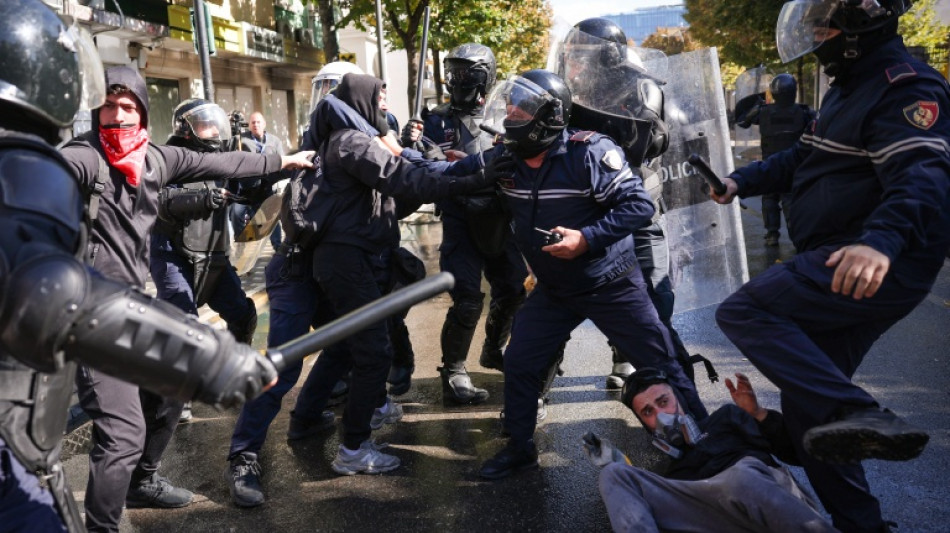
Thousands gather at new Albanian anti-government rally / Photo: Adnan Beci - AFP
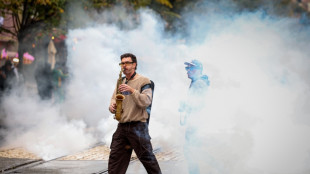
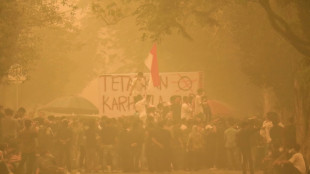
Thousands rallied in Tirana on Saturday at a fresh anti-government rally after days of violent unrest in the Albanian capital, with police firing tear gas to disperse the crowd.
Since mid-October, protesters and police have routinely clashed.
Several government buildings have been attacked, dozens of demonstrators have been detained and, according to the authorities, more than 300 protestors and police have been injured.
The situation has calmed in recent days, with only sporadic incidents in Tirana, but it escalated again on Saturday.
Thousands of people heeded calls from organisers for students and others around Albania to attend the rally.
Various groups, including university professors, artists and opposition parties, have announced their support or attendance.
"There is a lot of anger," said activist Sidorela Vatnikaj, labelling the movement a "revolution".
"It's not only a matter of students. It's not only a matter of environmental struggles ... It's a matter of the state of rights and state of law," she told AFP.
Soon after the rally began outside the education ministry, which has become a focal point for protests, a group of demonstrators hurled stones at the building, many of whose windows had been smashed in previous days, according to an AFP reporter.
Riot police immediately retaliated with water cannons, tear gas and rubber bullets.
- 'Want a future here' -
"We are here for one reason: we want to stay in our country and not have to dream of a life elsewhere," Rosela Mira, a first-year medical student, told AFP.
"I want to have a future here."
Her sister, a high school student, standing nearby, described deteriorating learning conditions, with 40 pupils per class and a lack of facilities such as laboratories, at her school.
More than 1.5 million people have left the Balkan nation since the fall of Communism in the 1990s.
The population now stands at 2.3 million.
The average salary before t
ax is 930 euros ($1,026) per month.
"We have to work several jobs... to help our parents, who receive meagre pensions," said Fabiola Nikaj, a third-year university law student.
"No violence", "Transparency" and "Democracy in danger" read some of the banners carried by high-school teachers and university professors.
They gathered on pavements partly stripped of their cobblestones, ripped up by protesters in previous days.
Albania ranks 91st among 182 countries on watchdog Transparency International's Corruption Perceptions Index.
- Calls for 'dialogue ' -
Anti-government protests started in May, sparked by a luxury hotel project linked to US President Donald Trump's family, which scientists said in July had already caused irreparable damage to a once pristine stretch of Albania's coast.
Anger over the resort development has morphed into a broader push against corruption, amid ongoing demands for Prime Minister Edi Rama to step down.
Rama has blamed "foreign actors" for the violence and accused both Russia and Iran of driving online misinformation.
The Socialist prime minister has also called for "dialogue".
But red cushions laid on the ground around an improvised concrete table outside the government headquarters on Saturday, a symbolic gesture for dialogue, remained empty and were later set on fire by hundreds of protesters.
"Rama in prison" and "Berisha in prison" they chanted on Saturday, blaming the entire political class for the crisis.
The prime minister had earlier published photos of around 40 people, identified by their initials, whom he accused of violence, and renewed his call for the heads of dozens of public institutions to resign.
bme-al/ljv
D.Pauwels--LCdB