Nutzen Sie La Quotidienne de Bruxelles mit personalisierter Werbung, Werbetracking, Nutzungsanalyse und externen Multimedia-Inhalten. Details zu Cookies und Verarbeitungszwecken sowie zu Ihrer jederzeitigen Widerrufsmöglichkeit finden Sie unten, im Cookie-Manager sowie in unserer Datenschutzerklärung.
Use La Quotidienne de Bruxelles with personalised advertising, ad tracking, usage analysis and external multimedia content. Details on cookies and processing purposes as well as your revocation option at any time can be found below, in the cookie manager as well as in our privacy policy.
Utilizar La Quotidienne de Bruxelles con publicidad personalizada, seguimiento de anuncios, análisis de uso y contenido multimedia externo. Los detalles sobre las cookies y los propósitos de procesamiento, así como su opción de revocación en cualquier momento, se pueden encontrar a continuación, en el gestor de cookies, así como en nuestra política de privacidad.
Utilisez le La Quotidienne de Bruxelles avec des publicités personnalisées, un suivi publicitaire, une analyse de l'utilisation et des contenus multimédias externes. Vous trouverez des détails sur les cookies et les objectifs de traitement ainsi que sur votre possibilité de révocation à tout moment ci-dessous, dans le gestionnaire de cookies ainsi que dans notre déclaration de protection des données.
Utilizzare La Quotidienne de Bruxelles con pubblicità personalizzata, tracciamento degli annunci, analisi dell'utilizzo e contenuti multimediali esterni. I dettagli sui cookie e sulle finalità di elaborazione, nonché la possibilità di revocarli in qualsiasi momento, sono riportati di seguito nel Cookie Manager e nella nostra Informativa sulla privacy.
Utilizar o La Quotidienne de Bruxelles com publicidade personalizada, rastreio de anúncios, análise de utilização e conteúdo multimédia externo. Detalhes sobre cookies e fins de processamento, bem como a sua opção de revogação em qualquer altura, podem ser encontrados abaixo, no Gestor de Cookies, bem como na nossa Política de Privacidade.
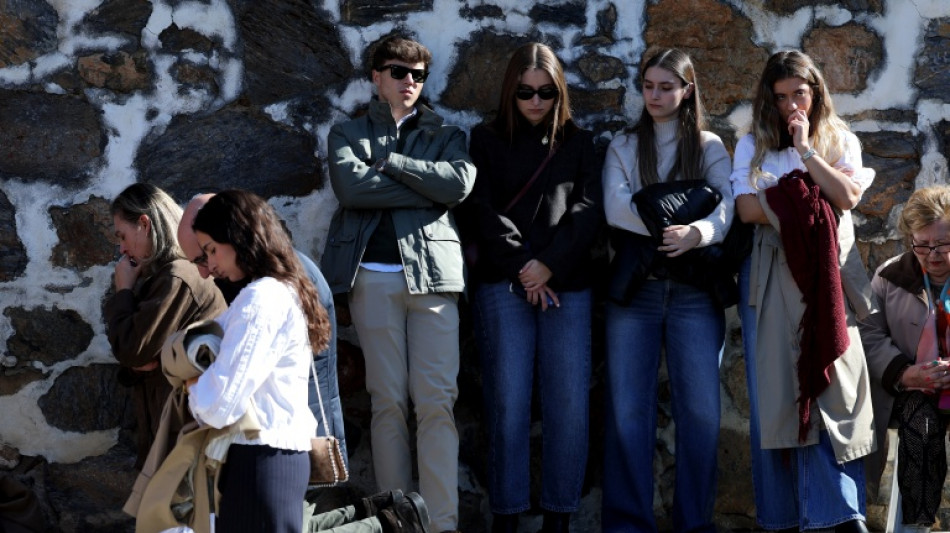
Residents and local officials gathered on Saturday in a Spanish village near the site of a high-speed train collision that killed at least 69 people for a memorial Mass honouring the victims.
Text size:
The pews inside the San Juan Bautista church in Urda, in the central province of Toledo, were packed, while dozens more people gathered outside to listen to the service. Some wiped away tears.
Investigators are looking into the cause of one of Europe's deadliest rail disasters this century, which occurred when a train travelling from Madrid to Seville barrelled into a stationary train on Wednesday.
The Archbishop of Toledo, Francisco Cerro, told mourners that the days since the disaster had been like a "Good Friday for us all", acknowledging that "there are no words that can offer comfort" to those who had lost loved ones.
"Dear families affected by the train accident, you are not alone. Society is with you, the best of society is with you," he said, urging the public not to forget the tragedy and calling for such disasters never to happen again.
He also paid tribute to emergency workers and volunteers, thanking healthcare staff, firefighters, police and rescue teams for their efforts, and praising what he described as "a genuine wave of solidarity".
The president of the Castilla-La Mancha region, Emiliano Garcia-Page, and Urda mayor Manuel Galan were among the officials who attended the service.
Residents of Urda, which has a population of around 2,500, "are very badly affected, in great pain and with a great need for support", Galan told Spanish public television ahead of the Mass.
Authorities overseeing the process have completed autopsies on all 69 people killed in the crash, with 36 identified so far.